
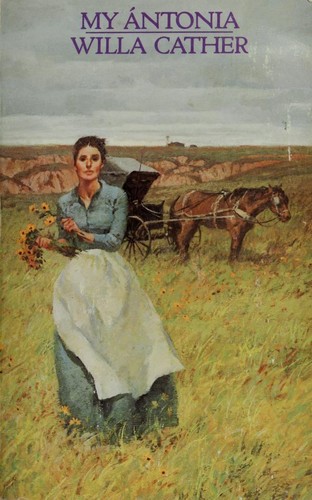
My Ántonia
Willa Cather · 1873–1947 · United States
Why it matters
A Bohemian immigrant girl remembered across a lifetime by the boy who loved her, on the Nebraska prairie. Cather turns the frontier into a lost country of light and land: the great American pastoral elegy.
At a glance
Warm, clear elegiac prose makes this among the most accessible novels of its era.
Deep dive
The novel's frame — a manuscript handed off by its own narrator — quietly admits that everything in it has been shaped by one man's longing, not by Ántonia herself.
Written for readers who have finished the book. No plot recap, and nothing here is safe to read first.
Themes & symbolism
The title stakes its claim before the story even starts: this is Jim's Ántonia, not Ántonia's own account of her life, and Cather makes that possessiveness structural rather than incidental. The often-skipped introduction establishes that the whole novel is a private manuscript Jim wrote for himself and handed to a childhood friend, never intended for anyone else's eyes. That frame explains why Ántonia remains slightly opaque throughout — vivid, luminous, physically present, but rarely granted real interiority. She is observed, not known. Jim shapes her into an emblem of vitality and rootedness precisely because his own adult life — a loveless marriage barely mentioned, a competent but hollow career in the East — so conspicuously lacks both. The prairie itself absorbs the same nostalgic treatment: land, weather, and season carry more emotional weight than any single event, which is why the book proceeds as a string of remembered tableaux — the snake killing, the wolves in Pavel's story, Mr. Shimerda's grave at the crossroads — rather than through a plot with a single destination.
Gender does quiet, deliberate work underneath the elegy. Ántonia labors, bears the shame of an abandoned pregnancy, and endures, and the novel treats her physical, laboring life as dignity rather than diminishment. Jim, by contrast, is essentially a spectator to his own youth: he watches, admires, and eventually leaves, and his passivity is the price of the education and mobility that separate him from the immigrant community he grew up beside. Mr. Shimerda's suicide anchors the book's early chapters partly because it resists Jim's softening lens more than anything else in the novel — an old-world man destroyed by homesickness, poverty, and the impossibility of transplanting a cultured European life onto raw, indifferent prairie soil. That his grave, placed at a crossroads outside consecrated ground because of the manner of his death, later becomes a peaceful local landmark rather than a site people avoid is itself a small piece of the book's larger argument: the prairie absorbs even its worst griefs into the long, forgiving rhythm of memory.
The Hired Girls
The town chapters, where Ántonia and other immigrant daughters work as domestic "hired girls" for native-born families, are the novel's sharpest class writing. These young women are physically freer, more socially confident, and more alive at the Saturday dances than the town's respectable daughters, and Jim is drawn to that vitality even as his own rising status — bound for the university, then law school — pulls him toward the more decorous, bloodless world of the people who employ them. His embarrassment at being seen with the hired girls, alongside his genuine attraction to them, is the clearest early sign that his path and Ántonia's are diverging for reasons that have nothing to do with affection. It is the first place the novel lets us see, without Jim's usual softening, that the class distance he will spend the rest of his life quietly maintaining is already forming well before he leaves for the East.
The last seal: what actually happens, and why it lands the way it does.
The ending, explained
After twenty years away, Jim finally returns to Nebraska and finds Ántonia not diminished by hardship, scandal, or age but thriving — married to Anton Cuzak, surrounded by a large and boisterous family on a farm that is unmistakably hers. Cather refuses to make this a consolation prize; it reads as a genuine triumph, the fullest possible life available to her. Jim's closing reflection is that he and Ántonia share an incommunicable past that neither marriage, distance, nor time can fully dissolve, and the novel's final image returns to the same road they walked as children — now standing for memory itself, the one country they will always hold in common.
Where to go next
 Willa Cather · 1913O Pioneers!Lvl 3Medium pace
 Willa Cather · 1922One of OursLvl 4Medium pace
 Henry James · 1881The Portrait of a LadyLvl 6Slow burn
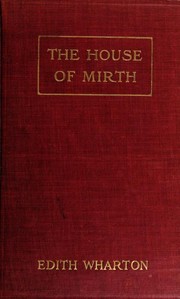 Edith Wharton · 1905The House of MirthLvl 5Medium pace
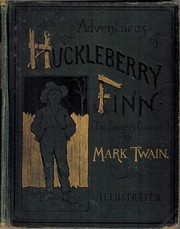 Mark Twain · 1884Adventures of Huckleberry FinnLvl 5Fast paced
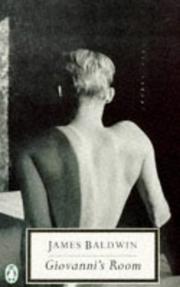 James Baldwin · 1956Giovanni's RoomLvl 5Medium pace