
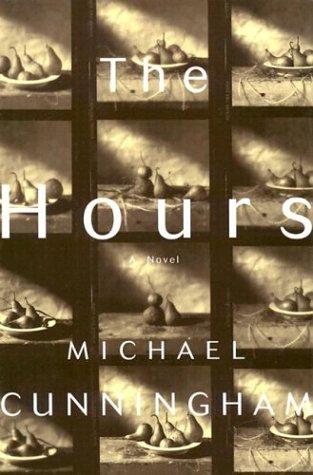
The Hours
Michael Cunningham · b. 1952 · United States
Why it matters
Virginia Woolf drafts Mrs. Dalloway, a 1950s housewife reads it while contemplating her own life, and a modern editor lives out its plot in Manhattan: three women's days interlaced across a century. Cunningham's Pulitzer winner is a love letter written inside another writer's sentence.
At a glance
Three interwoven timelines echo Woolf's own stream-of-consciousness technique.
Deep dive
Cunningham builds an entire novel out of another writer's discarded working title and one recurring sentence about buying flowers — and somehow the borrowing is the point, not a shortcut around one.
Written for readers who have finished the book. No plot recap, and nothing here is safe to read first.
Themes & symbolism
The Hours was Woolf's own working title for Mrs. Dalloway, and Cunningham's structure is an act of open homage rather than concealment: three women, three eras, each living a compressed version of Clarissa Dalloway's single day — party preparations shadowed by a death that refuses to stay offstage. Richard, the AIDS-stricken poet Clarissa cares for in the modern strand, functions as this century's Septimus, his illness standing in for the shellshock Woolf used to smuggle war trauma into a novel about parties and flowers; Cunningham updates the wound but keeps its structural job intact, an unspeakable catastrophe intruding on domestic ordinariness from just offstage.
Each woman negotiates the same argument Woolf made explicit in her essays — that a life spent entirely in service of others' needs is a kind of living death — but the novel refuses to let any one resolution stand as correct. Laura Brown's contemplated suicide curdles into something quieter and, the novel suggests, no less violent: she chooses to live, but only by abandoning her family outright, trading one form of self-erasure for another. Woolf's own strand, framed at the book's opening and close, insists that the historical author's actual 1941 suicide isn't a separate tragedy layered on top of the fiction but its origin point — Clarissa Dalloway's one ordinary day was always shadowed by the day its author chose to die.
Ventriloquizing Woolf
Cunningham writes the Woolf sections in a close, respectful approximation of her free indirect style, risking outright imitation rather than settling for safer paraphrase or homage-at-a-distance. It's a gamble that mostly pays off critically because the novel is explicit about what it's doing — not concealing its debt to Mrs. Dalloway but building the entire book as a visible structure of echo, repetition, and variation, three lives orbiting one earlier novel's architecture without ever pretending to have invented it themselves.
AIDS as the Novel's Silent War
Cunningham, writing as a gay man in the long shadow of the AIDS epidemic's toll on his own generation, gives Richard's illness the same narrative function Woolf gave the First World War in the original: a mass catastrophe experienced privately, grief that social convention has no adequate ritual for. Richard's death by his own hand, in front of Clarissa, replays Septimus's suicide from Mrs. Dalloway almost exactly, insisting that different eras keep producing the same unbearable collision between public occasion and private devastation.
The last seal: what actually happens, and why it lands the way it does.
The ending, explained
The three timelines converge on one day: Clarissa is hosting a party for Richard, who — exhausted by illness and by the performance of being cared for — jumps from his apartment window in front of her hours before it starts. She holds the party anyway, grief and social obligation forced into the same room, exactly as Woolf's original Clarissa absorbed news of a stranger's suicide mid-party. Laura Brown, revealed as Richard's estranged mother, arrives that evening and explains to Clarissa why she left her family decades earlier rather than die — a choice, not an escape from one. Virginia Woolf's framing strand closes on her real historical death: walking into the River Ouse with her pockets full of stones.
Where to go next
 Virginia Woolf · 1925Mrs DallowayLvl 7Slow burn
 Steven Millhauser · 1996Martin Dressler: The Tale of an American DreamerLvl 5Medium pace
 Marcel Proust · 1913Swann's WayLvl 8Slow burn
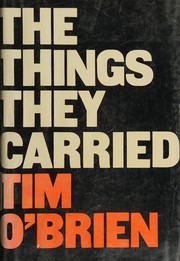 Tim O'Brien · 1990The Things They CarriedLvl 4Medium pace
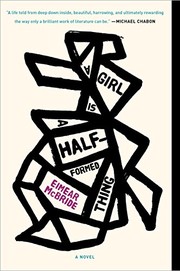 Eimear McBride · 2013A Girl Is a Half-formed ThingLvl 9Slow burn
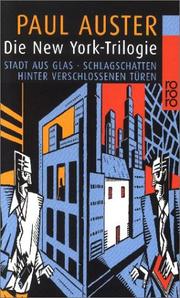 Paul Auster · 1987The New York TrilogyLvl 7Medium pace