
The Hive
Camilo José Cela · 1916–2002 · Spain
Originally La colmena (Spanish)
Why it matters
Hundreds of characters pass through a single Madrid café over three days in the hungry, repressive years after the Spanish Civil War. Cela's kaleidoscopic technique makes the whole wounded city its true protagonist.
At a glance
Hundreds of characters cut between in short fragments with almost no connective narration.
Deep dive
Madrid's hungriest, most watched cafe in 1942 becomes the hub for a novel that refuses to give any of its several hundred characters the dignity of being the protagonist.
Written for readers who have finished the book. No plot recap, and nothing here is safe to read first.
Themes & symbolism
Cela's title names his method: rather than follow one protagonist, La colmena tracks something near three hundred named residents of a single Madrid neighborhood over three days in 1942, moving between Dona Rosa's cafe, tenement rooms, and streets with no fixed center of gravity, so that hunger and poverty read as the environment's baseline condition rather than any one character's misfortune. No single plot organizes the novel; instead recurring debts, rumors, and small betrayals pass between characters the way gossip actually moves through a real neighborhood, arriving at different people out of order and never quite resolving.
Cela writes in the mode Spanish critics would later call tremendismo, an unflinching, almost clinical attention to squalor, hunger, and casual cruelty that refuses the era's official optimism about Francoist Spain's recovery. Dona Rosa's cafe runs on watered coffee and unpaid tabs, Victorita sells herself to buy medicine for her tubercular boyfriend, and Cela records all of it without editorializing, letting the accumulation of small degradations do the moral work a narrator's commentary would otherwise have to supply.
Martin Marco, an unemployed, would-be writer sponging meals and shelter off friends and an indulgent sister, is as near as Cela's sprawling ensemble ever settles on a recurring thread, a man of some intellectual pretension reduced to the same hunger and dependency as everyone around him, his half-formed political opinions worth nothing against his empty stomach. Cela uses him to puncture the idea that education or sensibility offers any protection in a city this starved, since Martin's inner life is exactly as precarious as his next meal.
Written for Franco's Censors, Published in Buenos Aires
Cela finished the novel in the late 1940s, and Spain's censors, unwilling to license its depiction of hunger and moral collapse under a regime claiming national recovery, blocked its publication; the book first appeared in 1951 in Buenos Aires and wasn't legally printed in Spain itself until 1963, over a decade after readers elsewhere had it. Cela, who had served as a Francoist censor himself earlier in his career, wrote the most damning literary indictment of the regime's official narrative from a position uncomfortably close to the machinery of suppression, an irony that has shadowed his later Nobel Prize as much as his fiction.
The last seal: what actually happens, and why it lands the way it does.
The ending, explained
Cela numbers his final chapter out of sequence, labeling it 'Final' while setting its events earlier than material readers have already passed through, a structural trick that denies the book any real chronological closure. What resolution there is belongs to Martin Marco, who learns his mother has died while simultaneously becoming aware, in the novel's last pages, that police are asking after him in connection with a friend's political activity. He walks out into a cold Madrid dawn unaware of how much danger he's actually in, and the novel simply stops there, on an ordinary morning that could as easily be the start of another three days exactly like the ones just narrated.
Where to go next
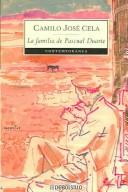 Camilo José Cela · 1942The Family of Pascual DuarteLvl 4Medium pace
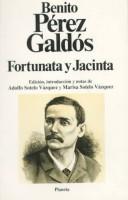 Benito Pérez Galdós · 1887Fortunata and JacintaLvl 6Medium pace
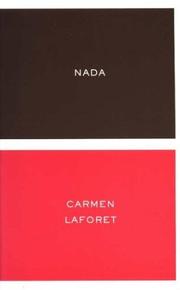 Carmen Laforet · 1945NadaLvl 5Medium pace
 Alberto Moravia · 1951The ConformistLvl 5Medium pace
 Roberto Arlt · 1929The Seven MadmenLvl 7Medium pace
 François Mauriac · 1927Thérèse DesqueyrouxLvl 5Slow burn