
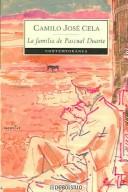
The Family of Pascual Duarte
Camilo José Cela · 1916–2002 · Spain
Originally La familia de Pascual Duarte (Spanish)
Why it matters
A condemned peasant confesses a life of violence in flat, unflinching prose. Cela's debut founded tremendismo and dragged Spanish fiction out of the Civil War's silence by staring directly at cruelty.
At a glance
Blunt confessional prose, though its violence and moral bleakness weigh heavily.
Deep dive
What Pascual Duarte's own account of his violence leaves conspicuously unexplained, and why Cela built the whole novel to make that gap the point.
Written for readers who have finished the book. No plot recap, and nothing here is safe to read first.
Themes & symbolism
Cela frames Pascual's confession with a fussy, fictional editorial apparatus, a transcriber who claims to have found the manuscript and appends a closing note along with an official account of Pascual's fate, and that scaffolding does real work: it insists the reader treat a peasant murderer's own words as a document worth the same scholarly care usually reserved for respectable memoirs. What Pascual actually delivers inside that frame is flat, declarative, and strikingly unashamed: he reports killing a dog, a horse, and eventually people with the same unadorned sentences, refusing the reader any of the interiority that would let his violence be safely explained away as madness or metaphor.
Tremendismo, the mode Cela founds here, gets its name from precisely this refusal: instead of moralizing about rural Spain's poverty, ignorance, and brutality, the novel just stares at it, cruelty rendered with the same tone as weather. Pascual's repeated, almost ritual acts of killing animals before people escalate with a logic the novel never states outright, each act training him further into the violence the ending requires of him. His own family supplies the escalation's material as much as his temperament does: a brutal father, a mother who favors his half-brother, a sister pushed into prostitution by poverty, none of it offered as excuse exactly, but all of it present in the record for a reader to weigh against Pascual's own refusal to explain himself.
A Censor's Regime Publishing Its Own Indictment
Cela wrote and published this under Franco's regime in 1942, and would later work at times as a state censor himself, a biographical fact that makes the book's survival almost as strange as its content: a novel this unflinching about Spanish rural brutality got past a censorship apparatus built to protect exactly the national self-image Pascual's confession refuses to flatter. That the regime's own machinery let through a document staring so directly at the violence underneath its idealized peasantry says as much about the censors' blind spots as it does about Cela's nerve. Later Spanish editions were themselves banned for a stretch even as the book's reputation grew abroad, an irony Cela, by then comfortably inside the establishment he'd once startled, seemed to enjoy rather than resent.
The last seal: what actually happens, and why it lands the way it does.
The ending, explained
The manuscript's editorial frame closes with an official account, separate from Pascual's own narration, confirming he was executed by garrote for murdering his mother, the last and most morally freighted killing in a chain that started with a dog. Cela never lets Pascual explain that final act any more than he explained the others: no confession of hatred, no burst of clarity, just the same flat reporting that has carried the whole book, so that the reader is left doing the moral labor the narrator refuses, deciding for themselves whether this was a monster's story or an ordinary man's, told with the safety catch removed.
Where to go next
 Camilo José Cela · 1951The HiveLvl 7Medium pace
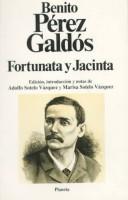 Benito Pérez Galdós · 1887Fortunata and JacintaLvl 6Medium pace
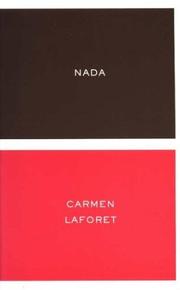 Carmen Laforet · 1945NadaLvl 5Medium pace
 Alberto Moravia · 1951The ConformistLvl 5Medium pace
 Roberto Arlt · 1929The Seven MadmenLvl 7Medium pace
 François Mauriac · 1927Thérèse DesqueyrouxLvl 5Slow burn