
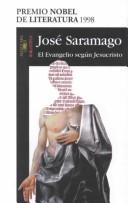
The Gospel According to Jesus Christ
José Saramago · 1922–2010 · Portugal
Originally O Evangelho Segundo Jesus Cristo (Portuguese) · translated by Giovanni Pontiero
Why it matters
Saramago retells the life of Christ as a man shaped by guilt, doubt, and a God complicit in every death demanded for glory. The book was heterodox enough that Portugal's government blocked it from a European prize, prompting Saramago's self-exile to Lanzarote.
At a glance
Saramago's flooding, unpunctuated sentences again, now applied to sustained theological argument.
Deep dive
What happens to the Christmas story when Saramago makes Joseph responsible for a warning that never gets sent, and God a character with a marketing plan for the deaths his religion is going to require.
Written for readers who have finished the book. No plot recap, and nothing here is safe to read first.
Themes & symbolism
Saramago opens by making Joseph guilty of something the Gospels never charge him with: overhearing that Herod's soldiers are coming for Bethlehem's infant boys, he saves his own family and says nothing to his neighbors, whose sons die in the massacre he could have warned them about. That inherited, unconfessed guilt, not divine election, is what Saramago has Jesus grow up carrying, discovering his father's silence as a boy and never fully forgiving it, so that the crucifixion at the end reads less like sacrifice than like a debt finally coming due across two generations.
Mary Magdalene appears here not as a reformed sinner kept at arm's length but as Jesus's lover and intellectual equal, a working prostitute who supports him financially and argues theology with him as his ministry takes shape, and Saramago writes the relationship with a domestic ordinariness that is itself the provocation, more than any single blasphemy the book was banned for.
The novel's most unsettling scene puts Jesus on a boat with God, who shows him, in a kind of guided vision, every martyrdom that will be committed in his name across the centuries still to come, inquisitions, wars, burnings, and asks him to accept the role anyway. God here is not cruel exactly, he is a strategist, frank about wanting glory measured in blood and converts, and Jesus's horror at the plan, rather than his faith in it, is what Saramago treats as the story's real turning point. A shepherd who calls himself simply Pastor, tending a mixed flock and quietly courting Jesus's loyalty for years before that boat scene, functions as Saramago's stand-in for a reasonable, undogmatic alternative to the God who ultimately wins the argument by leverage rather than by persuasion.
A Novel That Got Portugal's Government to Censor Its Own Nobel Prize
When this book was shortlisted for a European literary prize in 1992, the Portuguese government, under pressure from the Catholic Church, ordered it withdrawn from consideration, calling it offensive to Catholics. Saramago, already in his late sixties, responded by leaving mainland Portugal for Lanzarote in the Canary Islands, where he lived for the rest of his life; the Nobel committee awarded him the Prize in Literature six years later anyway, in 1998, naming this novel among the works that made the case for him. Portuguese bishops and Brazilian commentators alike denounced the book on publication, guaranteeing it exactly the wide readership controversy tends to deliver free of charge.
The last seal: what actually happens, and why it lands the way it does.
The ending, explained
On the cross, Saramago rewrites Jesus's last words entirely: rather than forgiving his executioners, he cries out for mercy on God, the one who orchestrated the whole bloody arrangement and is, in this telling, watching from above with evident satisfaction at how well the spectacle is going. The line inverts the traditional Gospel, moving the plea for forgiveness from the victim's mouth to the victim's judgment of his own father, and it is the clearest statement the novel makes: the guilt Joseph passed down at the start belongs, by the end, to God himself, not to the man dying under his name.
Where to go next
 José Saramago · 1982Baltasar and BlimundaLvl 7Medium pace
 José Saramago · 1995BlindnessLvl 7Medium pace
 José Saramago · 1997All the NamesLvl 6Slow burn
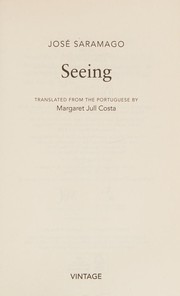 José Saramago · 2004SeeingLvl 7Slow burn
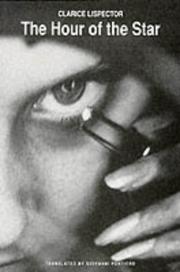 Clarice Lispector · 1977The Hour of the StarLvl 7Slow burn
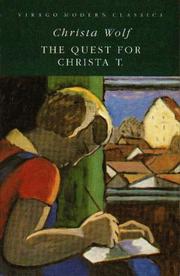 Christa Wolf · 1968The Quest for Christa T.Lvl 7Slow burn