
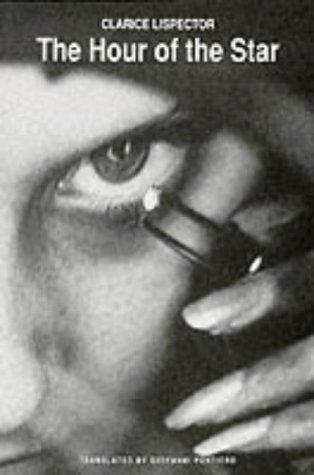
The Hour of the Star
Clarice Lispector · 1920–1977 · Brazil
Originally A Hora da Estrela (Portuguese)
Why it matters
A poor typist from the Northeast who barely registers her own existence, and a narrator who agonizes over the right to tell her. Lispector's last book: compassion and metaphysics compressed to a diamond.
At a glance
A metafictional narrator's philosophical digressions complicate a deceptively simple plot.
Deep dive
The book's real subject isn't Macabéa at all — it's the narrator who can't stop confessing how badly he's failing to write her.
Written for readers who have finished the book. No plot recap, and nothing here is safe to read first.
Themes & symbolism
Rodrigo S.M. is less a narrator than a wound. He interrupts Macabéa's story every few pages to catalogue his own doubts, his own comparative privilege, his own dread that literature — a form built by and for people who already matter — has no real instrument for a woman this unremarkable. The novel keeps threatening to become about him, and that threat is the point: Lispector stages the ethical problem of representation as a live wire running under the surface of the plot. Macabéa never articulates a complaint, a rebellion, or even much of a wish; she wants a boyfriend, a Coca-Cola, a kind voice on the radio, and that near-total absence of appetite reads less as deprivation than as an alien, almost saintly refusal to want what she's been told to want, one the narrator, cluttered with self-consciousness, can register but never inhabit.
The title is the cruelest joke in the book. Macabéa gets exactly one instant that counts as a "star's hour" — the fortune-teller's absurd, generous vision of wealth and love ahead of her — and it lasts about as long as it takes to cross a street. Lispector grants her heroine significance only in the same breath that ends her life, which means the "star" is less a reward than a formal trick: importance manufactured retroactively, by narration itself, for someone the world never thought to grant it while she was alive to use it.
Rodrigo S.M.'s Confession
His interruptions aren't padding; they're the argument. He tells us repeatedly that he is fat, comfortable, a man, and that none of this qualifies him to speak for a starving Northeastern woman he's invented — and yet inventing her is the only way he has to approach her at all. That paradox never resolves, deliberately: Lispector, dying as she wrote the book, seems less interested in solving the problem of speaking for the voiceless than in refusing the comfort of pretending it's solvable. The gap between Rodrigo and Macabéa is the gap between literature's machinery and the lives it claims to serve, and the novel's nervous, stammering prose style is what that gap sounds like from the inside.
Small Pleasures as Armor
Macabéa's few joys — Coca-Cola, a radio announcer's voice, the word "glamorous" — are the cheapest available fragments of a consumer world she can't otherwise afford entry into, and Lispector refuses to let the reader condescend to them. They're not pathetic substitutes for a fuller life; within the novel's logic they're proof that meaning can be extracted from almost nothing, that a life this materially bare is still a life with its own interior weather. Olímpico's contempt and Glória's guilty pity both fail to see this, which is part of why the narrator, for all his hand-wringing, is the only person in the book who comes close to seeing her at all.
The last seal: what actually happens, and why it lands the way it does.
The ending, explained
Madame Carlota, reading a hand that has never once been read, invents a future for Macabéa wholesale — money, a foreign suitor, a life finally worth wanting — and Macabéa believes every word of it instantly and completely, because believing costs her nothing and she has never had anything else to hold. Walking out of that room euphoric for the first time in the novel, she's struck by a yellow Mercedes. Lispector lingers on the death for pages, not to milk tragedy but to insist on it as the one moment the universe bothers to notice her — the "star's hour" arriving only as extinction, a recognition that is also, unbearably, a joke.
Where to go next
 Clarice Lispector · 1964The Passion According to G.H.Lvl 9Slow burn
 Graciliano Ramos · 1938Barren LivesLvl 6Slow burn
 Rachel de Queiroz · 1930The FifteenLvl 3Medium pace
 João Guimarães Rosa · 1956The Devil to Pay in the BacklandsLvl 9Slow burn
 Jorge Amado · 1958Gabriela, Clove and CinnamonLvl 3Fast paced
 Virginia Woolf · 1925Mrs DallowayLvl 7Slow burn