
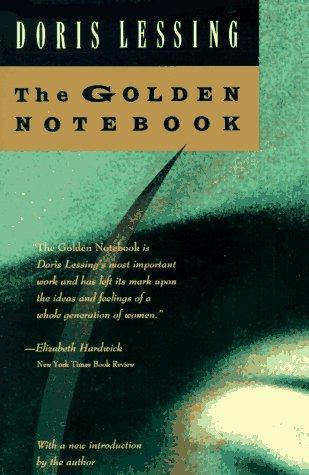
The Golden Notebook
Doris Lessing · 1919–2013 · United Kingdom / Zimbabwe
Why it matters
A writer keeps four separate notebooks (black, red, yellow, blue) for the fragments of her life, until a golden one tries to bind them. A founding text of the women's movement and a landmark of formal daring.
At a glance
Interleaved notebooks and nested fictions-within-fiction require tracking multiple frames.
Deep dive
Why Anna keeps four separate notebooks — one for the novel that made her famous, one for a dying political faith, one for a fictional alter ego, one for raw unmediated fact — and what happens once the walls she's built between them start to fail.
Written for readers who have finished the book. No plot recap, and nothing here is safe to read first.
Themes & symbolism
The four notebooks correspond to selves Anna keeps deliberately uncontaminated by each other: black for the Africa novel that made her famous and that she now half-repudiates, red for her disintegrating faith in the Communist Party, yellow for Ella, a fictionalized alter ego through whom she can say what she can't say directly, blue for a diary meant to hold raw, unmediated fact. Compartmentalization is the coping strategy, not the cure — the separations exist to prevent one crisis from flooding into the others, and the novel's real drama is watching that containment fail.
The 'Free Women' sections read as a conventional realist novel complete with chapter breaks, until the surrounding notebooks make clear that this tidy outer narrative is itself something Anna has shaped and possibly fictionalized — Lessing's biggest formal trick, which quietly withdraws the ground under whichever layer the reader had assumed was simply 'true.'
Anna's breakdown, precipitated by her affair with the American writer Saul Green, culminates in the single golden notebook of the title, where their voices, ideas, and even sentences start to blur and trade places. Fragmentation here isn't cured by synthesis so much as ridden through: the merging with Saul is disintegration and repair happening as the same event, and it's what allows Anna to write again afterward.
Free Women as a Novel Inside the Novel
By exposing 'Free Women' as Anna's own composition, Lessing indicts the realist novel's usual promise of a stable, external truth against which a character's private confusion can be measured. No notebook here is more authoritative than another — the diary is as constructed as the fiction — which was, in 1962, as radical a formal claim as anything the book says outright about politics or marriage.
Anna and Saul: Breakdown as Merger
Saul is both collaborator and antagonist, feeding Anna's paranoia while also, through their shared writing sessions, giving her back a way to work. Their psychic entanglement — finishing each other's sentences, each supplying the other with a first line to write from — dramatizes madness not as isolation but as a dangerous, productive contagion between two people who are each other's harshest mirror. Lessing herself resisted the label 'feminist novel' that critics immediately attached to the book, insisting she'd written about breakdown and fragmentation generally rather than a manifesto — a disavowal the book's own reception has mostly overruled.
The last seal: what actually happens, and why it lands the way it does.
The ending, explained
The breakdown with Saul resolves, internally, into something like integration — the separate notebooks stop, replaced by the single golden one, and Anna starts writing fiction again. But the outer 'Free Women' frame closes on a deliberately deflating note: Anna decides to take a job as a marriage counselor and join the Labour Party, folding her turbulent, unruly year into two conventional, socially legible roles. Lessing refuses to resolve whether this is defeat, disguise, or a hard-won truce with ordinary life — the irony is that after five hundred pages of formal rebellion against tidy resolution, the 'novel' Anna is living inside ends tidily anyway.
Where to go next
 Doris Lessing · 1950The Grass Is SingingLvl 4Medium pace
 Doris Lessing · 1952Martha QuestLvl 4Medium pace
 Doris Lessing · 1974Memoirs of a SurvivorLvl 6Slow burn
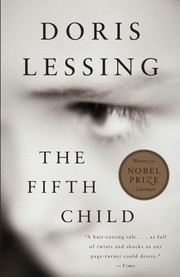 Doris Lessing · 1988The Fifth ChildLvl 4Fast paced
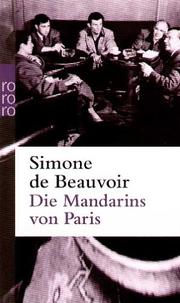 Simone de Beauvoir · 1954The MandarinsLvl 6Slow burn
 Ingeborg Bachmann · 1971MalinaLvl 8Slow burn