

Malina
Ingeborg Bachmann · 1926–1973 · Austria
Originally Malina (German)
Why it matters
An unnamed woman narrates her life split between two men, one gentle and safe, one controlling and possibly fatal, building toward one of postwar fiction's most unsettling final images. Bachmann's only completed novel remains one of the starkest portraits of psychic violence against women in postwar fiction.
At a glance
Fragmented, dreamlike, and structurally elusive: chronology and reality blur throughout.
Deep dive
An unnamed woman narrates her life split between two men, one who terrifies her only in nightmares and one who simply shares her apartment, and Bachmann spends the whole novel building a quiet case for which relationship is actually the dangerous one.
Written for readers who have finished the book. No plot recap, and nothing here is safe to read first.
Themes & symbolism
Bachmann structures Malina in three unequal movements, 'Happy with Ivan,' a nightmare-heavy central chapter called 'The Third Man,' and a brief closing section, 'Last Things,' and the imbalance is deliberate: the narrator's daylight relationship with Ivan, tender, unequal, ultimately shallow, gets far less narrative weight than the recurring dreams of a menacing, incestuous father figure who beats and threatens her across dozens of variations. Bachmann lets the dream chapter's violence read as the emotional truth underneath the ordinary domestic chapters' surface calm.
Malina himself, the narrator's flatmate and the novel's title character, functions less as a rival to Ivan than as the narrator's own capacity for detachment given a separate name and a separate room: calm where she is frantic, controlled where she is disintegrating, Malina absorbs more and more of the narrative's authority as the book goes on, until whole passages arrive in his voice rather than hers. The 'Third Man' dreams link the tyrannical father explicitly to national violence, air raids, camps, interrogation, collapsing personal and political history into a single recurring assault.
Bachmann conceived Malina as the sole completed volume of a planned trilogy called 'Ways of Dying,' and the title's plural matters: the novel argues that women are undone by ordinary structures, marriage, unequal conversation, a culture that assigns men the right to interpret women's speech, at least as often as by the literal violence of the father's dreams, and that the ordinary kind is harder to name precisely because no one commits an arrestable crime.
Ivan and Malina as the Same Refusal, Twice
Ivan's gentleness and Malina's coldness look like opposites on the page, but Bachmann builds both men around the same underlying failure: neither one ever actually listens to what the narrator says, Ivan too absorbed in his own contentment to notice her unraveling, Malina too committed to interpreting her feelings on his own terms to let her narrate them herself. The novel's real subject isn't a love triangle at all; it's a woman surrounded on every side by men convinced they already understand her.
The last seal: what actually happens, and why it lands the way it does.
The ending, explained
In the novel's last pages the narrator's voice grows steadily thinner against Malina's, until an argument between them ends with her stepping toward a crack in the apartment wall, and the wall closes over her, absorbing her completely. Malina, left alone in the apartment, calmly tidies up, answers the phone when Ivan calls looking for her, and denies any woman by that name ever lived there, the novel's final line insisting flatly that it was murder even though no body, no crime scene, and no witness exist to prove it. Bachmann ends on that unprovable verdict deliberately: a violence so structurally ordinary it leaves no evidence a court, or a culture, would ever recognize as a crime.
Where to go next
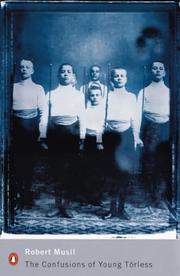 Robert Musil · 1906Young TörlessLvl 6Medium pace
 Elfriede Jelinek · 1983The Piano TeacherLvl 7Slow burn
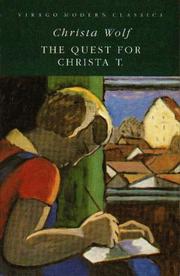 Christa Wolf · 1968The Quest for Christa T.Lvl 7Slow burn
 Simone de Beauvoir · 1954The MandarinsLvl 6Slow burn
 Alfred Döblin · 1929Berlin AlexanderplatzLvl 8Slow burn
 Ford Madox Ford · 1915The Good SoldierLvl 7Slow burn