
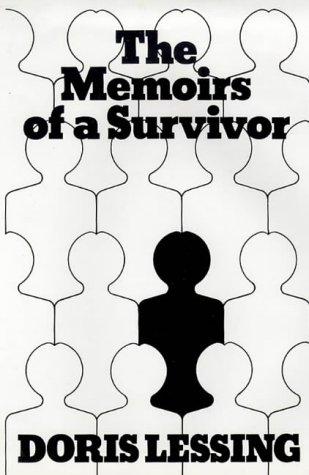
Memoirs of a Survivor
Doris Lessing · 1919–2013 · United Kingdom / Zimbabwe
Why it matters
An unnamed narrator watches civilization quietly disintegrate outside her window while a strange wall in her flat opens onto other rooms and other times. Lessing's spare, allegorical turn toward speculative fiction, urban collapse rendered as dream-logic.
At a glance
Dreamlike, ambiguous shifts between the realistic and the visionary resist a single stable reading.
Deep dive
What it means that a novel about civilization quietly collapsing outside one window keeps opening, inside the same flat, onto rooms from somewhere else entirely.
Written for readers who have finished the book. No plot recap, and nothing here is safe to read first.
Themes & symbolism
Lessing alternates two registers without ever naming the collapse outside her narrator's window: fuel runs out, gangs form, streets empty of authority, families migrate west in silent processions, all reported in the same flat, observational tone she uses for the ordinary. Against that impersonal disintegration she sets the personal, a wall in the narrator's flat that periodically turns permeable, opening onto other rooms, other decades, scenes that feel excavated rather than invented. The two kinds of seeing, the impersonal chronicle and the personal vision, never merge into a single explanation, and Lessing insists that's the point: history dissolving in public and a psyche dissolving in private are the same event witnessed from two distances.
Emily Cartwright, left in the narrator's care by parents the book never bothers to produce, grows from a watchful twelve-year-old into an adolescent drawn toward Gerald, a charismatic boy building an improvised commune for the city's abandoned children. What begins as tenderness, food pooled, younger children sheltered, curdles as the outside world worsens: Gerald's household slides from care into tribal hierarchy, then toward rumored cannibalism among the most desperate stragglers, a utopian project failing exactly along the lines the larger society is failing outside it.
The visions behind the wall keep returning to a cold, controlled household, a mother withholding warmth from a child who might be Emily, might be the narrator, might be neither specifically. Lessing treats the wall as a kind of psychic archaeology, excavating not a plot but an emotional inheritance, generations of English domestic repression that the book suggests helped produce the very numbness now letting civilization fail without anyone quite fighting for it.
Lessing's Sufi Vision Behind the Wall
Lessing was deeply engaged with the Sufi teacher Idries Shah by the time she wrote this novel, and she described the wall's visions as arising from something closer to an inner discipline of attention than to invention. The narrator functions as a "watcher," a figure permitted to see the ordinary and the extraordinary simultaneously without letting either cancel the other out, and the book sits as a hinge in Lessing's career, the realist domestic fiction of the Children of Violence sequence behind her, the explicitly cosmic Canopus in Argos novels just ahead.
The last seal: what actually happens, and why it lands the way it does.
The ending, explained
As the city outside disintegrates completely, roving gangs, the last services failing, families streaming away toward nothing in particular, the wall widens into a doorway and does not close again. The narrator, Emily, her strange dog-cat companion Hugo, and finally Gerald's straggling children walk through it, led by a silent, luminous woman who has appeared in fragments throughout the wall's earlier visions and now seems to gather every earlier scattered room into a single presence. Lessing gives no destination and no explanation of what lies past the threshold, only that the walk is toward something rather than away from everything. Read as apocalypse it is an ambiguous rescue; read through Lessing's Sufism it is the passage past a collapsing personal and social self into a wider awareness the wall has been rehearsing, in fragments, the whole novel.
Where to go next
 Doris Lessing · 1950The Grass Is SingingLvl 4Medium pace
 Doris Lessing · 1952Martha QuestLvl 4Medium pace
 Doris Lessing · 1962The Golden NotebookLvl 8Slow burn
 Doris Lessing · 1988The Fifth ChildLvl 4Fast paced
 Simone de Beauvoir · 1954The MandarinsLvl 6Slow burn
 Ingeborg Bachmann · 1971MalinaLvl 8Slow burn