
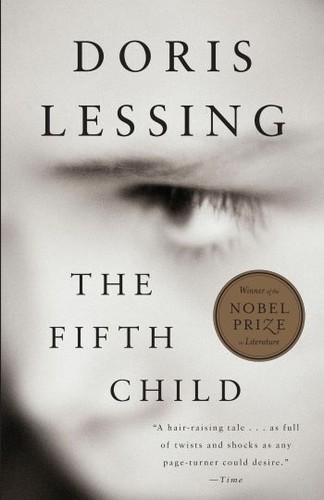
The Fifth Child
Doris Lessing · 1919–2013 · United Kingdom / Zimbabwe
Why it matters
A comfortable English family's fifth child arrives feral, violent, and unlovable, curdling the mother's utopian dream of a large happy household. Lessing's most compact, most frightening book, a domestic horror story about the limits of maternal love.
At a glance
Short and propulsive, though the mounting dread is psychologically unsettling.
Deep dive
A couple builds their entire vision of family around having as many children as the house can hold, and Lessing tracks exactly what one difficult arrival costs everyone else who already lived there.
Written for readers who have finished the book. No plot recap, and nothing here is safe to read first.
Themes & symbolism
Harriet and David Lovatt commit, almost as an ideology, to a large, old-fashioned family, buying a Victorian house well beyond their means specifically to host an open door of relatives every Christmas and summer. Lessing renders that domestic plenty in loving, specific detail, four children born in quick, happy succession, precisely so that its collapse later registers as total rather than partial, a fairy tale of successful family life built up only to be dismantled one child at a time.
Ben, the difficult fifth pregnancy that leaves Harriet doped and in pain for months, arrives unusually strong, oddly formed, and violent from infancy, described by relatives, one aloud, as a possible throwback to something not quite modern and not quite human. Lessing declines to resolve whether Ben is a genuine biological anomaly or simply a child the family and the culture around them have no framework to absorb, and Harriet's guilt-driven refusal to leave him institutionalized becomes both her single most admirable act and the decision that unravels everyone else in the house.
Paul, the youngest of the four older children, absorbs the most visible damage, developing fears and a watchfulness around his own home that follows him into adulthood, and Lessing is careful to make him neither exaggerated nor symbolic, only a boy whose ordinary need for safety quietly stopped being a priority once Ben arrived.
The Family the Fifth Child Was Never Going to Fit
Lessing builds the novel's structural cruelty around a fact easy to miss amid Ben's violence: it isn't only Ben who suffers for his presence in the house, it's each of the other four children, driven one by one from a home that has reorganized itself entirely around managing him. Harriet's love for one difficult son is shown costing her the ordinary childhoods of the other four, a trade the book refuses to let anyone, reader included, call anything gentler than a loss. Extended family, once fixtures at every holiday, stop visiting almost without announcement, and the big house built for permanent hospitality ends up hosting no one but the family it was meant to gather everyone else around.
Dorothy's Departure Confirms the Pattern
Harriet's mother Dorothy moves in for a stretch to help manage Ben, the one adult in the book who takes the burden seriously enough to reorganize her own life around it, and even she eventually reaches a limit and leaves. Lessing uses her departure, coming from the relative who tried hardest rather than one of the many who simply stopped visiting, as proof that the exhaustion Ben produces is not a failure of love in any single person. It is a mathematics no ordinary household's budget of attention was ever going to balance.
The last seal: what actually happens, and why it lands the way it does.
The ending, explained
Retrieved from the institution where the rest of the family had quietly hoped he would simply remain, Ben grows into adolescence tolerated rather than loved inside his own household, until he finds, almost with relief on Harriet's part, a rough fellowship among a gang of older boys on motorbikes who treat his strength and strangeness as an asset rather than a wound. Lessing lets him drift toward that world rather than staging any climactic confrontation, the family by then already scattered, the other children grown and distant, David and Harriet's marriage hollowed out by years spent absorbing a catastrophe no one outside the house ever quite believed in. The last image is abandonment rather than violence, everyone involved, Ben included, simply released from a household that was never built to hold him, Harriet's original dream of abundance ending in a family that dispersed instead of exploding.
Where to go next
 Doris Lessing · 1950The Grass Is SingingLvl 4Medium pace
 Doris Lessing · 1952Martha QuestLvl 4Medium pace
 Doris Lessing · 1962The Golden NotebookLvl 8Slow burn
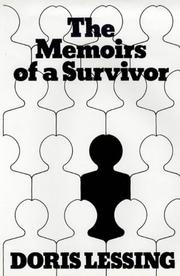 Doris Lessing · 1974Memoirs of a SurvivorLvl 6Slow burn
 Simone de Beauvoir · 1954The MandarinsLvl 6Slow burn
 Ingeborg Bachmann · 1971MalinaLvl 8Slow burn