
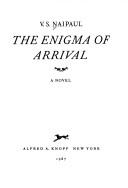
The Enigma of Arrival
V. S. Naipaul · 1932–2018 · Trinidad / England
Why it matters
A writer settles into a cottage on a fading Wiltshire estate and watches an ancient English landscape, and his own sense of arrival, slowly dissolve. Naipaul's most inward book: colonial displacement turned into a decades-long meditation on change.
At a glance
A plotless, meditative narrative unfolds at a deliberately slow, digressive pace.
Deep dive
A writer settles into a cottage on a fading English estate expecting to find the timeless countryside of literary myth, and spends the book discovering that everything around him, the land, the manor, his own sense of arrival, has been quietly decaying the entire time he thought it was permanent.
Written for readers who have finished the book. No plot recap, and nothing here is safe to read first.
Themes & symbolism
Naipaul's narrator, a writer from Trinidad closely modeled on Naipaul himself, rents a cottage on a Wiltshire estate near Salisbury and spends years walking the same fields, watching the same reclusive, aging landlord's manor slide gradually into disrepair, and slowly correcting an idea of England he had carried since childhood, one built from colonial-era books that presented the English countryside as changeless, ancient, and settled. What he finds instead is a landscape and a social order both in continuous, unglamorous decline: the manor's gardens going to seed, its staff aging out and not being replaced, the whole visible structure of rural gentility persisting mostly out of habit and inertia rather than genuine vitality.
Naipaul takes his title from Giorgio de Chirico's painting of the same name, a surreal, static harbor scene that seems to promise arrival while offering no visible way to actually complete the journey, and the novel's own structure works the same way: divided into loosely related sections rather than a driving plot, circling the same walks and observations from slightly different angles as years pass, so that the narrator's arrival in England, and his gradual arrival at a mature understanding of his own life and craft, never resolves into a single decisive moment. Change in the novel isn't a crisis to be narrated. It's the ordinary, barely perceptible condition of everything, the estate, the narrator's own body and confidence as a writer, the England he'd imagined as fixed.
Colonial Reading and What It Gets Wrong
The narrator repeatedly returns to the gap between the England he absorbed from books read as a colonial subject in Trinidad, an England of settled hierarchies and permanent institutions, and the England he actually finds himself living inside, which turns out to be just as subject to economic pressure, generational turnover, and quiet dispossession as anywhere else. Naipaul treats that misreading not as a simple case of naivety corrected but as evidence of how colonial education manufactures a fantasy of the metropole precisely so its subjects will measure their own, supposedly lesser homelands against a stability the metropole never actually possessed.
A Book That Ends by Explaining How It Was Written
The final section pulls back from the Wiltshire estate entirely to Trinidad, where the narrator returns for his sister's funeral and finds himself reflecting on his family, his own approaching mortality, and the writing career the whole preceding book has quietly been an account of. Naipaul reveals, in effect, that the meditative, plotless chapters the reader has just finished are the narrator's own attempt to write the book we are holding, collapsing memoir and novel into a single continuous act of composition. That closing move is why the book resists a conventional plot summary: its subject was never a sequence of events so much as the slow, cumulative labor of learning to see decay clearly enough to describe it, which the narrator only manages once death, in his sister's funeral, has made the subject impossible to avoid any longer.
Where to go next
 V. S. Naipaul · 1959Miguel StreetLvl 3Fast paced
 V. S. Naipaul · 1961A House for Mr BiswasLvl 5Medium pace
 V. S. Naipaul · 1971In a Free StateLvl 6Medium pace
 V. S. Naipaul · 1979A Bend in the RiverLvl 5Medium pace
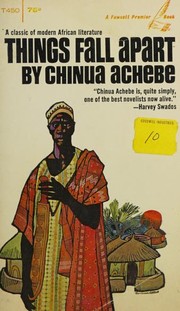 Chinua Achebe · 1958Things Fall ApartLvl 4Medium pace
 Ngũgĩ wa Thiong'o · 1967A Grain of WheatLvl 6Slow burn