
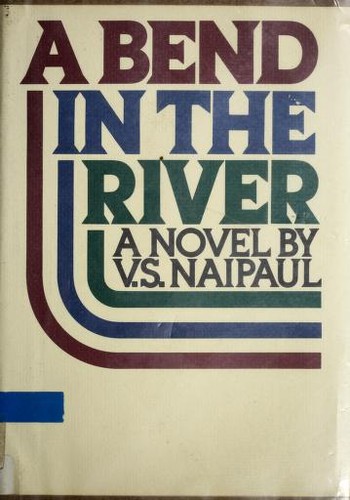
A Bend in the River
V. S. Naipaul · 1932–2018 · Trinidad / England
Why it matters
An Indian trader in a newly independent African country watches the Big Man's revolution consume itself. Unsparing to every side and argued over ever since: postcolonial disillusion in its most controversial form.
At a glance
Spare, controlled prose carries dense political and historical argument beneath it.
Deep dive
A shopkeeper builds a modest, hard-won life in a river town remade by a newly independent country's Big Man, and watches everything he has assembled turn out to be rented rather than owned the moment the state decides it wants it back.
Written for readers who have finished the book. No plot recap, and nothing here is safe to read first.
Themes & symbolism
Salim, an Indian Muslim trader from Africa's east coast, buys a shop at a bend in a great river in an unnamed Central African country clearly modeled on Mobutu's Zaire, and Naipaul builds the whole novel around how little of what Salim assembles there, property, standing, even his own sense of who he is, turns out to be secure. The country's president, referred to only as the Big Man, nationalizes Salim's shop under a state trustee named Théotime, a local man with no trading experience installed purely because indigenization policy requires an African face on the business, and Salim keeps running the shop's actual operations while owning none of it, a legal fiction that exposes how thin the line has always been between his possessions and his position as a foreigner in someone else's newly reclaimed country.
The Domain, the Big Man's showcase development of imported modernist architecture and an ill-fitting polytechnic, stands through the novel as the regime's most literal monument to imported ideas outrunning the ground they're built on, glossy and half-abandoned within a few years of construction. Naipaul pairs it with Salim's affair with Yvette, wife of Raymond, a European scholar the Big Man once favored as his court historian and has since begun to freeze out, and the affair's slow curdling into violence mirrors the country's own trajectory: an initial rush of possibility giving way to possession, jealousy, and finally the raw exercise of power once its original justifications have worn through.
The River as the Only Honest Narrator
The town's name and its regime change with each new wave of ideology, but the river underneath it keeps its own indifferent schedule of flood and current regardless of who currently claims to rule its banks, and Naipaul returns to it constantly as the one feature of the landscape not subject to revision by decree. Salim's own trajectory across the book, arrival by road, prosperity by river trade, and eventual departure by steamer as the town falls into open unrest, uses the same water as both his opportunity and his exit, a structural rhyme suggesting that in a country where every human institution can be renamed, requisitioned, or burned, only the geography keeps its word.
The last seal: what actually happens, and why it lands the way it does.
The ending, explained
As rebellion spreads and the Big Man's authority visibly frays, the town descends into the disorder Salim has spent years half-expecting: his trading permit is effectively voided, he's briefly imprisoned, and Ferdinand, a young man he once mentored who has since risen to a hollow regional commissionership, arranges his release only by admitting that no one, including officials at the top, actually controls what happens next. Salim leaves the only way still open to him, boarding a departing steamer on the river that made his life there possible in the first place. The boat is soon overtaken in the dark by an attack on a smaller craft traveling alongside it, and Naipaul ends on that unresolved violence rather than safe passage, since the novel's whole argument has been that in this country, arrival was never followed by permanence, only by the next uncertain departure.
Where to go next
 V. S. Naipaul · 1959Miguel StreetLvl 3Fast paced
 V. S. Naipaul · 1961A House for Mr BiswasLvl 5Medium pace
 V. S. Naipaul · 1971In a Free StateLvl 6Medium pace
 V. S. Naipaul · 1987The Enigma of ArrivalLvl 6Slow burn
 Chinua Achebe · 1958Things Fall ApartLvl 4Medium pace
 Ngũgĩ wa Thiong'o · 1967A Grain of WheatLvl 6Slow burn