
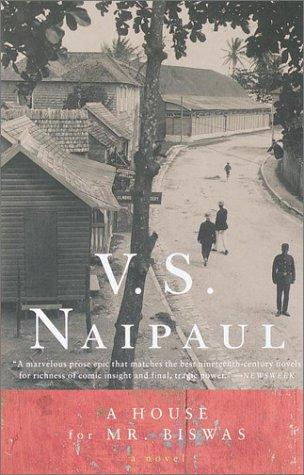
A House for Mr Biswas
V. S. Naipaul · 1932–2018 · Trinidad / England
Why it matters
Mohun Biswas, born unlucky in colonial Trinidad, wants one thing: a house of his own. Comic, exasperating, and finally heartbreaking: the Caribbean's great novel, built from Naipaul's father's life.
At a glance
Long, digressive comic realism rewards patience but poses no real structural puzzle.
Deep dive
Why Naipaul plays his hero's lifelong hunger for a house of his own for comedy and pathos at once, and refuses to let you decide which one wins.
Written for readers who have finished the book. No plot recap, and nothing here is safe to read first.
Themes & symbolism
Naipaul's comedy is inseparable from grief. Every pratfall — the failed shop, the half-built Green Vale house that nearly ends in Biswas's breakdown, the demeaning sign-painting jobs — lands as funny and as a small annihilation of dignity at once, because Naipaul refuses to let readers laugh without registering what colonial poverty and family dependency actually cost a man's sense of self. The Tulsi household is the novel's real antagonist: its communal verandahs and shared meals are a fossil of the joint-family structure carried from India via indenture to Trinidad, offering real security at the price of total submission of individual will. Naipaul, whose own father was Mr Biswas's model, refuses to sentimentalize either side of that bargain.
Property ownership becomes the novel's stand-in for full personhood. Biswas's dream of a house of his own is comically modest as ambitions go, yet the book insists it amounts to the demand for selfhood, full stop, because under colonial rule and extended-family subordination alike, owning nothing is inseparable from being no one in particular. Naipaul is careful not to grant Biswas easy victimhood: his vanity, temper, and impracticality contribute to his repeated failures as much as Tulsi interference does, which is exactly what keeps the comedy from curdling into pure pathos, and what makes his eventual, compromised win feel earned rather than pitied.
A Father Rewritten as Epic
Naipaul built Mr Biswas out of his own father Seepersad Naipaul's disappointments, and the transformation of private paternal failure into a four-hundred-page comic epic is itself an act of filial vindication — the kind of attention a colonial journalist's ordinary, thwarted life would never otherwise receive. The novel's irony is unusually free of contempt for a book this funny at its protagonist's expense: Naipaul is laughing at his father's stand-in and defending him in the same sentence, which is a harder trick than it looks.
An Ill-Omened Birth
The novel opens with Biswas born the wrong way round, in the wrong month, with the wrong number of fingers, pronounced unlucky by a pundit before he can do anything to deserve or disprove it — and the rest of the book can be read as an argument between that inherited fatalism and Biswas's stubborn, often self-sabotaging insistence on making his own luck instead. Naipaul never resolves the argument outright; the crooked house at the end could be read either way, as the omen finally catching up with him or as proof that will outlasts prophecy. That the novel lets both readings sit unreconciled is part of why it earns its comedy rather than just performing it.
The last seal: what actually happens, and why it lands the way it does.
The ending, explained
After decades as an unwanted dependent in the Tulsi household, Biswas finally buys a house of his own late in life — hastily purchased, overpriced, and structurally unsound, sold to him by a man he should have known not to trust. The irony is total: his one clear victory is a badly built house. But it is unambiguously his, the first thing in his life held on nobody's sufferance but his own, and he dies not long after achieving it. Narrated with hindsight by his adult son, the novel insists on reading this compromised, slightly absurd purchase as a genuine triumph of selfhood rather than a bitter joke, without ever asking us to stop finding it funny.
Where to go next
 V. S. Naipaul · 1959Miguel StreetLvl 3Fast paced
 V. S. Naipaul · 1971In a Free StateLvl 6Medium pace
 V. S. Naipaul · 1979A Bend in the RiverLvl 5Medium pace
 V. S. Naipaul · 1987The Enigma of ArrivalLvl 6Slow burn
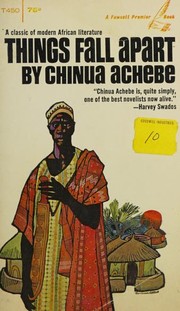 Chinua Achebe · 1958Things Fall ApartLvl 4Medium pace
 Ngũgĩ wa Thiong'o · 1967A Grain of WheatLvl 6Slow burn