
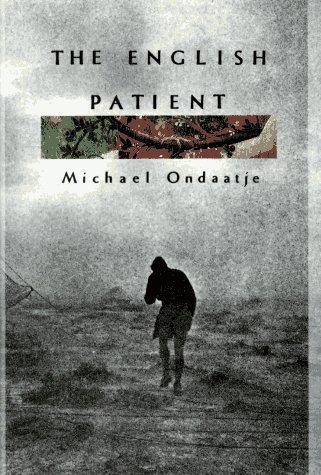
The English Patient
Michael Ondaatje · b. 1943 · Canada / Sri Lanka
Why it matters
Four damaged people gather in a ruined Italian villa at the war's end: a burned pilot, a nurse, a thief, a sapper. Ondaatje writes love and empire as mosaic, the Booker winner that reads like poetry.
At a glance
Lyrical, elliptical prose and fractured chronology across four intertwined lives.
Deep dive
Why a burned cartographer who spent the prewar years mapping a supposedly borderless desert, and a Sikh sapper trained to defuse bombs for an empire that will never fully claim him, are really arguing the same case about what nationality costs the people who take it seriously.
Written for readers who have finished the book. No plot recap, and nothing here is safe to read first.
Themes & symbolism
The 'English patient' is revealed early as an invented identity: Count László de Almásy, a Hungarian desert cartographer burned past recognition and mistaken by the war machine for one of its own simply because he speaks the right accent in delirium. Ondaatje uses that misidentification as the novel's whole argument about nationality — Almásy spent the prewar years mapping the Sahara as a supposedly neutral, borderless space, only to watch the desert get carved up by the same nations now killing each other over Europe, and his affair with Katharine Clifton, married to a fellow expedition member, entangles with his eventual, near-treasonous choice to aid German intelligence in exchange for a plane to retrieve her body.
The ruined Italian villa, gutted and half-mined, functions as a fifth character: a piece of Europe so damaged it has stopped being anyone's territory, which is exactly why Hana, Caravaggio, and Kip can improvise a family inside it that no nationality or army claims. Ondaatje's prose keeps returning to maps, books, and the marginalia Almásy leaves in his copy of Herodotus — a commonplace book stuffed with fragments of other lives — as the novel's real form: history isn't a continuous narrative here but a scarred, annotated, salvaged text, assembled the way Hana and Caravaggio piece together who Almásy actually is.
Kip and the Limits of Empire's Welcome
Kip, a Sikh sapper trained by the British to defuse bombs, spends the novel as the character most thoroughly assimilated into the Allied cause and the most exposed by it — his job is to walk toward the thing everyone else runs from, on behalf of an empire that will never fully claim him as its own. His disillusionment isn't sudden so much as finally given proof large enough to see: hearing of Hiroshima and Nagasaki, he understands atomic weapons as something the West would never have used on a European population, and the realization severs him from the villa's makeshift family and the war effort in the same motion.
The Book Ondaatje Steals From
Almásy's battered copy of Herodotus's Histories, glued and annotated with maps, photographs, and other texts pasted into its pages, is less a prop than a model for Ondaatje's own method — a novel built from fragments, shifting narrators, and interrupted chronology rather than a single continuous account. Herodotus, the 'father of history' and also a compulsive collector of rumor and myth, gives Almásy — and the novel — permission to treat memory and desert and love affair as equally valid kinds of historical record.
The last seal: what actually happens, and why it lands the way it does.
The ending, explained
With the war ending and his body entirely consumed by his burns, Almásy asks Hana for enough morphine to die, and she administers the fatal dose herself, an act of mercy that closes out the novel's long meditation on what people owe each other once nationality and rank stop mattering. Kip, having defused bombs throughout the novel on behalf of an empire that never fully accepted him, hears the news of Hiroshima and Nagasaki and leaves the villa abruptly, unable to square the atrocity with the Western civilization he'd risked his life to serve. The ending scatters its makeshift family — Hana, Caravaggio, Kip — back into separate, uncertain postwar lives, refusing a single reunited image; only the fact of the desert, and Almásy's erased, borderless idea of it, persists.
Where to go next
 Michael Ondaatje · 1987In the Skin of a LionLvl 7Slow burn
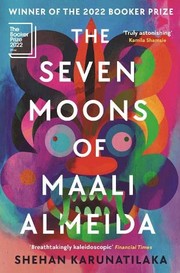 Shehan Karunatilaka · 2022The Seven Moons of Maali AlmeidaLvl 6Fast paced
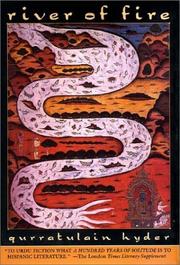 Qurratulain Hyder · 1959River of FireLvl 8Slow burn
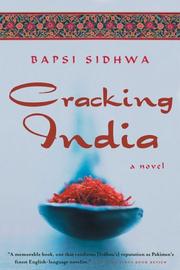 Bapsi Sidhwa · 1991Cracking IndiaLvl 3Medium pace
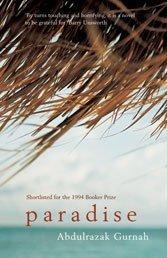 Abdulrazak Gurnah · 1994ParadiseLvl 5Medium pace
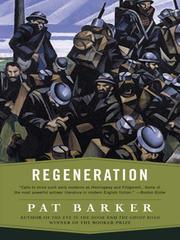 Pat Barker · 1991RegenerationLvl 4Medium pace