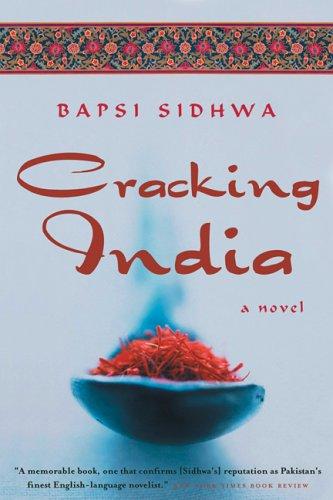
Cracking India
Bapsi Sidhwa · 1938–2024 · Pakistan / United States
Why it matters
A young disabled Parsi girl in Lahore watches Partition's violence split apart the servants and neighbors she loves. One of the most vivid child's-eye accounts of 1947's sectarian catastrophe.
At a glance
A clear child's-eye narrator makes brutal events legible, if emotionally intense.
Deep dive
A polio-stricken Parsi child watches her beloved Ayah's circle of suitors turn on each other as Lahore comes apart, and how much a seven-year-old's flattened, literal language ends up telling the reader anyway.
Written for readers who have finished the book. No plot recap, and nothing here is safe to read first.
Themes & symbolism
Lenny's polio keeps her physically apart from other children and gives Sidhwa a narrator who watches rather than participates, and her family's Parsi identity, a small community with no side to take in a Hindu-Muslim-Sikh conflict, positions her as an observer of Partition rather than a combatant in it, close enough to the violence to register its texture but structurally exempt from choosing an allegiance. That neutrality is also the novel's method: Lenny reports what adults around her say and do without the analytical distance to fully process it, so her literalized understanding of India cracking like a china plate, a child's honest misreading of a map splitting into two countries, becomes the novel's central image precisely because it's simpler and more accurate than any adult's political explanation.
Ayah, Lenny's beloved Hindu caregiver, is courted throughout the novel's early chapters by a circle of admirers from every community, the Muslim ice-candy-man, a Pathan, a Hindu masseur, whose friendly rivalry curdles, once the violence reaches Lahore, into exactly the communal fracture the country is undergoing at the same moment. Sidhwa uses Ayah's body, desired, then targeted, then fought over, as the novel's most direct evidence that Partition's violence against women wasn't incidental to the political rupture but one of its primary instruments, and Lenny's inability to protect the woman she loves most becomes the child narrator's central trauma.
A Parsi Girl Watching Everyone Else's War
Sidhwa, herself Parsi, uses Lenny's community's historical position, prosperous, religiously distinct, and deliberately neutral in the surrounding violence, to generate a narrator who can move between communities without belonging fully to any side's version of events, and that vantage is what lets the novel show ordinary friendliness between neighbors curdling into atrocity without pretending any single community held a monopoly on either kindness or cruelty.
Ranna's Chapter as the Novel's Change of Register
Partway through, Sidhwa breaks from Lenny's household entirely to follow Ranna, a Muslim village boy who survives a massacre Lenny only hears about secondhand, and the chapter's documentary, unsparing violence stands in sharp contrast to the domestic comedy and gossip filling Lenny's own sections, a deliberate reminder that the child narrator's charm and naivety are themselves a kind of shelter, one Ranna's story makes sure the reader can't mistake for the whole picture.
The last seal: what actually happens, and why it lands the way it does.
The ending, explained
Ice-candy-man, revealed to have taken part in the mob that seizes Ayah during a riot, ultimately claims her for himself, installing her as a dancing girl in Lahore's red-light district rather than the disappearance Lenny initially fears; his professed love for Ayah never separates itself from possession, the same man having helped hand her over to danger in the first place. Godmother, an older relative with an authority even Ice-candy-man defers to, eventually intervenes and secures Ayah's return to her family in India, but the reunion is bittersweet rather than triumphant, since nothing restores what she survived or the community's friendliness that curdled around her. Lenny closes the novel older and more aware, having learned that the adults she trusted, Ice-candy-man especially, contained a capacity for cruelty her child's-eye narration couldn't have anticipated when the story began.