
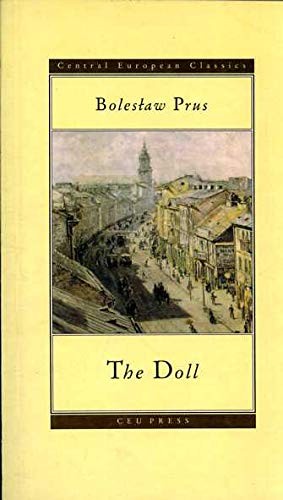
The Doll
Bolesław Prus · 1847–1912 · Poland
Originally Lalka (Polish)
Why it matters
A self-made merchant's ruinous obsession with an aristocratic woman unfolds against a Warsaw of shifting classes and stalled national ambition. Routinely named the greatest Polish novel.
At a glance
A long, multi-plot social panorama told in accessible realist prose throughout.
Deep dive
A self-made merchant's ruinous fixation on an aristocrat who despises his trade becomes a portrait of an entire stalled society — one that can't decide whether ability or bloodline should run it.
Written for readers who have finished the book. No plot recap, and nothing here is safe to read first.
Themes & symbolism
Wokulski's infatuation with Izabela is less a love story than a diagnostic instrument: every humiliating gesture he makes to win acceptance from her class exposes a Warsaw where the aristocracy has lost its economic function but kept every ounce of its contempt for "trade," and where a rising, competent bourgeoisie can't convert real ability into social standing no matter how much money it amasses. Prus splits the narrative between Wokulski's story and his old clerk Rzecki's diary, and the gap between them is the novel's real subject: Rzecki's Napoleon-worship and sentimental faith in great men versus Wokulski's brutal, ongoing lesson that devotion and competence buy you nothing in a society this frozen.
Wokulski's one uncorrupted passion, funding a friend's half-mad research into a metal lighter than air, stands opposite his self-destructive romantic pursuit as practical modern ambition against useless nostalgia — and the fact that the novel can't let this ambition simply succeed, any more than it can let Wokulski win Izabela, is Prus's verdict on a partitioned Poland that has the raw material for a coherent national future and no framework to build one. Izabela herself is barely a person in the text so much as a mirror for status obsession: shallow, exquisitely trained in performing value she doesn't possess, and entirely willing to spend Wokulski's devotion without ever risking her own.
Prus, a positivist committed to science and gradual social reform over romantic nationalism, builds the novel's whole panoramic cast, Jewish shopkeepers, aging aristocrats, ambitious clerks, revolutionary students, as a working cross-section of a nation searching for a modern identity it can't yet articulate, which is why the book is still routinely assigned in Polish schools as much for its social history as for its love story. Polish readers and critics have repeatedly voted it the country's greatest novel in surveys spanning generations, a consensus remarkably durable given how thoroughly the book indicts the very social order many of its most devoted readers descended from. Prus originally serialized the novel in a Warsaw newspaper, a format that shaped its sprawling, multi-plotted structure and its willingness to let minor characters, streets, and shopfronts accumulate detail well beyond what a tighter, single-volume conception would have allowed.
The last seal: what actually happens, and why it lands the way it does.
The ending, explained
After Izabela's rejection exposes just how little Wokulski's devotion was ever valued or reciprocated, a broken man disappears from Warsaw without explanation. Prus deliberately refuses to confirm what happened to him: found notes, secondhand speculation, and the thematic weight given earlier to his friend's scientific experiments and a nearby ruin all point toward death, quite possibly self-inflicted, in an explosion connected to that one unspoiled passion — but the text will not say so outright. That refusal is the point: a novel built as social diagnosis declines, at its close, to grant its individual tragedy the false comfort of full resolution, leaving Wokulski's fate exactly as unresolved as the national situation he was never able to fix.
Where to go next
 Bolesław Prus · 1895PharaohLvl 5Medium pace
 Henryk Sienkiewicz · 1896Quo VadisLvl 3Fast paced
 Bankim Chandra Chattopadhyay · 1882AnandamathLvl 5Medium pace
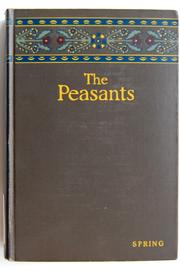 Władysław Reymont · 1904The PeasantsLvl 5Slow burn
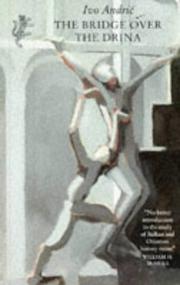 Ivo Andrić · 1945The Bridge on the DrinaLvl 4Slow burn
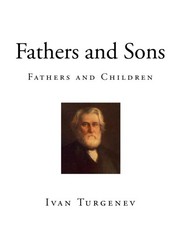 Ivan Turgenev · 1862Fathers and SonsLvl 3Medium pace