
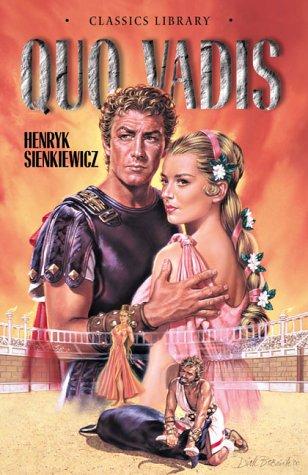
Quo Vadis
Henryk Sienkiewicz · 1846–1916 · Poland
Originally Quo Vadis (Polish)
Why it matters
A Roman patrician falls for a Christian woman amid Nero's persecutions, spectacle and melodrama building toward the burning of Rome. A global bestseller that helped win its author the Nobel Prize.
At a glance
A conventional, plot-forward historical romance built for a broad popular readership.
Deep dive
A Roman patrician's predatory pursuit of a Christian hostage curdles into obsession, then something closer to conversion, as Nero's Rome builds toward spectacle, fire, and a persecution that tests exactly what his new faith is worth.
Written for readers who have finished the book. No plot recap, and nothing here is safe to read first.
Themes & symbolism
Marcus Vinicius begins as a textbook Roman predator, arranging an abduction attempt on Lygia with the casual entitlement of a man who's never been told no, and the novel's real interest is in tracking how contact with the Christian community — Lygia's own steadfastness, the apostle Peter's teaching — reroutes that hunger into something like genuine transformation rather than merely thwarting it. Sienkiewicz means the personal conversion to stand for the civilizational one: pagan Rome's eventual absorption into Christian Europe, dramatized in miniature through one soldier's slow, reluctant change of heart. Nero anchors the other pole, drawn as a vain, cowardly aesthete-tyrant who burns Rome partly for stagecraft and partly for real estate, then scapegoats Christians for a disaster of his own making — a portrait built to make the old imperial order look morally bankrupt exactly as the new ethic rising against it starts to look inevitable.
The title comes from a specific legend the novel dramatizes directly: Peter, fleeing Rome to save himself from persecution, meets a vision of Christ walking toward the city and asks 'Quo vadis, Domine?' — 'Where are you going, Lord?' — and receives the answer that Christ is going to Rome to be crucified again, since Peter is abandoning his flock. Shamed, Peter turns back to face his own martyrdom, traditionally crucified upside down at his own request as unworthy of dying the same way as Christ. It's the novel's clearest statement of its own theme: faith measured not by feeling but by the willingness to turn around and walk toward the thing you were fleeing.
The Arena as Spectacle and Argument
The set-piece of Lygia bound to a wild aurochs for public execution, saved when the giant slave Ursus wrestles and kills the beast bare-handed in front of the crowd, is pure popular melodrama, but Sienkiewicz uses it as an argument too: the same crowd that came to watch Christians die finds its sympathy flipped by one act of impossible, plainly moral strength, a hinge the novel treats as historically real — public opinion, not imperial decree, is what eventually turns against the persecutions. Sienkiewicz researched Roman daily life and Neronian court politics with genuine antiquarian care, and that documentary density is part of why the novel became a global bestseller rather than merely a respected one: readers got both a page-turning romance and a convincingly reconstructed lost world, a combination that helped carry Sienkiewicz to the 1905 Nobel Prize in Literature.
The last seal: what actually happens, and why it lands the way it does.
The ending, explained
Marcus and Lygia survive the arena and the worst of the persecution through Ursus's heroics and what the novel frames as outright providence, and leave Rome together, married, safely beyond Nero's reach. The closing chapters pivot to Nero himself, whose escalating tyranny alienates his own guard and the Senate until the historical revolt against him finally forces his real, historically documented suicide. Sienkiewicz closes on an explicitly providential note: Nero's Rome, however spectacular its power, was already doomed, and the quietly growing Christian community Marcus and Lygia now belong to is the future no amount of arena spectacle could burn out.
Where to go next
 Henryk Sienkiewicz · 1884With Fire and SwordLvl 6Fast paced
 Bolesław Prus · 1890The DollLvl 5Medium pace
 Władysław Reymont · 1904The PeasantsLvl 5Slow burn
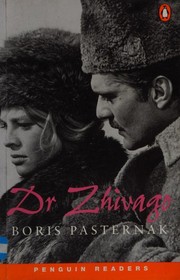 Boris Pasternak · 1957Doctor ZhivagoLvl 6Slow burn
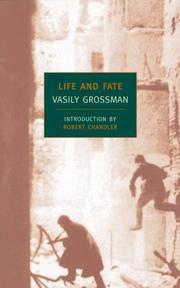 Vasily Grossman · 1980Life and FateLvl 7Medium pace
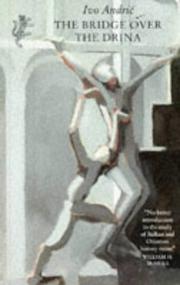 Ivo Andrić · 1945The Bridge on the DrinaLvl 4Slow burn