
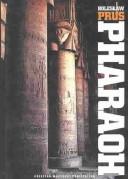
Pharaoh
Bolesław Prus · 1847–1912 · Poland
Originally Pharaoh (Polish)
Why it matters
A young idealist pharaoh battles Egypt's entrenched priesthood for control of the treasury and the throne. Prus's meticulously researched historical epic doubles as a cold-eyed study of how institutional power actually works.
At a glance
A long historical epic, but told through clear, linear court intrigue.
Deep dive
A young heir to the throne of ancient Egypt discovers that the priesthood, not the crown, actually runs the country, and sets out to break their hold on power in a novel far more interested in how states actually govern than in anything supernatural about the setting.
Written for readers who have finished the book. No plot recap, and nothing here is safe to read first.
Themes & symbolism
Prince Ramses is named heir at twenty-two, brash and confident that he will restore Egypt to its old glory the moment he takes the throne, and Prus spends the novel systematically dismantling that confidence by showing him exactly how power in his kingdom actually works: not through royal decree but through the temple bureaucracy's control of the treasury, the calendar, astronomical knowledge, and the loyalty of the priesthood's own network across the country, all commanded by the high priest and war minister Herhor. Ramses assumes that being pharaoh means being obeyed; Herhor understands that whoever controls information and money controls the pharaoh.
Prus, writing under Russian occupation of Poland with no functioning Polish state of his own, built the novel less as a historical romance than as a case study in statecraft, and it shows: Herhor's faction manipulates prophecy, currency, and public opinion with a cynicism that reads as strikingly modern for a book published in 1895, while Ramses's genuine reform instincts, his sympathy for overtaxed peasants and his frustration with priestly corruption, are consistently outmaneuvered not by any single trick but by an entrenched institution simply outlasting a single ruler's reign. Czesław Miłosz would later single the novel out as a nearly unique nineteenth-century study of how state power actually functions, stripped of any romantic faith that good intentions or a rightful crown are sufficient to wield it.
A Historical Novel Without a Hero's Victory
Prus researched Egyptology exhaustively for the novel, aiming for a historically grounded portrait of the late Twentieth Dynasty rather than the exoticized Egypt popular in contemporary fiction, and the result reads closer to a political thriller than an adventure story: extended sequences track budgets, temple accounting, and the mechanics of tax collection with the same attention other historical novels of the period reserve for battles. Sara, a Jewish woman who becomes Ramses's lover and bears him a son, and Kama, a Phoenician priestess used by Herhor's faction to manipulate the prince, both become casualties of the succession struggle in ways that keep the court intrigue grounded in personal cost rather than abstract strategy.
The last seal: what actually happens, and why it lands the way it does.
The ending, explained
Ramses becomes pharaoh and moves directly against the priesthood, seizing temple treasure to fund the state and pay off Herhor's rivals, but the assassination that follows arrives not from open war but from the same quiet manipulation Herhor has used throughout: a hired agent kills Ramses, and Herhor steps into the vacancy himself, marrying Ramses's own mother to secure his claim and founding a new priestly dynasty. Prus refuses his idealistic young reformer any posthumous vindication; Herhor, once installed, actually enacts a version of the peace and prosperity Ramses wanted, proving the novel's bleakest point twice over, that competence and cynicism can produce better governance than sincerity and impatience, and that the men who understand a system's real levers will always outlast the ones who only understand its throne.
Where to go next
 Bolesław Prus · 1890The DollLvl 5Medium pace
 Henryk Sienkiewicz · 1896Quo VadisLvl 3Fast paced
 Bankim Chandra Chattopadhyay · 1882AnandamathLvl 5Medium pace
 Władysław Reymont · 1904The PeasantsLvl 5Slow burn
 Ivo Andrić · 1945The Bridge on the DrinaLvl 4Slow burn
 Ivan Turgenev · 1862Fathers and SonsLvl 3Medium pace