
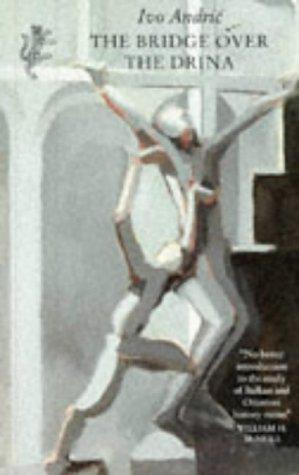
The Bridge on the Drina
Ivo Andrić · 1892–1975 · Yugoslavia / Bosnia
Originally Na Drini Ćuprija (Serbo-Croatian) · translated by Lovett F. Edwards
Why it matters
Four centuries of Bosnian life (Muslim, Christian, Jewish) pass over a single Ottoman bridge at Višegrad. Andrić's Nobel-winning chronicle of the Balkans, the bridge outlasting every empire and atrocity it sees.
At a glance
Episodic, chronicle-style structure across centuries, but each episode reads plainly.
Deep dive
A single stone bridge, not any one person, is the real protagonist of this four-century chronicle — and what it quietly argues about how long coexistence lasts once the empire holding it together changes hands.
Written for readers who have finished the book. No plot recap, and nothing here is safe to read first.
Themes & symbolism
Andrić builds the novel around the Mehmed Paša Sokolović Bridge at Višegrad, commissioned by a Bosnian boy taken in the devşirme, the Ottoman practice of conscripting Christian children into imperial service, who rose to become Grand Vizier and built the bridge, in part, in memory of the very crossing where he was torn from his family. Across the centuries the bridge presides over, its kapia — the wide stone terrace at its center — becomes the fixed point where Muslim Bosniaks, Orthodox Serbs, Catholic Croats, and Sephardic Jews meet to court, gossip, mourn, and celebrate, a genuine and durable daily coexistence that the novel never sentimentalizes.
That coexistence is repeatedly shown to be real but thin: Ottoman-era impalements and executions, later Habsburg modernization, and the slow arrival of nationalist ideology all test the bridge's community past what its habits of shared life can absorb. Writing during the Second World War with the Balkans' own unfolding catastrophe in view, Andrić uses the long historical lens to argue that coexistence here has always depended on the specific political weather of whichever empire currently rules — a peace held in trust, never guaranteed, and vulnerable to being shattered by forces its own people didn't choose.
Folklore and the Bridge's Construction
Local legend, which Andrić folds into the historical record as though it were simply more history, holds that a mysterious spirit haunted the construction site and had to be appeased with tribute, giving rise to stories of children walled into the bridge's foundations. The legend functions less as supernatural color than as the town's own way of registering what the bridge's construction actually cost — a monument to connection built, in the popular imagination, on a buried sacrifice. Andrić, himself a Bosnian-born diplomat fluent in the region's layered history, wrote the novel during the Nazi occupation of Belgrade, largely from memory and research rather than access to a library, a constraint that pushed the chronicle toward the compressed, legend-inflected episodes that give the book its particular texture. That same year he completed two other major chronicles, Bosnian Chronicle and The Woman from Sarajevo, and the trio together secured the 1961 Nobel Prize's recognition of what the committee called his 'epic force.'
The last seal: what actually happens, and why it lands the way it does.
The ending, explained
The chronicle carries the town up to the outbreak of the First World War, when Austro-Hungarian engineers begin partially demolishing the bridge for military purposes as the front approaches — a literalization of a nationalist violence about to consume the whole region on a scale no earlier tension in the book, however brutal, had matched. The bridge that survived four centuries of empires, uprisings, and religious friction is undone not by any of its own town's quarrels but by a modern war arriving from outside, Andrić's final, quiet suggestion that what looked like the region's oldest and steadiest continuity was never separate from the larger history threatening to overwhelm it.
Where to go next
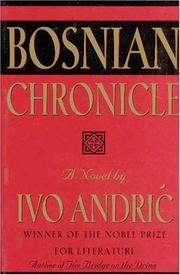 Ivo Andrić · 1945Bosnian ChronicleLvl 4Slow burn
 Meša Selimović · 1966Death and the DervishLvl 6Slow burn
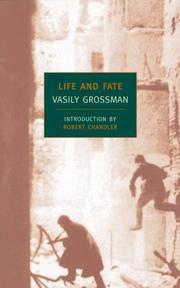 Vasily Grossman · 1980Life and FateLvl 7Medium pace
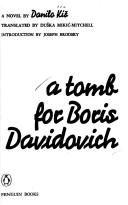 Danilo Kiš · 1976A Tomb for Boris DavidovichLvl 7Medium pace
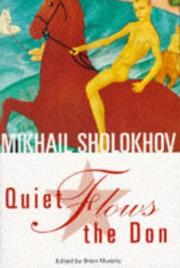 Mikhail Sholokhov · 1928And Quiet Flows the DonLvl 5Medium pace
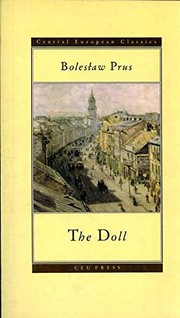 Bolesław Prus · 1890The DollLvl 5Medium pace