
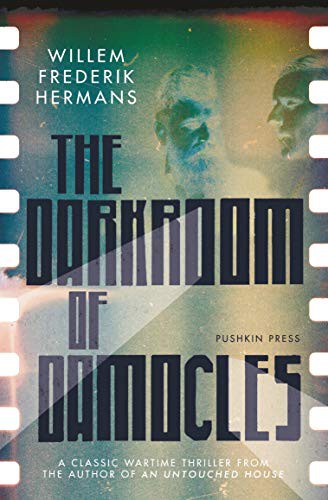
The Darkroom of Damocles
W. F. Hermans · 1921–1995 · Netherlands
Originally De donkere kamer van Damokles (Dutch)
Why it matters
A Dutch shopkeeper carries out a shadowy wartime resistance mission whose reality no one can later confirm. A paranoid, unresolved study of occupation, memory, and unreliable heroism.
At a glance
Clear prose but a deliberately unresolvable, paranoid plot structure.
Deep dive
Whether Henri Osewoudt's whole wartime mission was ever real, and why Hermans refuses to let the reader settle the question even after the last page.
Written for readers who have finished the book. No plot recap, and nothing here is safe to read first.
Themes & symbolism
Osewoudt, a scrawny, beardless tobacconist mistaken all his life for younger and weaker than he is, gets recruited into the resistance by a man named Dorbeck who looks, disconcertingly, like his own photographic negative: taller, darker, everything Osewoudt isn't. Hermans, trained as a physical geographer, builds the whole plot like a chaotic natural system rather than a moral one: orders arrive without explanation, missions succeed or fail for reasons Osewoudt never fully grasps, and the closer the novel gets to the war's end, the less anyone, including Osewoudt, can verify which side his actions actually served.
Photography becomes the novel's central, treacherous figure for evidence itself: cameras and darkrooms recur throughout as the one technology that should be able to settle what actually happened, and every time a photograph matters most, it fails, is switched, or develops as something other than what was shot. A world that trusts documentary proof to adjudicate guilt or innocence, the novel argues, has picked exactly the wrong tool for a war built on doubles, cover stories, and men who resemble their own opposites. Osewoudt's own appearance does similar work at street level: too slight and boyish to look like anyone's idea of a resistance operative, he survives early missions precisely because he fails to resemble the part he is actually playing, until the same mismatch, read the other way by his captors, is what condemns him.
A Geographer's Eye for Systems With No Author
Hermans spent two decades teaching physical geography at Groningen, studying landscapes shaped by forces indifferent to human intention, and that professional habit of mind is legible in how coldly the novel treats its own central injustice: nobody is orchestrating Osewoudt's downfall, no villain designed his fate, it simply accumulates the way erosion does, one unlucky coincidence compounding the last until the pattern looks, in hindsight, like a plot that nobody actually plotted. Hermans made that same indifferent-systems logic the whole basis of his postwar reputation, feuding for decades in essays and interviews with a Dutch literary culture he considered sentimentally attached to comforting stories in which suffering always turns out to mean something.
The last seal: what actually happens, and why it lands the way it does.
The ending, explained
Cornered at the war's end and accused of treason, Osewoudt's only possible defense collapses when the one photograph that could prove Dorbeck existed, and that his own missions had been legitimate, develops as an unusable dud. Unable to produce the man who gave him his orders or any evidence he was more than a delusion, Osewoudt panics, tries to flee custody, and is shot dead as an escaping traitor. Hermans never confirms Dorbeck's reality one way or the other, and the ambiguity is the whole point: a country that spent the war sorting neighbors into resistance heroes and collaborators discovers, in Osewoudt, a case its own evidentiary standards simply cannot resolve.
Where to go next
 W. F. Hermans · 1966Beyond SleepLvl 5Medium pace
 Gerard Reve · 1947The EveningsLvl 4Slow burn
 Cees Nooteboom · 1980RitualsLvl 6Slow burn
 Harry Mulisch · 1992The Discovery of HeavenLvl 6Medium pace
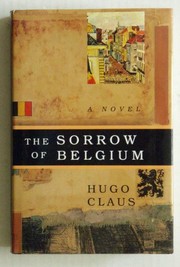 Hugo Claus · 1983The Sorrow of BelgiumLvl 6Medium pace
 Cesare Pavese · 1950The Moon and the BonfiresLvl 6Slow burn