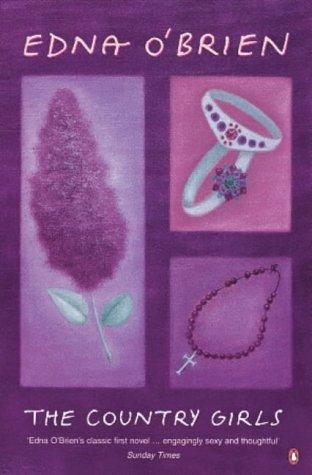
The Country Girls
Edna O'Brien · 1930–2024 · Ireland
Why it matters
Two convent-school friends chase romance and freedom into Dublin, only to find disillusion waiting. Banned and burned in Ireland on publication for its candor about female desire, it changed what Irish fiction could say.
At a glance
Direct, colloquial prose accessible even as it handles difficult material.
Deep dive
What Kate's slow-building infatuation with an older, married man is really standing in for, and why the freedom she and Baba engineer for themselves ends up shaped so exactly like the enclosure they were trying to escape.
Written for readers who have finished the book. No plot recap, and nothing here is safe to read first.
Themes & symbolism
Kate and Baba are drawn as deliberate foils: Kate interior, romantic, hungry for a love story to organize her life around; Baba brash, calculating, treating scandal as a tool rather than a risk. It's Baba who engineers their expulsion from the convent — a lewd note planted for the nuns to find — and the moment reads as gleeful sabotage of institutional control, except that it works only because both girls still speak the institution's own language of shame and disgrace; they don't escape the convent's moral logic so much as weaponize it against itself. Kate's mother drowning early in the book leaves a hole that never gets acknowledged as such, and her wildly disproportionate devotion to Mr. Gentleman — an older, married Frenchman who barely registers as a full person on the page, more a projection screen than a character — reads as that hole finding a shape: everything Ireland withholds from her (sophistication, secrecy, a life chosen rather than handed down) gets loaded onto a man who has done almost nothing to earn it.
O'Brien's prose is plain, close, and unashamedly interested in what a young woman actually wants — physically, romantically, materially — which is precisely what got the book banned and publicly burned in its own country on publication. The scandal wasn't the plot's mild transgressions but the frankness of the telling: a female narrator allowed to want things and say so, without the novel supplying the customary punishment or moral corrective. Dublin, when the girls finally reach it, offers exactly as much freedom as the convent did rules — which is to say, freedom that still runs entirely on men's terms, dressed up as glamour.
Banned in Ireland
The Censorship of Publications Board banned the novel within months of its release, and copies were reportedly burned in O'Brien's home parish, with her own mother said to have blacked out offending passages in a copy rather than destroy it outright. The reaction wasn't really about explicit content, since by later standards the book is restrained — it was about tone: a young Irishwoman's desire narrated without embarrassment or comeuppance was itself the transgression, and the controversy helped mark the novel as a hinge point for what Irish fiction was subsequently permitted to say about women's inner lives.