

The Color Purple
Alice Walker · b. 1944 · United States
Why it matters
A Black woman's survival of abuse and poverty in the rural South unfolds through her own letters to God and to her lost sister. The first novel by a Black woman to win the Pulitzer Prize for Fiction.
At a glance
Phonetic vernacular narration takes adjustment though the syntax stays simple.
Deep dive
How a woman who addresses her letters to God learns, over decades of correspondence, whom she's actually been talking to.
Written for readers who have finished the book. No plot recap, and nothing here is safe to read first.
Themes & symbolism
Celie's letters open addressed to God because God is the only listener available to a fourteen-year-old raped by the man she believes is her father and forbidden, on his instruction, from telling 'nobody but God.' The novel's real plot is theological before it's romantic: once Shug Avery — blues singer, Albert's longtime lover, and the person who finally touches Celie with tenderness instead of use — talks her out of the 'old white man' God of her childhood and toward a God who is 'inside you and inside everybody else,' indifferent to gender and delighted by a field of purple flowers nobody stopped to notice, Celie's letters pivot from God to her long-lost sister Nettie. That shift in addressee is the novel's real conversion: Celie stops praying to be rescued and starts writing to be known, which is the precondition for everything that follows — her sewing business, her leaving Albert, her voice.
Nettie's own letters, withheld from Celie by Albert for nearly thirty years and discovered only through Shug's intervention, run a missionary subplot in colonial Africa alongside Celie's Georgia narrative, and the parallel is deliberate: the Olinka village's patriarchal customs and the arrival of European rubber planters echo, at a diasporic remove, the same architecture of ownership and silencing that shaped Celie's childhood. Sewing, meanwhile, is the novel's counter-symbol to all that theft — Celie's pants, sewn first for herself and then for a paying clientele, are literally garments that let a woman take up space and move on her own terms, a craft passed to her by women rather than imposed by any man, and the closest thing the novel has to a stable, self-authored identity.
The Letters as Structure
The epistolary form does more than provide intimacy — the fact that half the correspondence goes unsent or unread for decades, Nettie's letters hidden in Albert's trunk, Celie's own letters never mailed to a God who can't write back, makes the novel's form itself an argument about Black women's speech being systematically intercepted and delayed rather than absent. Walker doesn't restore the correspondence gently; Celie finds the stack of letters all at once, thirty years of her sister's life withheld in a single act of Albert's petty cruelty, and has to grieve and celebrate in the same afternoon.
Sofia and the Limits of Defiance
Sofia, who fights back against every man who tries to control her and is nearly destroyed for it — beaten, jailed, and forced into years of servitude to the mayor's family after refusing to be his maid — is the novel's cautionary counter-melody to Celie's quieter transformation: physical defiance meets the full weight of white supremacist violence in a way Celie's slower, interior rebellion doesn't have to. The two women's arcs never cancel each other out; Walker keeps both models of survival, Sofia's open resistance and Celie's patient self-authorship, visibly necessary and neither one sufficient alone.
The last seal: what actually happens, and why it lands the way it does.
The ending, explained
Celie, now financially independent through her pants business and living without Albert, is reunited on the Fourth of July with Nettie, who returns from Africa with Samuel and the two children Celie believed she'd lost forever — Olivia and Adam, who turn out to be Celie's own biological children, fathered by her stepfather and given away in infancy, raised abroad without either sister knowing the whole truth until now. Albert, humbled by years alone and by his own belated decency, has become an unlikely friend to Celie rather than an enemy, sewing beside her instead of over her. The reunion lands as pointedly ironic on Independence Day, freedom arriving decades late and privately, inside a family, rather than through any institution — and the letters, addressed by the final page to 'Everything' rather than any single God, close on Celie's sense that she has never felt younger or more herself.
Where to go next
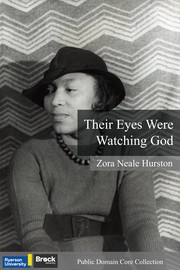 Zora Neale Hurston · 1937Their Eyes Were Watching GodLvl 5Medium pace
 Sylvia Plath · 1963The Bell JarLvl 4Medium pace
 Carmen Laforet · 1945NadaLvl 5Medium pace
 Edna O'Brien · 1960The Country GirlsLvl 3Medium pace
 Tsitsi Dangarembga · 1988Nervous ConditionsLvl 4Medium pace
 Steven Millhauser · 1996Martin Dressler: The Tale of an American DreamerLvl 5Medium pace