
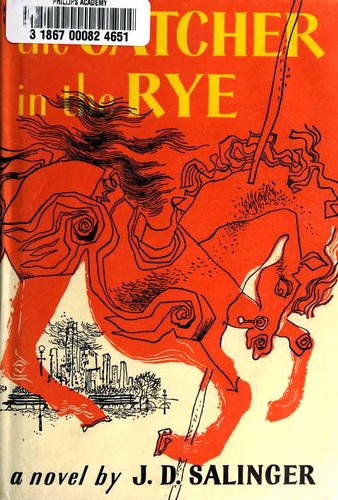
The Catcher in the Rye
J. D. Salinger · 1919–2010 · United States
Why it matters
Three lost days in New York with Holden Caulfield, hating phonies and mourning lost innocence. Salinger's voice of adolescent alienation has spoken for disaffected youth for seventy years.
At a glance
A colloquial, first-person voice reads quickly despite its psychological undercurrents.
Deep dive
What Holden's detour to the frozen dioramas at the Museum of Natural History reveals about what he actually wants from adolescence — and why he can't bring himself to go inside.
Written for readers who have finished the book. No plot recap, and nothing here is safe to read first.
Themes & symbolism
"Phony" is Holden's diagnosis for everyone else and his alibi for himself: calling Ossenburger a fraud, Sally Hayes a poser, and Old Spencer a hypocrite lets him avoid naming the actual wound, which is Allie, dead of leukemia at eleven, and D.B. sold out to Hollywood, and Holden himself flunking out of school after school on purpose because stopping still would mean feeling it. The red hunting hat he buys on impulse and wears backward is the costume for this: a declaration of individuality that's really camouflage, something to hide under rather than express himself through, which is why he only wears it alone or under cover of not caring who sees.
The Museum of Natural History dioramas obsess him because they're the one thing in New York that doesn't change — the Eskimo is always fishing, the deer is always drinking at the same spring, no matter how many times Holden himself returns different from the last visit. That's the logic behind the catcher-in-the-rye fantasy itself, his garbled misremembering of the Burns poem: he doesn't want to save children from a literal cliff, he wants to freeze them exactly where they are, the way the dioramas are frozen, before whatever adulthood is — which he's decided means phoniness, sex, compromise, dying — gets to them. It's why Phoebe matters more to him than any adult in the book: she's the last diorama he hasn't watched change yet.
The Voice
Salinger's real innovation isn't plot, it's syntax: the compulsive qualifiers ("if you want to know the truth," "it really is," "and all"), the habit of undercutting his own statements the second after making them, the way "that killed me" does duty as praise, horror, and grief depending on the sentence. It reads as spontaneous confession, but the constant hedging and backtracking is Holden narrating around something rather than through it — an unreliable narrator not because he's lying to us, exactly, but because he's still lying to himself, and the prose keeps catching him in the act. That voice — vernacular, digressive, allergic to its own sincerity — became the template for nearly every first-person adolescent narrator that followed it, from campus novels to YA, in a way that can obscure how odd and controlled a performance it actually is.
The last seal: what actually happens, and why it lands the way it does.
The ending, explained
Holden tells us, almost as an aside, that he's narrating all of this from some kind of rest home or sanatorium out west, addressing an unnamed listener — plainly a psychoanalyst — who wants to know if he's going to apply himself when he goes back to school in September. He won't say. The closest thing to resolution the book offers is the carousel scene: watching Phoebe ride around and around in the rain, reaching for the gold ring the way all the kids do, Holden is flooded with a happiness he can't fully explain and doesn't try to justify — he just lets her reach for it without stopping her, the one time in the novel he doesn't try to arrest a child's fall. The final page refuses tidy uplift: Holden says he's sorry he told so many people the story, and that the strange thing is he misses everybody he's mentioned, even Stradlater, even Ackley, even the elevator operator Maurice who roughed him up — proof that underneath the contempt was always a hunger for connection he never had the vocabulary to ask for directly.
Where to go next
 J. D. Salinger · 1961Franny and ZooeyLvl 4Medium pace
 Sherwood Anderson · 1919Winesburg, OhioLvl 3Medium pace
 Mark Twain · 1884Adventures of Huckleberry FinnLvl 5Fast paced
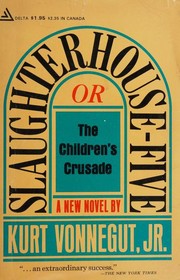 Kurt Vonnegut · 1969Slaughterhouse-FiveLvl 5Fast paced
 Carson McCullers · 1940The Heart Is a Lonely HunterLvl 5Medium pace
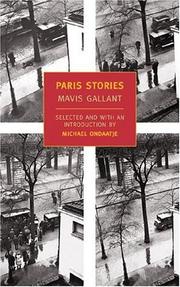 Mavis Gallant · 2002Paris StoriesLvl 5Medium pace