
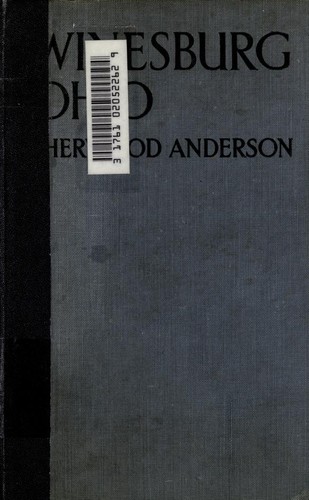
Winesburg, Ohio
Sherwood Anderson · 1876–1941 · USA
Why it matters
Interlinked stories of a small Ohio town's lonely, warped 'grotesques,' loosely tied together by a young reporter desperate to escape them. Its plain, elliptical sentences broke from Victorian ornament and taught Hemingway and Faulkner how loneliness actually sounds on the page.
At a glance
Plain, accessible prose, though its elliptical, unresolved endings reward close reading.
Deep dive
Why George Willard, who barely appears in half the book's stories, is still the reason Winesburg holds together as a single design, and what its 'grotesques' see in a boy still too young to understand what they're confessing.
Written for readers who have finished the book. No plot recap, and nothing here is safe to read first.
Themes & symbolism
Anderson opens with a discarded frame, 'The Book of the Grotesque,' in which an old writer proposes that the world once held countless truths, and that anyone who seizes a single one and lives by it alone becomes a grotesque. Every story that follows tests that idea on a different resident of Winesburg: Wing Biddlebaum in 'Hands,' whose expressive teacher's hands were misread as molestation and who has spent twenty years training himself to keep them still; Alice Hindman in 'Adventure,' who waits years for a lover who never returns and one rainy night runs naked into the street calling to a stranger; Kate Swift in 'The Teacher,' whose attempt to reach George honestly collapses into a scene neither of them can name afterward. Each character carries one truth jealously, and each eventually tries to hand it to George, a local reporter still too young to know what to do with any of it.
George's own mother, Elizabeth Willard, runs through the book as its most persistent grotesque, a woman who married the wrong man, buried an acting career she never had, and spends 'Mother' watching her son for some sign he might escape the fate she didn't. Anderson never lets the stories build into a plot; instead they accumulate around George as listener, a role the book assigns him before he has any say in it, until the town's failed intimacies, not any single romance or ambition, become the actual subject.
Hands as the Book's First Warning
Anderson places 'Hands' first for a reason: Wing Biddlebaum's history as a small-town teacher whose habit of touching his students' hair and shoulders gets willfully misread as abuse, driving him out of Pennsylvania and into decades of hiding his own gestures, sets a pattern every later grotesque varies without ever literally repeating it. Each one after Wing is defined by one distinguishing habit or restraint, and the narrator's refusal to explain Wing fully, leaving the reader to infer what was actually lost, becomes the method the whole collection uses on everyone else.
The last seal: what actually happens, and why it lands the way it does.
The ending, explained
Elizabeth Willard dies in 'Death' still unable to tell George about the eight hundred dollars she has hidden inside her bedroom wall, saved secretly so he could leave Winesburg before the town ground him down the way it ground her down. George never learns the money exists; what he inherits instead is the town itself, already narrated to him story by story. In the closing 'Departure,' he boards a morning train for the city with almost no money and no clear plan, and Anderson's last image is Winesburg shrinking out the window until it becomes, in the book's own phrase, only a background against which he will paint the dreams of his manhood. Nothing resolves for the people George leaves behind: Wing Biddlebaum is still alone, Kate Swift is still teaching, Alice Hindman is still waiting. The ending belongs only to George, and only because he is finally moving somewhere the town's earlier grotesques never managed to go.
Where to go next
 Mavis Gallant · 2002Paris StoriesLvl 5Medium pace
 J. D. Salinger · 1951The Catcher in the RyeLvl 3Fast paced
 Mark Twain · 1884Adventures of Huckleberry FinnLvl 5Fast paced
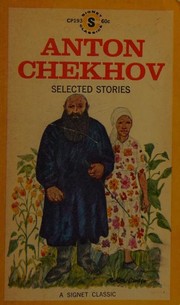 Anton Chekhov · 1899Selected StoriesLvl 4Medium pace
 Alice Munro · 2012Dear LifeLvl 5Medium pace
 Peter Taylor · 1986A Summons to MemphisLvl 5Slow burn