
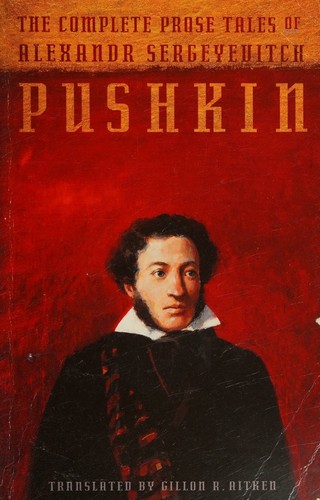
The Captain's Daughter
Alexander Pushkin · 1799–1837 · Russia
Originally Kapitanskaya Dochka (Russian)
Why it matters
A young officer's love and honor are tested during the Pugachev rebellion. Pushkin's crisp historical novel is a founding model of Russian prose: clear, swift, and humane where the later giants would be vast.
At a glance
Brisk, clean narration with a straightforward adventure plot and no formal experimentation.
Deep dive
A stranger's coat, given away in a snowstorm out of simple gratitude, becomes the one debt that matters more than an entire rebellion once the man who received it rises to lead it.
Written for readers who have finished the book. No plot recap, and nothing here is safe to read first.
Themes & symbolism
Pushkin sends young Pyotr Grinev to a remote frontier posting almost as a formality, the kind of unglamorous assignment fathers used to toughen soft sons, and the novel's opening chapters read like a light social comedy: a card-game debt, a duel over Masha Mironova, the captain's daughter, with a rival officer, the small society of a garrison so minor that its captain and his wife run it like a village household rather than a military post. Into that light comedy Pushkin drops a genuinely historical catastrophe, Yemelyan Pugachev's Cossack rebellion of the 1770s, which claimed to be led by a resurrected Tsar Peter III and briefly commanded a real, terrifying insurgent army across the Russian steppe.
What keeps Grinev alive when Pugachev's forces overrun the fortress and execute its garrison is not rank or luck but a debt incurred before the novel's plot even properly starts: months earlier, guided through a blizzard by a peasant stranger, Grinev gave the man his own hareskin coat as thanks, not knowing he was giving it to the future rebel leader. Pushkin builds the whole novel's moral center on that unlikely reciprocity, private honor operating on its own logic entirely apart from the vast historical violence surrounding it, and refuses to let either side of the conflict, Pugachev's brutal rebellion or the crown's own brutal suppression of it, claim a monopoly on decency.
A Founding Model for Russian Prose
Pushkin wrote The Captain's Daughter in a plain, fast, unornamented Russian that stands in deliberate contrast to the florid, French-inflected prose still fashionable among the Russian nobility of his own day, and generations of later novelists, Tolstoy prominent among them, pointed to Pushkin's clarity here as the real origin point of the Russian novel's mature style. The book pairs that plainness with real archival research into Pugachev's rebellion, Pushkin having traveled to the Ural region and interviewed survivors while researching a parallel historical account of the uprising, so that the novel's swift, unfussy narration sits on top of genuine, hard-won historical fact rather than romantic invention.
The last seal: what actually happens, and why it lands the way it does.
The ending, explained
Shvabrin's testimony implicates Grinev in treason for having briefly been Pugachev's captive rather than resisting to the death, and it's Masha, not Grinev, who becomes the story's real agent in its final stretch: she travels alone to Petersburg and, encountering a woman in the palace gardens whose identity she doesn't yet recognize, pleads Grinev's case directly and is later revealed to have been speaking to Catherine the Great herself. The empress pardons Grinev on the strength of Masha's testimony about his conduct, closing the novel on an act of mercy that deliberately mirrors Pugachev's earlier one: both come from absolute power exercised, unusually, out of personal recognition of one man's decency rather than out of any political calculation.
Where to go next
 Alexander Pushkin · 1833Eugene OneginLvl 6Fast paced
 Nikolai Gogol · 1842Dead SoulsLvl 5Medium pace
 Mikhail Lermontov · 1840A Hero of Our TimeLvl 4Medium pace
 Ivan Turgenev · 1862Fathers and SonsLvl 3Medium pace
 Leo Tolstoy · 1878Anna KareninaLvl 5Medium pace
 Vladimir Nabokov · 1955LolitaLvl 8Medium pace