
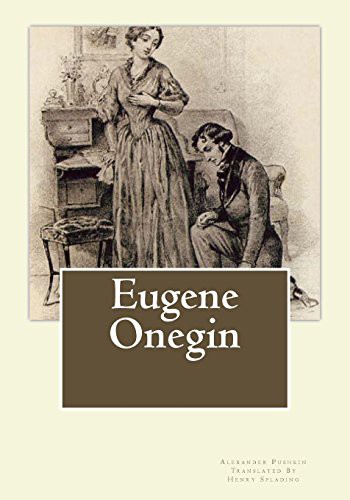
Eugene Onegin
Alexander Pushkin · 1799–1837 · Russia
Originally Yevgeny Onegin (Russian)
Why it matters
A novel in verse of miraculous lightness: the bored dandy, the bookish Tatyana, a duel, and a reversal that still stings. It fixed the Russian literary language and seeded the whole Golden Age; Russians know its stanzas by heart.
At a glance
Sonnet-stanza verse form and constant authorial digression complicate a simple plot.
Deep dive
Why the reversal Pushkin spends eight chapters building toward lands with no aftermath at all, and what a stanza pattern has to do with it.
Written for readers who have finished the book. No plot recap, and nothing here is safe to read first.
Themes & symbolism
Onegin is Russian literature's founding "superfluous man": bored, well-read, incapable of sustained feeling because feeling has always arrived to him secondhand, filtered through Byron and the fashionable ennui of his class. When Tatyana, a provincial girl raised on sentimental French novels, writes him an unguarded letter of love, he responds with a lecture on his own unsuitability that is really a performance of world-weariness he's rehearsed from books rather than lived. The duel with Lensky that follows is the novel's cruelest demonstration of the same emptiness: Onegin doesn't want to kill his young friend over a trivial flirtation, but social convention and his own vanity leave him no script for backing out, so a code he doesn't even believe in gets a man killed anyway.
The novel's cruelest symmetry arrives when it reverses the letter: years later Onegin meets Tatyana again, now a poised, married princess, and falls into exactly the desperate, humiliating love he once refused from her. She admits, plainly, that she still loves him — and refuses him anyway, choosing fidelity to a husband she does not love over a passion she does. Pushkin lets both characters be simultaneously sincere and formed by literary convention, which is the book's real subject: people who have read themselves into the shapes their culture expects, discovering too late which parts of the performance were real, and which parts they can no longer tell apart from themselves. Belinsky's later description of the poem as "an encyclopedia of Russian life" undersells how personal that argument stays even at its widest angle — a whole society's manners refracted through two people's mistimed feeling.
The Onegin Stanza
Pushkin invented a fixed form for the poem — fourteen lines of iambic tetrameter with the rhyme scheme aBaBccDDeFFeGG — and sustains it for nearly four hundred stanzas without the strain ever showing. The pattern's alternation of tight couplets and looser cross-rhymes gives the poem a conversational, ironic lightness even at its most devastating moments, which is exactly why it has defeated generations of translators (Nabokov eventually gave up on rhyme entirely and produced a scholarly prose crib instead, arguing the music was simply untranslatable).
A Narrator Who Won't Stay Out of the Way
Pushkin's narrator constantly interrupts the story to gossip, digress, and address Onegin as "my friend," refusing the illusion of an invisible teller. That intrusive voice is doing thematic work, not just charming the reader: a novel about characters who perform borrowed roles is narrated by a voice performing its own role as garrulous, unreliable host, so the poem's form keeps admitting what its characters can't — that all of this is, to some degree, theater.
The last seal: what actually happens, and why it lands the way it does.
The ending, explained
Onegin, now in love with Tatyana himself, finds her alone and confesses everything. She tells him she still loves him but will not betray her husband, then leaves him standing in the room. Pushkin does not follow Onegin out, does not show what he does next, and does not resolve the story any further — the narrator simply steps forward to address the reader directly and close the book on the spot. The abruptness is the point: a novel about people trapped inside literary and social scripts ends by refusing to supply the scripted final scene, leaving Onegin — and the reader — with no third act, only the moment the door shuts.
Where to go next
 Alexander Pushkin · 1836The Captain's DaughterLvl 3Fast paced
 Nikolai Gogol · 1842Dead SoulsLvl 5Medium pace
 Mikhail Lermontov · 1840A Hero of Our TimeLvl 4Medium pace
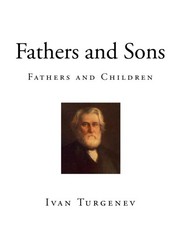 Ivan Turgenev · 1862Fathers and SonsLvl 3Medium pace
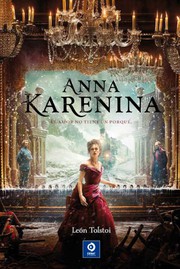 Leo Tolstoy · 1878Anna KareninaLvl 5Medium pace
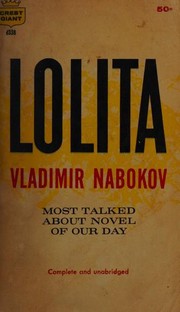 Vladimir Nabokov · 1955LolitaLvl 8Medium pace