
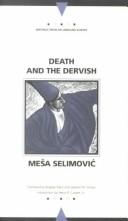
Death and the Dervish
Meša Selimović · 1910–1982 · Bosnia
Originally Derviš i Smrt (Serbo-Croatian)
Why it matters
An Ottoman-era Sufi sheikh is drawn into political intrigue after his brother's unjust arrest, testing his faith against power and complicity. Bosnia's greatest novel, and a philosophical study of conscience under any totalitarian pressure.
At a glance
Meditative, first-person philosophical narration slows a tense political plot.
Deep dive
An Ottoman-era Sufi sheikh's philosophy of detachment gets tested against the very worldly, very bureaucratic machinery of power once someone he loves needs saving from it.
Written for readers who have finished the book. No plot recap, and nothing here is safe to read first.
Themes & symbolism
Ahmed Nuruddin's Sufi equanimity reads, in the novel's early sections, as genuine spiritual achievement — a hard-won detachment that has given him real inner peace and standing within his community. Selimović's real subject, though, is what that detachment has also quietly functioned as: an insulation from ever having to act, take risks, or confront power directly. His brother's arrest on vague, unspecified charges strips that insulation away, and Nuruddin discovers that a lifetime of religious conviction has left him with no practical resources whatsoever for opposing the arbitrary machinery he now has no choice but to engage with — bribery, favor-trading, alliances with men he privately despises.
Written under Tito's Yugoslavia, the novel's Ottoman setting functions as a deliberately transposable parable: the arbitrary, faceless bureaucratic power Nuruddin confronts reads, to any reader living under any totalitarian system, as immediately recognizable regardless of century or empire. Selimović's first-person, meditative narration keeps circling the same unresolved question — whether pure spiritual withdrawal and practical political engagement are the only two options available to a conscience under absolute power, and whether either one lets a person keep both their integrity and the people they love.
A National Epic Written from Compromise
The novel is widely regarded as the single most important work of Bosnian literature, and its power comes partly from refusing the comfort of a villain: there's no single corrupt official to blame, only a distributed, self-perpetuating system that implicates everyone who has to move through it, including Nuruddin himself. Selimović's philosophical density — long interior passages weighing faith, doubt, and complicity against each other — asks to be read as slowly and seriously as the moral crisis it depicts, which is part of why the book has endured as a touchstone for thinking about conscience under any regime that treats arbitrary power as simply how things are done. Selimović, born a Bosnian Muslim who fought with Tito's partisans and lost his own brother to a wartime execution under murky political circumstances, drew directly on that loss in shaping Nuruddin's central crisis, giving the novel's Ottoman-era distance a lived, unresolved grief underneath its historical costume.
The last seal: what actually happens, and why it lands the way it does.
The ending, explained
Nuruddin's efforts to save his brother fail; his entanglement with the very power structures he compromised himself to navigate does nothing to stop the execution, and may even have hastened it. Having lost his brother anyway and permanently forfeited the spiritual purity that once defined him, Nuruddin is drawn further into the corrupt machinery he'd tried to bend toward good, eventually implicated in further violence as he pursues some form of reckoning against those responsible. The novel closes on his genuinely tragic recognition that neither withdrawal nor engagement offered any way to preserve both his brother's life and his own soul — a bleak verdict on whether real innocence is possible for anyone operating inside a totalitarian system at all.
Where to go next
 Ivo Andrić · 1945The Bridge on the DrinaLvl 4Slow burn
 Endō Shūsaku · 1966SilenceLvl 5Slow burn
 Magda Szabó · 1987The DoorLvl 5Slow burn
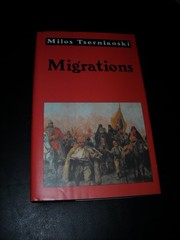 Miloš Crnjanski · 1929MigrationsLvl 7Medium pace
 Aleksandr Solzhenitsyn · 1962One Day in the Life of Ivan DenisovichLvl 3Fast paced
 Harry Mulisch · 1992The Discovery of HeavenLvl 6Medium pace