

A Tomb for Boris Davidovich
Danilo Kiš · 1935–1989 · Yugoslavia / Serbia
Originally Grobnica za Borisa Davidoviča (Serbo-Croatian)
Why it matters
Seven tales of old revolutionaries devoured by the Stalinist machine, told as forged documents. Kiš exposes how the totalitarian state rewrites a human being out of existence.
At a glance
Faux-documentary form and dense historical allusion blur fact and fiction deliberately.
Deep dive
Seven counterfeit biographies of people crushed by the Stalinist machine, built from footnotes and invented sources, and the plagiarism fight they set off when Kiš published them.
Written for readers who have finished the book. No plot recap, and nothing here is safe to read first.
Themes & symbolism
The title story follows Boris Davidovich Novsky, an old Bolshevik arrested in the purges, and centers on his interrogator Fedukin, who extracts a false confession not primarily through torture but through argument: Fedukin convinces Novsky that a properly written, self-incriminating confession is the last meaningful revolutionary act still available to him, service to the Party disguised as destruction of the self. Kiš's real subject across all seven stories is that specific machinery, ideology persuading its victims to author their own erasure, which he treats as more chilling than naked violence alone.
Each story is dressed as a scholarly dossier, dates, invented bibliographies, footnoted sources, borrowing Borges's device of the fictional citation but redirecting it at documented twentieth-century state murder instead of metaphysical puzzles. 'The Knife with the Rosewood Handle' follows Miksha, a handyman pursued across three decades and multiple borders by an assassin whose motive is never fully explained, and 'The Magic Card Dealing' turns a camp card game into a lottery for who gets sent to near-certain death, the same bureaucratic randomness dressed up, this time, as chance rather than as verdict.
Answering Borges With Real Corpses
Borges's fictional scholarship, invented authors, invented encyclopedias, generates metaphysical vertigo about the nature of authorship and reality. Kiš borrows the same apparatus, footnotes, source lists, the tone of an academic afterword, but points it at the actual archive of Stalinist terror, so that the vertigo his reader feels is not about whether the world is real but about how completely a totalitarian state can rewrite a real person's documented life into whatever confession serves it.
The Plagiarism Charge and Kiš's Answer
After publication in 1976, a circle of Belgrade critics accused Kiš of lifting material, an encyclopedia entry, passages resembling Karlo Štajner's Gulag memoir Seven Thousand Days in Siberia, without sufficient transformation, treating his documentary-collage method as theft rather than technique. Kiš answered at book length with The Anatomy Lesson (Čas anatomije, 1978), defending montage and appropriated source material as legitimate tools of documentary fiction, but the controversy cost him standing in Belgrade's literary establishment and fed his decision to settle permanently in Paris.
Where to go next
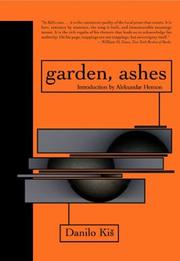 Danilo Kiš · 1965Garden, AshesLvl 6Slow burn
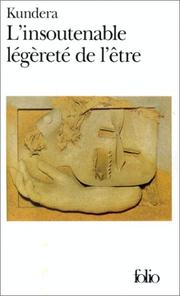 Milan Kundera · 1984The Unbearable Lightness of BeingLvl 5Slow burn
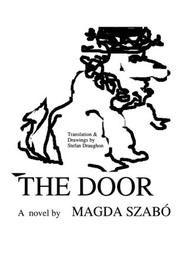 Magda Szabó · 1987The DoorLvl 5Slow burn
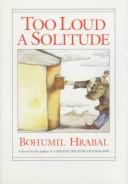 Bohumil Hrabal · 1976Too Loud a SolitudeLvl 6Slow burn
 Orhan Pamuk · 1998My Name Is RedLvl 7Medium pace
 W. G. Sebald · 1995The Rings of SaturnLvl 7Slow burn