
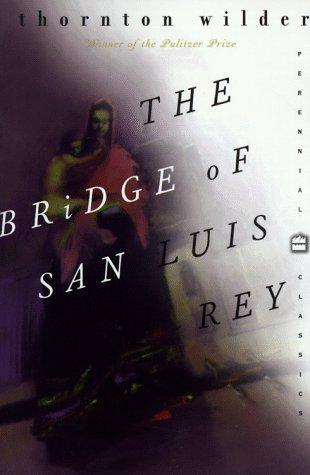
The Bridge of San Luis Rey
Thornton Wilder · 1897–1975 · United States
Why it matters
A Peruvian bridge collapses in 1714, killing five strangers, and a friar spends years asking whether their deaths held any pattern of meaning. Wilder's brief, luminous novel made metaphysical inquiry into a bestseller and won the Pulitzer at thirty.
At a glance
Clear, classical prose despite braided character studies packed into short chapters.
Deep dive
Why Brother Juniper's careful, six-year case for divine justice behind a bridge collapse fails on its own terms, and what Wilder offers to replace the proof once faith stops needing one.
Written for readers who have finished the book. No plot recap, and nothing here is safe to read first.
Themes & symbolism
Brother Juniper watches a rope bridge collapse and kill five strangers, and instead of accepting it as chance, he spends six years compiling a case file on each victim's life, hoping to demonstrate statistically that Providence, not accident, selected them — an Enlightenment impulse to make faith empirical dressed in a friar's habit. Wilder structures the novel as Juniper's own evidence, five self-contained lives rendered in full before the bridge ever breaks, and the quiet cruelty of the design is that the evidence refuses to cooperate: the Marquesa de Montemayor, Uncle Pio, Esteban, and the others turn out to share nothing but bad luck, so the closer Juniper's book gets to proof, the more it accidentally demonstrates that no such pattern exists.
Each of the five is really a study in a failed or unequal love — the Marquesa's smothering devotion to a daughter who barely tolerates her, Uncle Pio's total absorption in the actress Camila Perichole, Esteban's grief for his dead twin — so that the bridge's arbitrary collapse reads less as divine judgment than as a machine indifferent to exactly the quality, love given without return, that structures every life it destroys. Wilder's real subject turns out not to be theodicy at all but its replacement: not why bad things happen to particular people, but what, if anything, persists once they're gone.
Brother Juniper's Heresy
Juniper's book is judged heretical and burned along with its author, and the irony is exact: trying to prove God's justice empirically is, to the Church that condemns him, a greater presumption than simply trusting it unproven. Wilder plants a real theological trap here — faith that requires evidence stops being faith — and lets Juniper's fate stand as the novel's rebuke to its own investigative structure, since the book we've just read is effectively the case file Juniper's own inquisitors destroyed.
Five Novellas, One Bridge
Wilder gives each of the five victims a self-contained biography rather than braiding their stories together in real time, so the reader arrives at the bridge already knowing these people more intimately than Juniper himself ever manages to. That structural choice is the novel's quiet argument against its own friar: a scientific case file reduces a life to a data point, but a novella restores interiority, contradiction, and unfinished longing, all the things a statistical pattern would have to flatten to make its case. The book's brevity, barely more than a hundred pages, is deceptive — it compresses five lifetimes of ordinary, particular loss into a span short enough to read in an afternoon and long enough to make each death land as singular.
The last seal: what actually happens, and why it lands the way it does.
The ending, explained
Having spent the novel reconstructing the five victims' lives without ever finding the pattern he set out to prove, Brother Juniper is condemned for his book and burned with it. The narrative then shifts, in its closing pages, to the Abbess Madre María del Pilar, who loved several of the dead and continues her charitable work without either faith's certainty or Juniper's discredited method to lean on. The novel closes on her meditation, and the book's own thesis: that the bridge connecting the living to those they've lost isn't reason, evidence, or providence, but love itself — 'there is a land of the living and a land of the dead, and the bridge is love, the only survival, the only meaning' — the one continuity Wilder is willing to claim after dismantling every other kind.
Where to go next
 Thornton Wilder · 1967The Eighth DayLvl 6Medium pace
 Pearl S. Buck · 1931The Good EarthLvl 3Medium pace
 Charles Johnson · 1990Middle PassageLvl 5Fast paced
 Marguerite Yourcenar · 1951Memoirs of HadrianLvl 6Slow burn
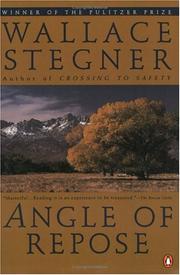 Wallace Stegner · 1971Angle of ReposeLvl 6Medium pace
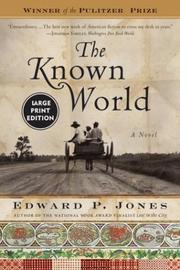 Edward P. Jones · 2003The Known WorldLvl 6Slow burn