
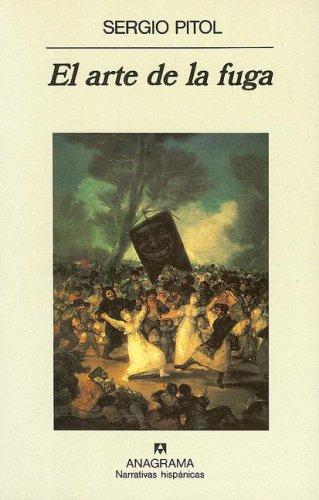
The Art of Flight
Sergio Pitol · 1933–2018 · Mexico
Originally El arte de la fuga (Spanish) · translated by George Henson
Why it matters
Memoir, literary criticism, and fiction dissolve into a single essayistic form tracing a life built between languages and countries. Belated recognition of Pitol's genre-blurring achievement won him Spanish letters' top honor, the Cervantes Prize.
At a glance
A genre-blurring essayistic form resists conventional memoir or narrative structure.
Deep dive
How a Mexican writer builds a memoir out of the books he's translated, the countries he's lived in, and the dreams he's kept notes on, refusing the whole time to say which parts are strictly true.
Written for readers who have finished the book. No plot recap, and nothing here is safe to read first.
Themes & symbolism
El arte de la fuga takes its title from Bach, and from the pun built into the Spanish word fuga, which means both fugue, a musical form built from independent voices running in counterpoint, and flight, an escape. Pitol builds the book to earn both meanings at once: chapters shift without warning between memoir, literary criticism, travel notation, and transcribed dreams, each register given full weight rather than subordinated to a single narrating voice, so the book reads less like a life told in order than like several instruments playing the same life simultaneously. The dislocation isn't a stylistic trick borrowed for novelty. Pitol spent decades as a Mexican diplomat posted across Communist Eastern Europe, Poland, Czechoslovakia, Hungary, the Soviet Union, and the book's formal restlessness reads as a direct record of a life that never held one fixed address long enough to be told as a single continuous story.
Pitol's real subject across these fragments is reading as a form of biography in its own right: entire sections are devoted to writers he loves and has translated, and he treats rendering someone else's sentences into Spanish as no less formative than any lived event he narrates elsewhere in the book. A chapter on Chekhov sits beside a memory of a Moscow apartment, a note on a half-forgotten Polish novelist beside a Barcelona dinner party, without the book ever ranking one kind of experience above the other. The implicit argument is total and unapologetic: a writer's real autobiography isn't the sequence of cities and years, it's the accumulated record of everything they've read closely enough to want to remake in their own language.
Counterpoint as the Only Honest Form
Bach's Art of Fugue develops several melodic lines that remain distinct even while sounding together, and Pitol uses that structure quite literally, letting a chapter of art criticism run alongside a chapter of raw dream transcription without ever forcing them to resolve into one argument. The choice reads as an honest refusal rather than an affectation: a linear memoir would have to pretend Pitol's reading life, his diplomatic postings, and his private unconscious were one continuous narrative, when the book's whole method insists they were always several voices running at once, sometimes in harmony, sometimes simply overlapping.
A Diplomatic Career Spent Mostly Reading
Pitol's postings across the Eastern Bloc during some of the Cold War's coldest decades supply the book's most vivid settings, but he's candid that the diplomacy itself was rarely the point: he used consular postings as cover for an obsessive reading and translating life, bringing Polish, Russian, and English writers into Spanish largely on his own initiative rather than his government's. The book's real career narrative, underneath its official one, is of a man who kept finding postings that would leave him enough solitude to keep translating, which fits a writer whose entire method treats reading as the more serious vocation.
Where to go next
 Elena Poniatowska · 1971Massacre in MexicoLvl 5Medium pace
 Reinaldo Arenas · 1969HallucinationsLvl 7Fast paced
 Manuel Puig · 1976Kiss of the Spider WomanLvl 6Fast paced
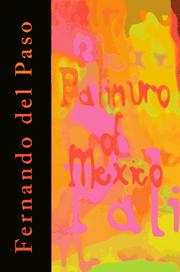 Fernando del Paso · 1977Palinuro of MexicoLvl 9Slow burn
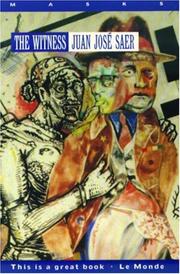 Juan José Saer · 1983The WitnessLvl 7Slow burn
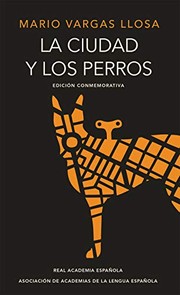 Mario Vargas Llosa · 1963The Time of the HeroLvl 6Medium pace