
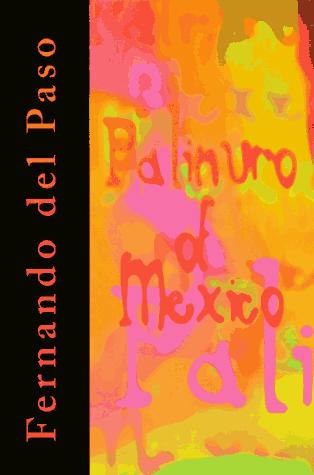
Palinuro of Mexico
Fernando del Paso · 1935–2018 · Mexico
Originally Palinuro de México (Spanish) · translated by Elisabeth Plaister
Why it matters
A medical student's love affairs, memories, and political awakening are conjured through wordplay, catalogues, and dazzling encyclopedic excess, all set against Mexico City's charged year of 1968. One of the era's most maximalist Latin American novels.
At a glance
Maximalist wordplay, catalogues, and encyclopedic digression demand sustained close reading.
Deep dive
Why del Paso names his hero after the Aeneid's doomed helmsman and spends nine hundred pages of anatomical wordplay, dictionary entries, and incestuous love letters building toward a single, real night in Mexico City in 1968.
Written for readers who have finished the book. No plot recap, and nothing here is safe to read first.
Themes & symbolism
Palinuro is Aeneas's helmsman in Virgil, the man who falls asleep at the rudder and is lost overboard so the rest of the fleet can reach Italy, and del Paso hangs the entire novel on that borrowed name before a single event has happened: here is a hero pre-marked as the one who won't survive the passage he's steering everyone else through. The medical school setting compounds the joke and the dread at once. Palinuro spends much of the book cataloguing the human body organ by organ, bone by bone, as if enough anatomical precision could stand in for the mortality the name already promised.
His cousin and lover Estefanía is the book's other great organizing obsession, an incestuous relationship the two of them treat with none of the shame the word usually carries, conducted in a room off the Plaza de Santo Domingo where they assemble a skeleton from mismatched bones between bouts of lovemaking, itself a small, comic rehearsal of the anatomy Palinuro is meanwhile mastering for his degree. Del Paso lets love and dissection sit in the same room without irony: Estefanía is the body Palinuro actually desires, catalogued with the same hunger for exhaustive detail he brings to the cadavers.
Palinuro en la escalera: The Chapter del Paso Couldn't Publish
The novel's climactic chapter, staging the October 2, 1968 massacre of student protesters at Tlatelolco through commedia dell'arte, Greek tragedy, and Mexico's own popular theatrical traditions, was so politically dangerous while the government still enforced official silence about the killings that del Paso held it back from the novel's first printings. It wasn't published on its own until 1992, decades after he started writing Palinuro in 1968. Everything before that chapter, the puns, the dictionary parodies, the extravagant cataloguing, reads differently once the reader knows where del Paso has been steering the whole apparatus: an encyclopedic style built for centuries of accumulated language finally has to describe a night the state spent years insisting hadn't happened at all.
The last seal: what actually happens, and why it lands the way it does.
The ending, explained
Palinuro is among the students at the Plaza de las Tres Culturas on the night the army and paramilitary snipers open fire on an unarmed protest, and del Paso stages his death inside the same carnival register that has carried the rest of the novel, clowns, masks, and theatrical asides pressed up against real gunfire and a real body count the Mexican government spent decades refusing to acknowledge. The helmsman's name, planted on page one as a literary joke, resolves as prophecy: like Virgil's Palinuro, del Paso's hero doesn't get to see the shore the movement he was steering toward eventually reaches. The novel ends without turning his death into martyrdom or moral in any tidy sense. The massacre's own historical unresolved status, no full accounting, no accountability, becomes the note the book closes on.
Where to go next
 Fernando del Paso · 1987News from the EmpireLvl 8Slow burn
 Manuel Puig · 1976Kiss of the Spider WomanLvl 6Fast paced
 Elena Poniatowska · 1971Massacre in MexicoLvl 5Medium pace
 Jorge Ibargüengoitia · 1977The Dead GirlsLvl 4Fast paced
 Carlos Fuentes · 1962The Death of Artemio CruzLvl 8Slow burn
 Mario Vargas Llosa · 1963The Time of the HeroLvl 6Medium pace