
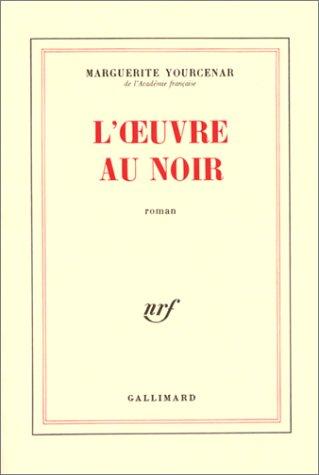
The Abyss
Marguerite Yourcenar · 1903–1987 · France / Belgium
Originally L'Œuvre au Noir (French) · translated by Grace Frick
Why it matters
A Renaissance physician and alchemist flees the Inquisition across a Europe of plague, war, and dawning science. Yourcenar's second historical masterwork extends her lifelong fascination with minds ahead of their era.
At a glance
Dense philosophical and scientific erudition woven through the historical narrative.
Deep dive
Why Zeno Ligre's decades of restless flight across Reformation Europe amount to Yourcenar's argument for a mind that refuses to stop working.
Written for readers who have finished the book. No plot recap, and nothing here is safe to read first.
Themes & symbolism
Zeno Ligre, a physician, alchemist, and philosopher born in Bruges to a merchant family, spends most of the novel in motion, Germany, Italy, the Ottoman Empire, always one step ahead of an Inquisition or a rival faction that has taken exception to something he's written, printed, or dissected. Yourcenar builds the sixteenth century around him in genuine intellectual detail, Paracelsian medicine, Reformation theology, the early stirrings of empirical science, and makes Zeno's restlessness less a personality trait than a survival strategy for a mind working faster than the institutions around it can tolerate.
The title's alchemical 'great work,' transmuting base matter into gold, doubles throughout as a figure for Zeno's actual project: the slow, dangerous transmutation of his own understanding, discarding inherited certainties about God, the body, and the natural world one at a time, in an era when discarding any one of them publicly could get a man burned. Yourcenar treats the alchemy not as mysticism dressed up as science but as the exact vocabulary a sixteenth-century mind would reach for to describe what we would now call intellectual honesty.
The Abbot Who Was Once His Only Friend
Zeno's boyhood connection to his half-brother Henri-Maximilien, a soldier who drifts in and out of the narrative across decades of separate wandering, is the novel's one sustained thread of ordinary affection amid Zeno's mostly solitary intellectual life, and their brief reunion late in the book underscores how much of Zeno's freedom has been purchased at the cost of every stable attachment a settled life would have given him. Yourcenar lets the reunion be genuinely warm without softening the larger isolation it briefly interrupts.
Dissection as a Claim the Body Belongs to Reason
Zeno's clandestine dissections of human corpses, conducted in secret across several of the cities he passes through, put him repeatedly at odds with religious authorities who treat the body as a text only theology has standing to interpret; Yourcenar treats each dissection as both scientific data-gathering and a quiet act of heresy, since to look inside a corpse without ecclesiastical sanction was already, in the era's terms, a claim that the body's truths belonged to reason rather than to scripture. The novel keeps returning to the image of a man cutting into what he isn't authorized to know.
The last seal: what actually happens, and why it lands the way it does.
The ending, explained
Zeno returns at last to his native Bruges under a false identity, taking a post as physician to a convent, and is recognized, denounced, and arrested on charges combining heresy and sodomy, the accumulated weight of a lifetime of unlicensed thought finally catching up with him in the one city he thought he could safely disappear into. Rather than await execution, he opens his own veins in his cell the night before, choosing the manner and the moment of his death as one final act of the self-determination the Inquisition had spent his whole trial trying to strip from him. Yourcenar frames the suicide not as defeat but as Zeno's last experiment, conducted, like everything else in his life, entirely on his own terms.
Where to go next
 Marguerite Yourcenar · 1951Memoirs of HadrianLvl 6Slow burn
 Jean-Paul Sartre · 1938NauseaLvl 6Slow burn
 Georges Bernanos · 1936Diary of a Country PriestLvl 6Slow burn
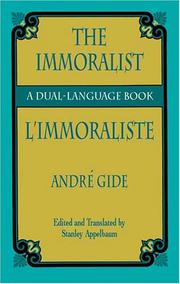 André Gide · 1902The ImmoralistLvl 5Medium pace
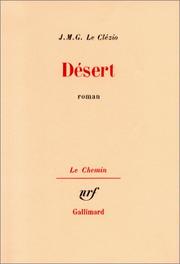 J. M. G. Le Clézio · 1980DesertLvl 5Slow burn
 Joris-Karl Huysmans · 1884Against Nature (À rebours)Lvl 7Slow burn