
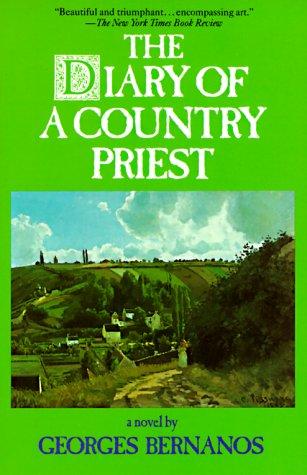
Diary of a Country Priest
Georges Bernanos · 1888–1948 · France
Originally Journal d'un curé de campagne (French)
Why it matters
A sickly young priest records his failing body and unbending vocation in a hostile rural parish. One of the century's starkest novels of faith: grace arriving, if at all, through suffering rather than comfort.
At a glance
Fragmentary journal form and theological weight slow a short book.
Deep dive
A young priest keeps a private journal of his failing stomach and his parish's contempt, and Bernanos uses the mismatch between the two to ask what grace actually looks like when it shows up.
Written for readers who have finished the book. No plot recap, and nothing here is safe to read first.
Themes & symbolism
The unnamed curé of Ambricourt records his failures in a notebook meant for no one, and the diary form does double work: it lets Bernanos show a man too humble to state his own sanctity while the reader watches him practice it anyway, tending a parish, the Comtesse, her cold husband, their resentful daughter Chantal, that treats his poverty and social awkwardness as proof he has nothing to teach them. His body is failing in tandem with his standing, living on bread soaked in wine because nothing else stays down, a detail Bernanos plants early and lets accumulate meaning rather than announcing it as illness.
The Comtesse has spent years nursing a private grudge against God for the death of her infant son, walling the grief off from her husband and daughter behind icy composure, and the priest's single real pastoral victory in the book is the conversation in which he refuses to let her keep that grudge comfortable, pressing until she throws a locket holding the dead child's hair into the fire and finally weeps. Bernanos gives the scene no triumphant music: the Comtesse dies that same night, and the household immediately misreads the priest's role in her death as interference rather than the deliverance it was.
Abbé Torcy, the seasoned, worldly priest of a neighboring parish, functions as the book's counter-voice, doubting the younger man's austerity and urging a more practical, sociable priesthood, and Bernanos never resolves which of them is right; he simply lets the curé's harder, lonelier path keep producing results Torcy's cannot, one exhausted, half-understood act of grace at a time.
Bresson's Camera as a Second Diary
Robert Bresson's 1951 film adaptation follows Bernanos's text almost line by line, reading long passages of the diary aloud over close, unmoving shots of Claude Laydu's face, a technique Bresson called making the actor a 'model' rather than a performer. The choice mirrors the novel's own method: withheld interiority forced into the open by sheer persistence of attention, the camera doing to the priest's face exactly what his notebook does to his soul.
The last seal: what actually happens, and why it lands the way it does.
The ending, explained
Diagnosed too late with stomach cancer, the priest travels to see an old seminary friend, Louis Dufréty, who has left the priesthood to live with a mistress under a false trade as a salesman, and collapses there rather than at his own presbytery or the Comtesse's chateau, dying among exactly the kind of worldly compromise his whole vocation refused. Dufréty, summoned to his bedside, reports his final words in a letter to another priest rather than Bernanos narrating them directly: unable to receive last rites because no priest reaches him in time, the dying man says simply that none of it matters, that grace is everywhere. Bernanos lets a defrocked, compromised witness carry the line, denying the reader even the comfort of a properly administered deathbed.
Where to go next
 Georges Bernanos · 1926Under the Sun of SatanLvl 7Slow burn
 André Gide · 1902The ImmoralistLvl 5Medium pace
 Joris-Karl Huysmans · 1884Against Nature (À rebours)Lvl 7Slow burn
 Marguerite Yourcenar · 1951Memoirs of HadrianLvl 6Slow burn
 Nathalie Sarraute · 1939TropismsLvl 7Slow burn
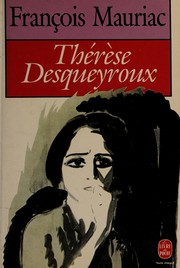 François Mauriac · 1927Thérèse DesqueyrouxLvl 5Slow burn