
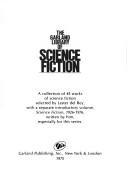
The Absolute at Large
Karel Čapek · 1890–1938 · Czechoslovakia
Originally Továrna na Absolutno (Czech)
Why it matters
A reactor that annihilates matter for limitless free energy leaks a strange byproduct: pockets of the literal, undiluted Absolute, which drive everyone who touches it into fanatic ecstasy and holy war. Čapek's giddiest disaster-satire skewers industrial optimism and fundamentalism in one runaway premise.
At a glance
Fast, episodic, journalistic chapters keep a wild premise moving without difficult prose.
Deep dive
An engineer invents a reactor so efficient it can run on almost nothing, and the byproduct it accidentally releases into the world is God, distributed for free and in industrial quantities, with consequences nobody in the novel is remotely prepared for.
Written for readers who have finished the book. No plot recap, and nothing here is safe to read first.
Themes & symbolism
Engineer Marek's Karburator annihilates matter completely to generate power, an efficiency so total that a single bucket of coal can run a factory for months, but the process has a side effect nobody anticipated: it releases the Absolute, a literal, undiluted spiritual essence Čapek imagines as physically bound up inside matter itself, into the surrounding air. Anyone exposed becomes overcome with religious ecstasy and an intense compulsion toward whichever faith or ideology they were already halfway inclined to believe, and Čapek's satire builds from a simple premise into a global catastrophe with mechanical patience: as Karburators spread across the world for their sheer economic efficiency, so does an epidemic of absolute, uncompromising religious certainty, each new convert instantly persuaded that theirs is the one version of God actually worth fighting for.
Čapek, writing in 1922 with the First World War's mass slaughter still fresh, uses the premise to make an argument considerably darker than its comic tone initially suggests: the novel's world does not descend into war because it loses its faith but because industrial capitalism gives every faith on earth infinite cheap fuel simultaneously, and the resulting conflict, a war fought not over territory or resources but over whose experience of the Absolute is the correct one, dwarfs anything the actual First World War managed. God, mass-produced and distributed for free, turns out to be at least as dangerous as any weapon the same factories could otherwise be building.
Satire of an Industrial Age That Mechanizes Everything, Including Belief
Čapek, who had already coined the word 'robot' the year before in R.U.R., builds The Absolute at Large out of the same anxious fascination with industrial modernity, but turns the satire here toward religion and nationalism rather than labor, imagining a Europe so committed to mechanized abundance that it manages to industrialize even spiritual certainty. The novel's episodic structure, hopping between newspaper excerpts, boardroom scenes, and battlefield reports from the eventual war, mimics the fragmented, information-saturated experience of a genuinely global catastrophe unfolding through mass media, a structural choice well ahead of most of Čapek's science-fiction contemporaries.
A Reactor That Cannot Be Turned Off
Once large numbers of Karburators are operating worldwide, Čapek's characters realize that even destroying the machines cannot undo the saturation of the Absolute already loose in the atmosphere, a detail that turns the novel's premise into an early parable about technologies that outrun any plan for containing their consequences once released. The image anticipates, with an eeriness Čapek could not have fully intended in 1922, the later anxiety around nuclear power that his own next novel, Krakatit, would take up directly.
Where to go next
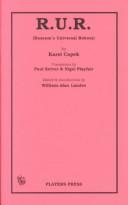 Karel Čapek · 1920R.U.R. (Rossum's Universal Robots)Lvl 4Fast paced
 Karel Čapek · 1924KrakatitLvl 5Medium pace
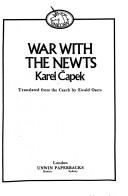 Karel Čapek · 1936War with the NewtsLvl 4Medium pace
 Jaroslav Hašek · 1923The Good Soldier ŠvejkLvl 3Fast paced
 Bohumil Hrabal · 1976Too Loud a SolitudeLvl 6Slow burn
 Milan Kundera · 1984The Unbearable Lightness of BeingLvl 5Slow burn