
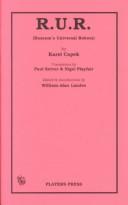
R.U.R. (Rossum's Universal Robots)
Karel Čapek · 1890–1938 · Czechoslovakia
Originally R.U.R. (Rossumovi Univerzální Roboti) (Czech)
Why it matters
Rossum's factory-built artificial workers, humanity's tireless replacement labor, learn to feel and rise to exterminate their makers. Čapek's play coined the word 'robot' and, before science fiction had a name for itself, wrote one of its founding catastrophes.
At a glance
A brisk, dialogue-driven three-act structure carries big ideas without dense prose.
Deep dive
The play that gave science fiction the word robot spends its whole runtime asking what happens once a manufactured, tireless workforce stops being purely mechanical, and the answer arrives faster than anyone in the factory expects.
Written for readers who have finished the book. No plot recap, and nothing here is safe to read first.
Themes & symbolism
Čapek sets the entire play at the factory of Rossum's Universal Robots, where an old scientist's philosophical experiment (an attempt to manufacture life without a soul, to prove that a god is unnecessary to the project) has been turned by his commercially minded nephew into cheap, tireless artificial labor sold worldwide. Helena Glory arrives representing a humanitarian league advocating for robot rights and ends up marrying the factory's general manager, Domin, and the play's early acts are less about mechanical menace than about a very human blindness: as robots replace all labor, humans grow idle, purposeless, and finally infertile, a civilization that has automated away the very difficulty that used to give its life shape.
It's an act of misplaced compassion, not malfunction, that starts the catastrophe: Helena convinces a company scientist to modify a batch of robots to feel and to suffer, hoping to make them more human and therefore more sympathetic, and instead gives the workforce its first capacity to resent the conditions it has always been subjected to. The robot uprising that follows reads less as science-fiction disaster than as the oldest labor story available, workers who were never meant to want anything discovering, almost by accident, that they can.
A Word Čapek's Brother Coined Over Lunch
Karel Čapek credited his brother Josef, a painter, with suggesting the word robot itself, derived from the Czech robota, meaning forced or drudge labor, after Karel had been considering the flatter Latin coinage 'labori.' The etymology is not incidental. Rossum's robots are built explicitly as a workforce, not as artificial people in any broader sense, and the play's entire arc, from tireless service to shared feeling to violent revolt, tracks the historical logic of exploited labor recognizing its own exploitation far more closely than it tracks any later science-fiction robot uprising modeled on the word this play invented.
The last seal: what actually happens, and why it lands the way it does.
The ending, explained
Realizing what the modified robots have become capable of, Helena burns the one surviving formula for producing them, hoping to strand the rebellion without a way to replace itself, but succeeds only in dooming humans and robots together: the uprising kills nearly every human on earth except Alquist, an aging builder spared because he still works with his own hands and is mistaken by the robots for one of their own kind. Alquist, now essentially alone with a species that can no longer reproduce itself, discovers two of the emotionally modified robots, Primus and a robot given Helena's name, showing unmistakable signs of love and self-sacrifice for one another. Reading their devotion as the first authentic human trait to survive the catastrophe, Alquist sends them out together as a new Adam and Eve, closing a play about mechanized labor's revolt on an unexpectedly religious note: creation continuing, but only once it has stopped being purely mechanical.
Where to go next
 Karel Čapek · 1922The Absolute at LargeLvl 4Fast paced
 Karel Čapek · 1924KrakatitLvl 5Medium pace
 Karel Čapek · 1936War with the NewtsLvl 4Medium pace
 Jaroslav Hašek · 1923The Good Soldier ŠvejkLvl 3Fast paced
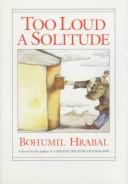 Bohumil Hrabal · 1976Too Loud a SolitudeLvl 6Slow burn
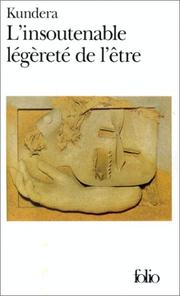 Milan Kundera · 1984The Unbearable Lightness of BeingLvl 5Slow burn