
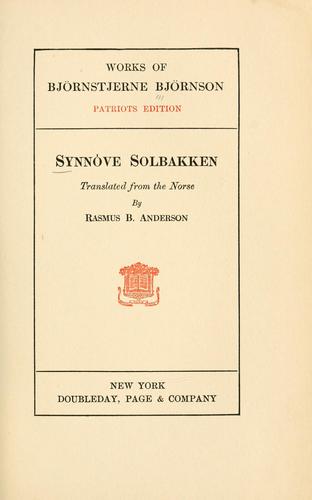
Synnøve Solbakken
Bjørnstjerne Bjørnson · 1832–1910 · Norway
Originally Synnøve Solbakken (Norwegian)
Why it matters
A hot-tempered boy from the shadowed farm loves the girl from the sunlit one, and must master himself to deserve her. The founding tale of the Norwegian peasant novel, saga-plain and quietly radical in trusting rural life with literature.
At a glance
Short, clear folk-tale prose; only the ballad interludes and rural customs date it.
Deep dive
Why Norway's first national bestseller measures a young man's worth not by what he wants but by how long he can go without losing his temper.
Written for readers who have finished the book. No plot recap, and nothing here is safe to read first.
Themes & symbolism
Bjørnson builds the whole book on a topography of the moral kind rarely stated so plainly: Solbakken, the sunlit farm, and Granlien, the shadowed one, aren't just where Synnøve and Thorbjørn happen to live, they're a diagram of the two futures on offer. Thorbjørn's whole plot is the work of walking himself out of the shade and into the light, and Bjørnson refuses to let romance alone do that work: talent, looks, even mutual love aren't enough, and the novel is unusually patient about making him earn it.
The pastoral setting, sung interludes and all, does something quietly radical for 1857: it insists that Norwegian farm life, not the sagas' kings or Christiania's drawing rooms, is dignified enough to carry a national literature. Bjørnson later wrote his country's anthem and campaigned his whole life for its independence from Sweden; Synnøve Solbakken is where that project starts, a claim that the valley itself, in its own plain speech, deserved a canon. That claim proved influential well past Bjørnson's own career: the peasant tale he essentially invented here became one of Norwegian literature's most durable modes, still legible generations later in writers who never met him.
Song as a Second Language for Feeling
Bjørnson breaks into folk song at his story's most charged emotional moments, verses standing in for the interior monologue the plain saga-prose around them otherwise declines to attempt. It's a device borrowed from oral peasant culture rather than from the psychological realism just then developing elsewhere in European fiction, and it lets him register feeling his characters would never actually voice aloud in dialogue: Thorbjørn's shame and Synnøve's hope arrive in song precisely because the prose has no other register built for expressing rather than simply reporting what a character does.
A Near-Fatal Stabbing as Character Test
The turning point isn't a courtship scene but a knife wound: Thorbjørn, provoked into the old violence he's spent the book trying to outgrow, is nearly killed by a rival, and Bjørnson uses his response, forgiveness of the man who stabbed him rather than vengeance, as the proof the narrative has been withholding. It's a strikingly unsentimental mechanism for a book this gentle in tone: character isn't declared, it's tested at the point of maximum provocation, and only survives the test by refusing the reflex the whole valley would have excused.
The last seal: what actually happens, and why it lands the way it does.
The ending, explained
Thorbjørn's forgiveness of his attacker is the last obstacle cleared, and Bjørnson closes with him standing at Solbakken itself, looking back across the valley at Granlien, the shaded farm he's finally left behind for good. It's a modest, almost wordless final image for a novel that has spent so much of its length in dialogue and song, and that restraint is the point: the reward for self-mastery isn't a speech, it's simply arriving, at last, somewhere sunlit.
Where to go next
 Selma Lagerlöf · 1891Gösta Berling's SagaLvl 6Medium pace
 Knut Hamsun · 1890HungerLvl 5Medium pace
 Karl Gjellerup · 1906The Pilgrim KamanitaLvl 5Slow burn
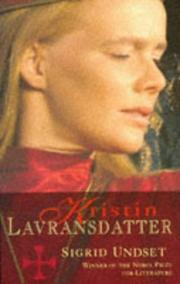 Sigrid Undset · 1920Kristin LavransdatterLvl 6Slow burn
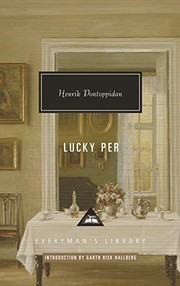 Henrik Pontoppidan · 1904Lucky PerLvl 6Medium pace
 Thomas Hardy · 1891Tess of the d'UrbervillesLvl 4Medium pace