
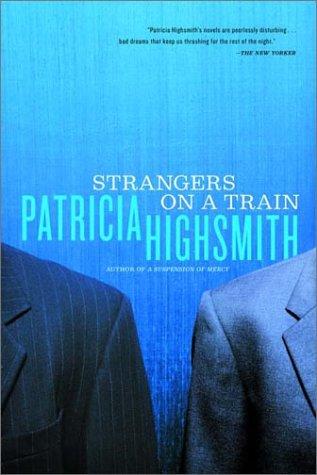
Strangers on a Train
Patricia Highsmith · 1921–1995 · United States
Why it matters
Two men meet on a train and one proposes they 'swap' murders, each killing a stranger the other wants gone. Highsmith's debut, later filmed by Hitchcock, established her signature amoral suspense.
At a glance
Tight, propulsive prose focused on mounting psychological pressure.
Deep dive
What happens after a bored architect laughs off a stranger's proposal to trade murders on a train, and discovers the stranger was never joking at all.
Written for readers who have finished the book. No plot recap, and nothing here is safe to read first.
Themes & symbolism
Guy Haines, an architect anxious about his upcoming marriage, shares a compartment with Charles Anthony Bruno, wealthy, unstable, and instantly fixated on Guy, who proposes over drinks that they solve each other's problems by swapping murders: Bruno will kill Guy's estranged wife Miriam, Guy will kill Bruno's domineering father, and since neither man has any motive connecting him to the other's victim, both crimes go permanently unsolved. Guy treats the conversation as a stranger's drunk theorizing and forgets it, which is exactly the mistake Highsmith's plot depends on: Bruno was never speaking hypothetically.
Bruno kills Miriam without warning and then begins pressing Guy to honor what Bruno considers a bargain already half fulfilled, and Highsmith's real subject isn't whether Guy will do it but how completely Bruno's presence dissolves Guy's sense of himself as someone incapable of it. The two men function as a matched pair throughout, one openly amoral and delighted by his own crime, the other respectable and horrified, and Highsmith collapses the distance between them steadily enough that the reader stops being sure, well before Guy does, that the difference was ever as stable as it looked. Highsmith frames their meeting on a train deliberately: a setting built entirely around chance, temporary proximity, strangers thrown together and then permanently parted, which makes Bruno's refusal to let the encounter stay temporary the novel's founding violation of its own premise.
Bruno's Father and the Logic of the Swap
Bruno's hatred of his father reads, on the page, as more petty than tragic, a rich man's son resentful of parental control rather than genuinely endangered, which makes Guy's eventual willingness to kill him for Bruno's sake land as an even starker measure of how far Bruno's psychological grip has traveled. Highsmith never gives Guy a comparably sympathetic motive for what he does, and that asymmetry is deliberate: the swap was never really about grievances being righted, only about Bruno's need to implicate someone else in his own compulsion.
The last seal: what actually happens, and why it lands the way it does.
The ending, explained
Bruno's hold over Guy only tightens after the second murder, escalating into blackmail dressed up as friendship, until Bruno drowns during a chaotic boating accident that Guy, despite everything, tries and fails to prevent. A detective named Gerard has been quietly building a case against both men from Bruno's own compulsive note-taking and confessional habits, and Guy, worn down past the point of concealment, ultimately admits what he did to his wife Anne rather than wait to be caught. Highsmith declines the clean moral accounting a more conventional thriller would supply: Guy's confession reads less like justice arriving than like a man finally too exhausted to keep performing the distance between himself and Bruno that the whole novel has been dismantling.
Where to go next
 Patricia Highsmith · 1955The Talented Mr. RipleyLvl 4Fast paced
 Fyodor Dostoevsky · 1866Crime and PunishmentLvl 6Fast paced
 Joyce Carol Oates · 1969themLvl 6Medium pace
 Donna Tartt · 2013The GoldfinchLvl 5Fast paced
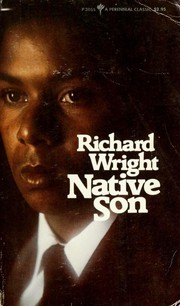 Richard Wright · 1940Native SonLvl 5Fast paced
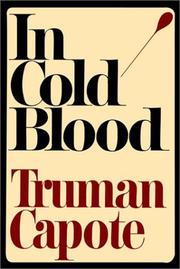 Truman Capote · 1966In Cold BloodLvl 5Fast paced