
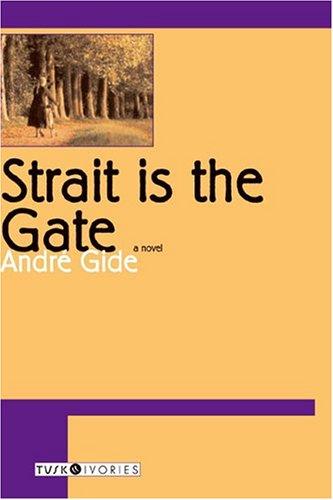
Strait Is the Gate
André Gide · 1869–1951 · France
Originally La Porte étroite (French)
Why it matters
A young woman's religious asceticism leads her to renounce the man she loves in the name of a punishing, self-denying virtue. Gide's austere counterpoint to The Immoralist's hedonism, and just as devastating.
At a glance
Restrained, diary-inflected prose builds a quietly devastating moral argument.
Deep dive
Why the woman renouncing earthly love in the name of God grows less certain of God the longer the renunciation goes on, and what only her private diary is willing to admit about it.
Written for readers who have finished the book. No plot recap, and nothing here is safe to read first.
Themes & symbolism
Alissa Bucolin loves her cousin Jérôme with an intensity the novel never questions, and builds an entire theology out of deferring him anyway, taking the Gospel verse that gives the book its title, strait is the gate, and narrow is the way, as a literal instruction that earthly happiness and the difficult road to virtue must be opposites. Every deferral, every small renunciation, reads to her as proof she is choosing the harder, truer path rather than simply failing to choose him.
Gide builds the novel's real critique underneath Alissa's sincerity: her asceticism, for all its Protestant piety, is just as total and just as self-focused a commitment as Michel's hedonism in The Immoralist, a totalizing devotion to her own private idea of virtue that costs Jérôme a life, costs her sister Juliette a genuine chance at happiness before Juliette settles for a marriage without passion, and ultimately costs Alissa herself the faith she was trying to prove through sacrifice, since the diary that closes the book shows her growing steadily less certain God is even asking this of her.
Gide sharpens the mismatch by letting the cousins' own letters drift apart over the years they correspond, Jérôme's remaining full of ordinary, hopeful plans while Alissa's grow steadily more abstract and devotional, so the reader watches, letter by letter, exactly the widening gap Jérôme himself is too patient and too in love to register fully until it is far too late to close.
A Verse Read Too Literally
The title's source, Matthew's Gospel, contrasts the narrow gate of life with the wide gate of destruction, and Gide, raised in the same austere Huguenot tradition he gives Alissa, builds the whole novel as a demonstration of what happens when a genuinely devout person takes a metaphor about spiritual discipline and applies it literally to an actual, living relationship, mistaking the deliberate difficulty of the road for proof that any easier one, including marriage to a man she loves without reservation, must be the wrong one.
The last seal: what actually happens, and why it lands the way it does.
The ending, explained
Alissa's diary, discovered by Jérôme only after her death in a nursing home she had retreated to alone, reveals a woman whose resolve to renounce him never once weakened but whose underlying faith did, entry by entry, until the sacrifice she had built her whole adult identity around reads, in her own private hand, less like devotion than a habit she no longer fully believed in but could not find a way to stop performing. She had, near the end, asked to see Jérôme one final time and then, in the diary's last entries, talked herself out of it, choosing consistency with a decade of refusal over whatever comfort the visit might have offered either of them, and Gide leaves Jérôme, and the reader, to decide whether that final refusal was still faith or simply what faith had curdled into once there was no one left to prove it to.
Where to go next
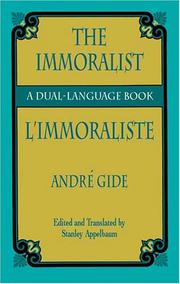 André Gide · 1902The ImmoralistLvl 5Medium pace
 Joris-Karl Huysmans · 1884Against Nature (À rebours)Lvl 7Slow burn
 Oscar Wilde · 1890The Picture of Dorian GrayLvl 4Medium pace
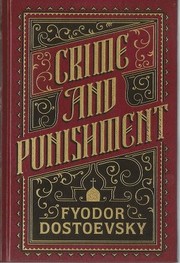 Fyodor Dostoevsky · 1866Crime and PunishmentLvl 6Fast paced
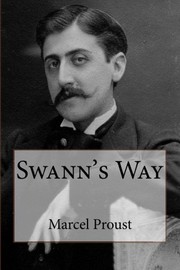 Marcel Proust · 1913Swann's WayLvl 8Slow burn
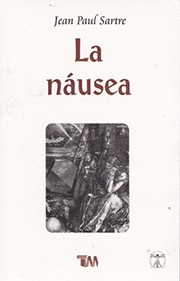 Jean-Paul Sartre · 1938NauseaLvl 6Slow burn