
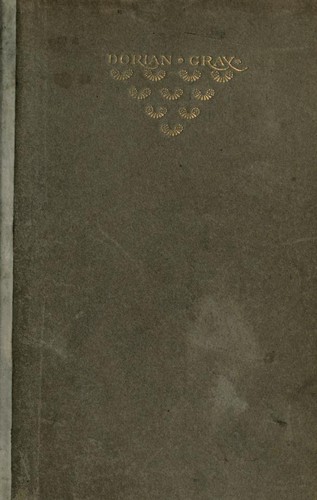
The Picture of Dorian Gray
Oscar Wilde · 1854–1900 · Ireland
Why it matters
Aestheticism's Gothic parable: eternal youth for the man, corruption for the portrait in the attic. Used against Wilde at his trials, it survives as the wittiest dangerous book in English: every epigram a loaded weapon.
At a glance
Epigrammatic dialogue and aestheticist philosophy layered over a clear plot.
Deep dive
Why the portrait's revenge is aimed at conscience rather than vanity — and how the ending restores the moral order the premise seemed to cancel.
Written for readers who have finished the book. No plot recap, and nothing here is safe to read first.
Themes & symbolism
The premise is Wilde's most perfect inversion of the Gothic double: instead of a hidden monstrous self erupting to destroy a respectable surface, Dorian's surface stays perfect while the monstrous self is literally painted elsewhere, hung behind a curtain, growing uglier with every cruelty he commits. That split lets Wilde run his aestheticist argument, that beauty and morality are separate registers, that art answers only to beauty, and simultaneously refute it: the whole plot is a demonstration that you cannot actually separate them, that the ledger keeps itself somewhere whether you look at it or not.
Lord Henry is the novel's real corrupting force, and Wilde gives him the wit rather than the moral authority — every epigram he tosses off is delightful and genuinely dangerous, style operating as a delivery mechanism for a philosophy that costs Sibyl Vane her life and turns Dorian, who starts merely vain, into someone who murders Basil for confronting him and blackmails Alan Campbell into disposing of the body. Basil's death is the hinge: he's punished not for painting the portrait but for still believing, as its creator, that Dorian could be shown himself and repent it. Basil is the last person in the book who thinks Dorian has a conscience worth appealing to, and he's wrong in exactly the way that gets him killed.
The trial in the book
The novel was used as evidence against Wilde at his 1895 trials, prosecutors reading Basil's infatuation and Henry's epigrams as confessions rather than fiction — an irony Wilde's own aestheticism, the claim that a book is well or badly written and nothing more, couldn't protect him from in a courtroom that read every line as autobiography. The novel that argues most explicitly for separating art from morality became evidence for collapsing that separation entirely, used to try the author for the tastes of his characters.
The last seal: what actually happens, and why it lands the way it does.
The ending, explained
Sickened by the portrait's monstrous face and unable to feel guilt as anything but an aesthetic irritant, Dorian decides to destroy the one remaining record of his conscience by stabbing the canvas with the same knife he used on Basil. The wish that split his fate in two, youth for the man, corruption for the image, only ever relocated the truth about him; it never erased it. So destroying the portrait doesn't free Dorian, it collapses the split back into a single body: the knife kills him, every mark of the life he actually lived snapping onto his own dead face, while the portrait reverts to its untouched, beautiful original. The servants find an unrecognizable corpse beneath a beautiful young man in the frame — the moral order the wish suspended snaps back into place in a single image, exactly at the moment Dorian tries to erase the evidence rather than reform.
Where to go next
 Oscar Wilde · 1892Lady Windermere's FanLvl 3Fast paced
 Oscar Wilde · 1895The Importance of Being EarnestLvl 2Fast paced
 Oscar Wilde · 1895An Ideal HusbandLvl 3Fast paced
 Oscar Wilde · 1905De ProfundisLvl 5Slow burn
 Joris-Karl Huysmans · 1884Against Nature (À rebours)Lvl 7Slow burn
 André Gide · 1902The ImmoralistLvl 5Medium pace