
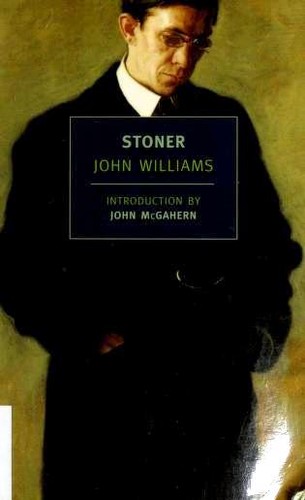
Stoner
John Williams · 1922–1994 · USA
Why it matters
An unambitious literature professor endures a loveless marriage, a stalled career, and one brief affair, his whole muted life treated with the gravity other novels reserve for triumph. Out of print for decades, then rediscovered as one of American fiction's great, quiet masterpieces.
At a glance
Plain, controlled prose and linear chronology, though its quiet devastation asks for patience.
Deep dive
A quiet, largely unremarkable academic career — the kind of life that's easy to read as failure from the outside — gets treated by the novel with the same gravity other books save for triumph. The question worth sitting with is what, exactly, that gravity is measuring.
Written for readers who have finished the book. No plot recap, and nothing here is safe to read first.
Themes & symbolism
William Stoner's life resists every plot the world tries to impose on it: a farm boy sent to college to study agriculture who instead falls in love with English literature during a required survey course, taught by Archer Sloane, that reorders his entire sense of what a life could be for. The university becomes both his refuge and his battlefield — a rewarding, unglamorous vocation on one hand, and on the other a decades-long feud with the department chair Hollis Lomax, who blocks his career at every turn after Stoner refuses to pass an unqualified graduate student out of professional courtesy. His marriage to Edith is the novel's other long attrition: two people who never developed a shared language for what's wrong between them, sustaining a coldness that outlasts every attempt either of them makes to name it.
Williams refuses melodrama at every turn where another novelist would reach for it — deaths, betrayals, and reversals of fortune are rendered in the same flat, exact prose as an ordinary Tuesday's teaching. That refusal is the novel's whole argument: attention paid equally to everything, without regard to whether the world considers it significant, is itself a form of dignity. Stoner's affair with the younger scholar Katherine Driscoll is the one fully realized intimacy in the book — mutual, articulate, unguarded — and its slow destruction, forced by the threat it poses to both their careers and reputations, is treated as no less devastating than a death, because for Stoner it effectively is one.
A Novel That Lived Stoner's Own Life
Stoner was published in 1965 to a handful of respectful reviews and almost no readers, then drifted out of print — a fate that mirrors, almost too neatly, its own protagonist's invisibility. It resurfaced in 2003 as an NYRB Classics reissue with an introduction by John McGahern, and from there found an unlikely second life in continental Europe: a French translation became a word-of-mouth bestseller around 2011, momentum that carried the novel to Waterstones' UK Book of the Year in 2013, nearly half a century after its first, quiet failure.
The rediscovery brought public praise from Tom Hanks, Ian McEwan, and Colm Tóibín, and Julian Barnes went as far as calling it close to 'a perfect novel.' The irony is exact: a book about an unheralded man whose worth nobody around him fully recognized spent decades as an unheralded book nobody fully recognized either, until enough readers, one at a time, decided otherwise — which is more or less the case the novel makes about how any real value gets seen at all.
The last seal: what actually happens, and why it lands the way it does.
The ending, explained
Diagnosed with cancer near the end of his teaching career, Stoner declines quickly and dies without ceremony, essentially unnoticed by the wider world he leaves behind. In his final days he moves back through the shape of his life — the loveless marriage to Edith, the costly stand he took defending a graduate student against Lomax's corrupt maneuvering, the brief affair with Katherine that he ended for the sake of his position — without bitterness, and without deciding any of it was wasted. In his last moments he reaches for the one scholarly book he ever published, a minor, largely forgotten work of criticism, and finds in it a quiet, undramatic recognition of himself: proof that he existed, thought clearly, and made something real, whatever the world made of it. The scene is the novel's whole thesis compressed into a gesture — a life doesn't require worldly triumph to have been worth living, only the honest attention of the person living it.
Where to go next
 John Williams · 1972AugustusLvl 5Medium pace
 William Styron · 1979Sophie's ChoiceLvl 6Slow burn
 Bernard Malamud · 1957The AssistantLvl 5Slow burn
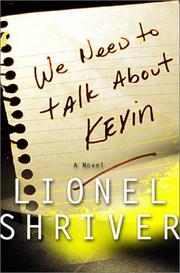 Lionel Shriver · 2003We Need to Talk About KevinLvl 6Slow burn
 Richard Yates · 1961Revolutionary RoadLvl 4Medium pace
 Carson McCullers · 1940The Heart Is a Lonely HunterLvl 5Medium pace