
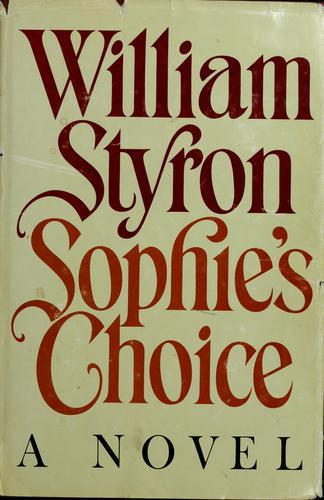
Sophie's Choice
William Styron · 1925–2006 · United States
Why it matters
A Polish Holocaust survivor's unbearable secret is slowly revealed to a young Southern writer in postwar Brooklyn. Styron builds toward one of American fiction's most devastating final revelations.
At a glance
Layered narration and long digressive sentences carrying immense weight.
Deep dive
The choice that gives the novel its title isn't revealed until the final chapters — Styron spends five hundred pages first showing you everything it costs to carry a decision you were never actually permitted to make.
Written for readers who have finished the book. No plot recap, and nothing here is safe to read first.
Themes & symbolism
The title is bitterly ironic: Styron insists on calling something a "choice" that was engineered to have no acceptable answer. The SS doctor at the selection ramp isn't extracting obedience from Sophie, he's extracting complicity — by making her pick, he ensures that she, not just the regime, will hold herself responsible for Eva's death for the rest of her life. The novel's real subject isn't the camp itself but the half-life of that manufactured guilt: Sophie's self-punishment, her drift into Nathan's violence, her eventual suicide, all readable as the choice replaying itself indefinitely, because a mind can't metabolize a decision it was never actually permitted to make.
Styron refuses to let Sophie be a simple victim, which is the novel's most serious and most argued-over move: she's Polish and Catholic, not Jewish; her father authored a vicious antisemitic pamphlet she herself typed; her survival at Auschwitz involved calculated attempts to ingratiate herself with Commandant Höss's household. None of that cancels her suffering, but it denies the reader an uncomplicated moral position — the machinery of the camp didn't just kill, the novel argues, it manufactured shame and compromise in everyone it touched, victims included, and flattening survivors into pure innocence is its own kind of dishonesty.
Stingo's South, Sophie's Poland
Styron frames the Holocaust story inside a young Southern writer's coming-of-age, and the pairing isn't incidental: Stingo is drafting a novel about slavery, echoing Styron's own Confessions of Nat Turner, while he absorbs Sophie's testimony, and the book keeps pulling American racial violence and European genocide into the same conversation rather than treating them as separate categories of horror. Some readers have found this presumptuous — a white Southern narrator borrowing the Holocaust's moral authority for his own reckoning — and the novel seems to know the risk and runs it anyway, letting Stingo's appetite for sex, literary success, and Sophie herself sit uncomfortably close to real atrocity instead of politely apart from it.
A Gentile Author, a Contested Reception
Styron, not Jewish himself, was criticized on publication for centering a Polish Catholic protagonist rather than a Jewish one, a choice some read as sidestepping the genocide's specifically Jewish character. His implicit answer is structural: Sophie's Polishness lets the novel show antisemitism as ambient European culture rather than a German program alone, and her own inherited prejudice implicates any reader's comfortable assumption that only outright villains hate. The debate never fully resolved, but the book's success — a National Book Award, a much-honored film — made it one of the primary channels through which American readers of the late twentieth century first encountered Auschwitz at all.
The last seal: what actually happens, and why it lands the way it does.
The ending, explained
Sophie's confession to Stingo finally supplies the title: at the Auschwitz selection ramp, a drunk SS doctor forces her, for his own amusement, to choose which of her two children goes immediately to the gas chamber, threatening to kill both if she refuses to choose at all. She gives up her daughter, Eva, keeping her son, Jan — who is taken from her anyway, deeper in the camp. In the present, Stingo tries to pull Sophie away from Nathan's escalating paranoid violence, but she returns to him one last time. Days later, Stingo finds them dead, having taken cyanide together — a final embrace neither could reach any other way, leaving him the sole witness left to carry the story forward.
Where to go next
 William Styron · 1967The Confessions of Nat TurnerLvl 6Slow burn
 William Faulkner · 1930As I Lay DyingLvl 9Medium pace
 Joyce Carol Oates · 1969themLvl 6Medium pace
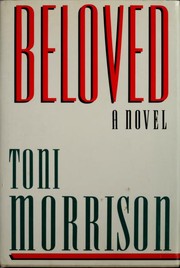 Toni Morrison · 1987BelovedLvl 8Slow burn
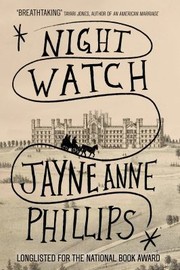 Jayne Anne Phillips · 2023Night WatchLvl 6Slow burn
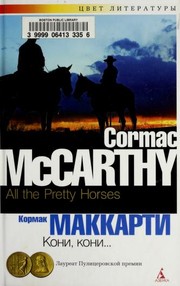 Cormac McCarthy · 1992All the Pretty HorsesLvl 6Medium pace