

The Assistant
Bernard Malamud · 1914–1986 · United States
Why it matters
A drifting young thief takes work at a failing Brooklyn grocery and slowly, unwillingly absorbs its owner's stubborn ethics. Suffering and redemption rendered in spare, near-biblical cadence.
At a glance
Spare but morally dense prose in close third person.
Deep dive
What it costs a man who once robbed a failing grocery to keep coming back to it, and what kind of debt he thinks he's actually paying off.
Written for readers who have finished the book. No plot recap, and nothing here is safe to read first.
Themes & symbolism
Malamud's Brooklyn grocery is a closed universe of near-total deprivation — Morris Bober's store barely survives competition from a new store across the street, and his own moral code (never shortchange a customer, extend credit he can't afford to extend) actively accelerates his ruin, which is exactly Malamud's point: Morris's decency has no practical payoff in this world, only an ethical one. Frank Alpine arrives already guilty, having taken part in robbing the store, and his unpaid labor there functions as a private penance no one else knows he's serving — the novel's tension is entirely in whether that guilt can transform into something more than self-punishment, since Frank keeps sabotaging his own progress (stealing small amounts from the register even as he tries to make amends, watching Helen through the airshaft, and ultimately assaulting her) exactly when redemption seems within reach.
Malamud's famous credo, voiced elsewhere in his work as 'all men are Jews,' operates here as the novel's real argument: Morris's Judaism isn't primarily doctrinal, it's a discipline of suffering-with-purpose, an insistence that ethical obligation to others doesn't lift just because your own circumstances are dire. Helen Bober, caught between hunger for a larger life (she dreams of college, of escaping the store) and loyalty to her father's exhausted decency, becomes the novel's clearest measure of what that inheritance costs the next generation, whether or not they want it.
Style: Malamud's Biblical Plain Style
The prose deliberately withholds ornament — short declarative sentences, an almost liturgical repetition of key phrases, dialogue inflected with Yiddish-English rhythms — producing something closer to parable than social-realist fiction, even though the Brooklyn tenement grocery is rendered with total material specificity. Malamud wrote this in the company of Bellow and Roth as postwar Jewish-American fiction was becoming a central American literary mode, but where Bellow's sentences sprawl and accumulate, Malamud's clip and compress, as if the prose itself were rationed the way the Bobers' groceries are. The effect is a novel that reads like scripture about people who can't afford scripture's comforts — suffering here earns no miracles, only, at best, the dignity of having endured it honestly.
The last seal: what actually happens, and why it lands the way it does.
The ending, explained
Morris dies of pneumonia after shoveling snow outside the store he can't bring himself to abandon even in his last days — a death that is, characteristically for this novel, both entirely avoidable and completely in character. Frank takes over the failing store afterward, effectively inheriting not just Morris's business but his entire mode of being: the unrewarded obligation to strangers, the quiet refusal to cut corners, the poverty that comes with both. In the novel's final page, Frank has himself circumcised and converts to Judaism during Passover, a physically painful, wholly private act with no audience and no practical benefit — the clearest possible sign that his transformation is real rather than performed, since there's no one left to perform it for. It completes the novel's logic exactly: redemption here was never about escaping suffering, only about consenting, finally and irreversibly, to take on someone else's.
Where to go next
 Bernard Malamud · 1958The Magic BarrelLvl 5Medium pace
 Bernard Malamud · 1966The FixerLvl 6Medium pace
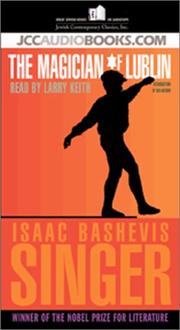 Isaac Bashevis Singer · 1960The Magician of LublinLvl 5Medium pace
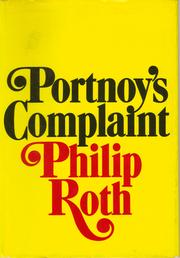 Philip Roth · 1969Portnoy's ComplaintLvl 5Fast paced
 Norman Mailer · 1948The Naked and the DeadLvl 6Fast paced
 Saul Bellow · 1964HerzogLvl 7Slow burn