
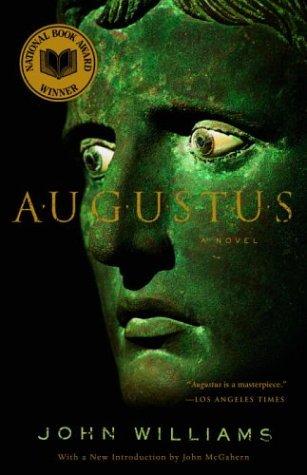
Augustus
John Williams · 1922–1994 · USA
Why it matters
Rome's first emperor reconstructed entirely through invented letters, memos, and journal entries: friends, enemies, and his own exiled daughter each getting the last word. Williams's epistolary historical novel shared the 1973 National Book Award and closed out his career on a wholly different register than Stoner.
At a glance
Multiple invented documentary voices require tracking shifting perspectives across decades of Roman history.
Deep dive
Rome's first emperor built entirely from other people's letters, memos, and grudges — nearly none of them reliable — until one voice, right at the end, finally claims the story as his own.
Written for readers who have finished the book. No plot recap, and nothing here is safe to read first.
Themes & symbolism
Williams builds Augustus almost entirely from documents attributed to people around him — Maecenas, Agrippa, Livia, Antony, Cleopatra, and his exiled daughter Julia — so that for most of the novel the emperor exists only as triangulated from secondhand, self-interested testimony, exactly the way actual historical figures survive: as an assembly of fragments none of which can be fully trusted. The structural conceit is itself the argument. A 'life' this thoroughly mediated is a comment on how biography and history actually get made — not delivered whole, but pieced together from competing witnesses each protecting their own version of events.
Only in the closing section does Augustus speak directly, in old age, and the gap between the political mask reconstructed by everyone else's letters and the man revealed in his own voice becomes the novel's real subject: what it cost him to *become* Augustus rather than remain Octavius. That cost lands hardest in his relationship with Julia, banished for adultery that was as much a political liability as a personal betrayal — a daughter sacrificed, by his own hand, to the stability of the empire he'd spent his life building.
A Different Register Than Stoner
Williams wrote Augustus after Stoner, and the two novels share a preoccupation with a life measured against what it cost — but where Stoner's William Stoner sacrifices himself in obscurity for a vocation nobody else values, Augustus sacrifices everyone around him, in full public view, for a vocation the entire world depends on. Read together, they're two studies of the same Williams question — what a life devoted to a larger purpose actually takes from the people living it — pitched at opposite ends of historical consequence. The choice of Rome's founding emperor for that inquiry is pointed: Augustus is remembered as the man who ended a century of civil war and built two centuries of peace on top of it, which makes him the hardest possible test case for whether a great public achievement can ever really justify its private cost.
The last seal: what actually happens, and why it lands the way it does.
The ending, explained
Awaiting death, Augustus reflects directly on the civilization he built — Roman peace, stability, the end of a century of civil war — and weighs it openly against what it cost the people closest to him, above all Julia, whom he loved and exiled in the same political calculation. He reaches no comfortable resolution, only an old man's honest uncertainty about whether the empire was worth the daughter, which is precisely why the final first-person section feels earned rather than triumphant: the mask comes off only once, for the reader alone, and what's underneath is doubt.
Where to go next
 John Williams · 1965StonerLvl 3Medium pace
 William Styron · 1979Sophie's ChoiceLvl 6Slow burn
 Bernard Malamud · 1957The AssistantLvl 5Slow burn
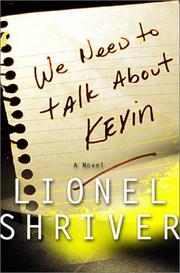 Lionel Shriver · 2003We Need to Talk About KevinLvl 6Slow burn
 Richard Yates · 1961Revolutionary RoadLvl 4Medium pace
 Carson McCullers · 1940The Heart Is a Lonely HunterLvl 5Medium pace