

William Styron
United States
Long, elaborate, Faulkner-inflected sentences that build dread through patient accumulation toward a devastating, carefully withheld revelation.
Styron grew up in Newport News, Virginia, served in the Marine Corps in the final stretch of the Second World War and again during the Korean War without seeing combat either time, and studied at Duke University before Lie Down in Darkness, his 1951 debut, announced a major new Southern voice.
The Confessions of Nat Turner, a fictionalized first-person account of the leader of an 1831 Virginia slave rebellion, won the Pulitzer Prize in 1967 but ignited a fierce backlash, with a group of Black writers and critics publishing a book-length rebuttal attacking a white novelist's claim to Turner's interior voice. Sophie's Choice, drawn partly from a real Auschwitz survivor he had known, followed twelve years later to wide acclaim.
Severe clinical depression overtook him in his sixties, and his 1990 memoir Darkness Visible became one of the most influential accounts of the illness ever published by a major writer; he died in 2006.
Lines of influence
No descendants recorded, yet.
Their books in the atlas
- 1967
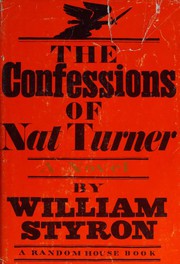 The Confessions of Nat TurnerLvl 6historical fiction
 - 1979
 Sophie's ChoiceLvl 6war novel
Meanwhile, elsewhere
 1922–2008Alain Robbe-GrilletFranceWestern Europe · France
 1922–2010José SaramagoPortugalWestern Europe · Portugal
 1918–2006Muriel SparkScotlandWestern Europe · Scotland
 1919–2013Doris LessingUnited Kingdom / ZimbabweWestern Europe · United Kingdom / Zimbabwe
 1923–2006Gerard ReveNetherlandsWestern Europe · Netherlands
 1918–2008Aleksandr SolzhenitsynRussiaRussia & Eastern Europe · Russia
If you like Styron, try
 1897–1962William FaulknerUSAshaped Styron · same region & era
 b. 1938Joyce Carol OatesUnited Statesboth shaped by Faulkner · kindred genres: psychological novel, tragedy · same region & era
 1931–2019Toni MorrisonUSAboth shaped by Faulkner · kindred genres: psychological novel, tragedy · same region & era
 b. 1952Jayne Anne PhillipsUSAboth shaped by Faulkner · kindred genres: historical fiction, war novel · same region & era
 1933–2023Cormac McCarthyUSAboth shaped by Faulkner · kindred genres: tragedy, historical fiction · same region & erab. 1928William KennedyUnited Statesboth shaped by Faulkner · kindred genres: psychological novel · same region & era