
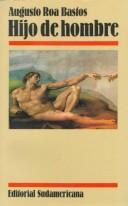
Son of Man
Augusto Roa Bastos · 1917–2005 · Paraguay
Originally Hijo de hombre (Spanish) · translated by Rachel Caffyn
Why it matters
Nine linked episodes trace Paraguayan peasants through dictatorship, rebellion, and the brutal Chaco War against Bolivia, a national wound narrated in fragments. Roa Bastos's first novel, the rough draft of the historical reckoning I, the Supreme would later complete.
At a glance
Nine loosely linked episodes and shifting narrators require piecing together a fragmented chronology.
Deep dive
Nine linked stories trace three generations of Paraguayan history from a jungle exile's homemade Christ to the Chaco War, and none of them let the country's oppressed and its intellectuals occupy quite the same moral ground.
Written for readers who have finished the book. No plot recap, and nothing here is safe to read first.
Themes & symbolism
Roa Bastos structures Son of Man as nine formally independent stories rather than a continuous plot, spanning from the aftermath of the nineteenth century dictatorship of José Gaspar de Francia through the Chaco War against Bolivia from 1932 to 1935, and the fragmentation is deliberate: Paraguay's own history, the novel argues, has never been available to its people as a single coherent narrative, only as scattered, half-understood episodes of submission and revolt passed down unevenly across families and generations. Cristóbal Jara, nicknamed Kiritó, a laborer who becomes a figure of near-messianic sacrifice across several of the stories, and Miguel Vera, the educated narrator who watches Kiritó's commitment from a permanent, guilty remove, anchor the collection's real argument without ever occupying equivalent moral positions.
Gaspar Mora, a leper who carves a wooden Christ figure alone in exile and sends it downriver to his village on a raft after his own death, gives the novel its central image and its title's ambiguity, son of man as both the crucified Christ and every ordinary Paraguayan swept into suffering he didn't choose. Roa Bastos treats Mora's carved Christ less as religious symbol than as a stand-in for the entire novel's method: something made in isolation and pain, sent forward without its maker, that a community downstream has to decide for itself what to do with.
Miguel Vera's recurring failure to act, watching Kiritó and others commit fully to resistance while he hedges, rationalizes, and ultimately betrays a group of revolutionaries under interrogation, makes him the novel's most damning creation, not a villain but the specific, familiar failure of an educated class that can articulate injustice with total clarity and still not risk anything to oppose it.
The Chaco War as Paraguay's Unhealed Wound
The Chaco War, fought against Bolivia from 1932 to 1935 over a stretch of desert both countries wrongly believed sat on oil reserves, killed a staggering proportion of Paraguay's population and forms the historical floor the novel's later stories are built on, ordinary conscripts, many of them indigenous or mestizo laborers with no stake in the territorial dispute, dying by the thousands in a war orchestrated by elites in both capitals. Roa Bastos, who served in the war himself as a teenager, refuses to let the fragmented structure soften that history into background color. It's the specific, avoidable catastrophe the whole book keeps circling back toward as proof that the pattern set by Francia's dictatorship, the country's own people spent as raw material by its own rulers, never actually broke.
The last seal: what actually happens, and why it lands the way it does.
The ending, explained
The collection's final stories bring Vera's cowardice to its full cost: his failure to warn or join a group of revolutionaries he privately sympathizes with results in their capture, cementing him as a man whose entire moral clarity has produced nothing but a longer, more articulate record of his own complicity. Kiritó, by contrast, dies as he lived across the book, in direct, costly action rather than reflection, and Roa Bastos leaves Gaspar Mora's carved Christ recurring in the background of the final pages as the novel's one image of something made honestly outlasting the men who failed to live up to it. The book doesn't resolve Paraguay's cycle of exploitation so much as catalogue, one more time, who pays for it and who merely narrates.
Where to go next
 Augusto Roa Bastos · 1974I, the SupremeLvl 9Slow burn
 Miguel Ángel Asturias · 1946El Señor PresidenteLvl 8Slow burn
 Carlos Fuentes · 1962The Death of Artemio CruzLvl 8Slow burn
 Mario Vargas Llosa · 1963The Time of the HeroLvl 6Medium pace
 José Donoso · 1970The Obscene Bird of NightLvl 9Slow burn
 Gabriel García Márquez · 1967One Hundred Years of SolitudeLvl 6Medium pace