
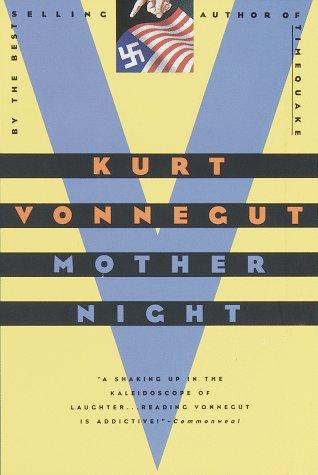
Mother Night
Kurt Vonnegut · 1922–2007 · USA
Why it matters
Howard Campbell broadcast Nazi propaganda from Berlin while secretly encoding Allied intelligence in its cadence, guilty of one crime and innocent of the other, and able to prove neither. Vonnegut's mordant answer to the banality of evil: we are what we pretend to be.
At a glance
A confessional first-person frame and short chapters keep a morally knotty premise readable.
Deep dive
What it costs Howard Campbell to have broadcast Nazi hate speech so convincingly it made him famous, while a code buried in his own delivery was quietly serving the side he was pretending to betray.
Written for readers who have finished the book. No plot recap, and nothing here is safe to read first.
Themes & symbolism
Vonnegut frames the whole book as a found document: Howard W. Campbell Jr.'s own confessions, written in an Israeli jail cell while he awaits trial for war crimes, with Vonnegut himself credited only as editor. That framing puts Campbell inside Adolf Eichmann's actual courtroom, the 1961 trial running in the background of the novel's composition, and it forces the same question the Eichmann trial asked in public: whether a monstrous act performed inside a bureaucratic or theatrical role still belongs, morally, to the person performing it. Campbell's own answer, stated as the book's epigraph, is unambiguous: 'We are what we pretend to be, so we must be careful about what we pretend to be.' Nothing in the pages that follow contradicts it.
Campbell's cover story sounds almost too clean to be a real spy's life: an American playwright living in Berlin, recruited before the war by a handler who calls himself Frank Wirtanen, told to keep broadcasting Nazi propaganda exactly as brilliantly as he already does, because the stammers, throat-clearings, and pauses he times into his delivery are actually a code relaying Allied intelligence. The joke, and it is one of Vonnegut's cruelest, is that nobody inside the story ever confirms the code works, or matters: Campbell simply gets told he is useful, then broadcasts genuinely persuasive Nazi hatred to millions of listeners for years and has to take the espionage on faith the same way his listeners take the hatred on faith. There is no way, textually, to separate the performance from the man doing it, and by the time Campbell tries to sort that out for himself, he no longer trusts his own memory enough to do it.
Resi, Kraft, and a Life Built Entirely of Doubles
Every relationship Campbell forms after the war turns out to be a costume worn by someone else. Resi Noth, who arrives at his shabby New York apartment claiming to be the younger sister of his dead wife Helga, is in fact a Soviet agent playing Helga's role for her own handlers. George Kraft, the elderly chess partner who becomes Campbell's only real postwar friendship, turns out to be Iona Potapov, another Soviet operative assigned to recruit him. Vonnegut stacks impersonation on impersonation until the novel's irony extends past Campbell alone: nobody in his life, on either side of the war, is finally who they present themselves as, which makes his own case less an aberration than the book's whole operating logic.
The last seal: what actually happens, and why it lands the way it does.
The ending, explained
Wirtanen finally surfaces to confirm, in writing, that Campbell's broadcasts were genuine intelligence work, which is enough to end the war crimes case against him and clear the path to release. Campbell doesn't take it. Held now only by his own conscience rather than any court, he writes that he is going to hang himself 'for crimes against himself,' a sentence that refuses every exoneration the plot has just handed him. The state can absolve espionage; it has no jurisdiction over a man who spent years performing hatred well enough that he can no longer prove, even to himself, where the performance stopped.
Where to go next
 Kurt Vonnegut · 1959The Sirens of TitanLvl 4Fast paced
 Kurt Vonnegut · 1963Cat's CradleLvl 4Fast paced
 Kurt Vonnegut · 1969Slaughterhouse-FiveLvl 5Fast paced
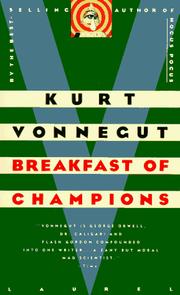 Kurt Vonnegut · 1973Breakfast of ChampionsLvl 4Fast paced
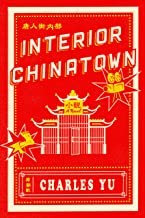 Charles Yu · 2020Interior ChinatownLvl 5Fast paced
 Haruki Murakami · 1987Norwegian WoodLvl 3Fast paced