
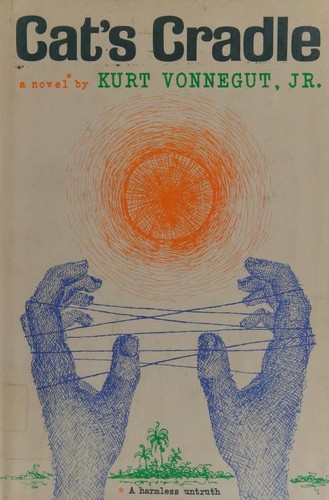
Cat's Cradle
Kurt Vonnegut · 1922–2007 · USA
Why it matters
Ice-nine, a doomsday substance, and Bokononism, a religion of useful lies: apocalypse as deadpan farce. The Cold War's absurdity distilled into chapters short enough to read between shudders.
At a glance
Short punchy chapters and dry wit make Vonnegut's satire go down easily.
Deep dive
How a frozen swimming pool in a Caribbean dictator's palace ends up mattering more than the bomb the whole book pretends to be about, and what a religion that admits, on its first page, to being made of lies has to offer people that the bomb's inventor never could.
Written for readers who have finished the book. No plot recap, and nothing here is safe to read first.
Themes & symbolism
The narrator, researching a book about the day the atomic bomb dropped on Hiroshima, tracks down the surviving children of Felix Hoenikker, one of the bomb's co-inventors, and finds a man better characterized by what he didn't care about than by what he built. Hoenikker plays cat's cradle with young Newt shortly before his death, an image Vonnegut returns to as the book's real diagnosis: 'No damn cat. No damn cradle.' Every explanation adults offer children, and offer each other, turns out to be exactly that kind of string figure, elaborate scaffolding around an absence. Hoenikker's last invention, ice-nine, a crystal that turns any water it touches into solid ice at room temperature, gets left behind for his three children to casually divide among themselves like family china, pure incurious genius handed down with no instructions about consequence.
Bokononism, the religion practiced on the island of San Lorenzo, announces its own falseness in its first line: 'All of the true things I am about to tell you are shameless lies.' Unlike a faith that insists on its own truth, Bokononism sells itself openly as foma, harmless untruths people need in order to live with dignity, and it survives specifically because San Lorenzo's dictator, Papa Monzano, has outlawed it on pain of the hook, keeping belief urgent and defiant rather than official and dull. Vonnegut's blackest joke is that a religion which admits it's lying comforts its people more honestly than the bomb-building science that insists its own truths are neutral and safe.
Karass Versus Granfalloon: Vonnegut's Taxonomy of Belonging
Bokonon supplies two terms Vonnegut clearly thinks the language needed: a karass, a group of people doing God's will together without ever being able to see the pattern, and a granfalloon, a false, proud team like a nation or a fraternity that only feels significant. The narrator's own research project, meant to be a sober history of a single day in 1945, turns out to have assembled his karass without his permission or knowledge, every character he meets along the way bound to him by a logic no census or nationality could have predicted.
The last seal: what actually happens, and why it lands the way it does.
The ending, explained
Papa Monzano, dying, bites into a capsule of ice-nine he's kept hidden at his throat and freezes solid; when his corpse later slides into the sea during a chaotic accident at the palace, the chain reaction freezes the world's oceans within days, killing nearly everyone. The narrator survives in a dungeon with a handful of others and eventually finds Bokonon himself on a mountaintop, having just written what he intends as the final sentence of his scripture: instructions for the last man alive to thumb his nose at the heavens and lie down on the ice. The narrator, telling all of this after the fact, ends the book poised to take Bokonon's advice rather than argue with it.
Where to go next
 Kurt Vonnegut · 1959The Sirens of TitanLvl 4Fast paced
 Kurt Vonnegut · 1961Mother NightLvl 4Fast paced
 Kurt Vonnegut · 1969Slaughterhouse-FiveLvl 5Fast paced
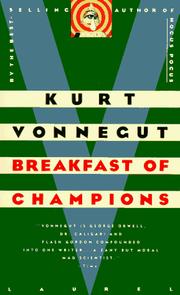 Kurt Vonnegut · 1973Breakfast of ChampionsLvl 4Fast paced
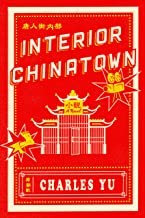 Charles Yu · 2020Interior ChinatownLvl 5Fast paced
 Haruki Murakami · 1987Norwegian WoodLvl 3Fast paced