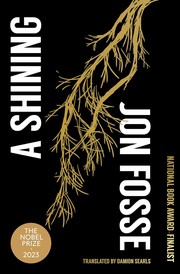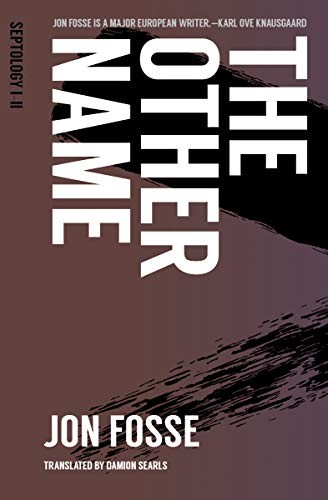
Septology
Jon Fosse · b. 1959 · Norway
Originally Septology (Norwegian) · translated by Damion Searls
Why it matters
An aging painter and his estranged double drift through memory, faith, and a Norwegian winter in one unbroken, unpunctuated sentence spanning seven parts. Fosse's Nobel-crowning achievement turns prose rhythm itself into prayer.
At a glance
One unbroken, unpunctuated sentence spanning hundreds of pages.
Deep dive
A painter meets his own alcoholic double across a Norwegian fjord, and Fosse writes all three volumes as one sentence that never actually stops to let you catch your breath.
Written for readers who have finished the book. No plot recap, and nothing here is safe to read first.
Themes & symbolism
Fosse builds the novel's central strangeness out of a doubling he never resolves into simple allegory: the narrator, Asle, an aging widowed painter living alone on the coast near Bjørgvin, keeps encountering and rescuing another painter also named Asle, a drunk and increasingly self-destructive man who once shared his name, his art school, and even, it's implied, some of his memories and choices. Whether the second Asle is a literal person, a version of the narrator's own life had he made different decisions (drunk instead of sober, alone instead of once-married, faithless instead of a late convert to Catholicism), a guardian-angel-like double, or simply a device for externalizing the narrator's own buried self-destructive impulses is a question the novel keeps alive rather than answers, and that irresolution is the point: Fosse is less interested in solving the puzzle than in using it to dramatize how thin the membrane is between the life a person actually lived and the ones just as easily could have.
The novel's single unbroken, largely unpunctuated sentence — spanning all seven parts and hundreds of pages, looping constantly between the narrator's present (driving to the city, tending his dog Bragi, painting a canvas he keeps returning to and reworking) and layered memories of his marriage to the now-dead Ales, his conversion to Catholicism, his estrangement from and reconciliation with his own painting practice — isn't a stylistic stunt so much as a formal argument about consciousness and time: Fosse's prose refuses the ordinary punctuation that would carve experience into discrete, sequenced units, insisting instead that memory, prayer, present perception, and even different versions of a life all coexist and interpenetrate rather than proceeding tidily one after another.
Asle's Catholic faith — a genuine, largely wordless conversion that runs through the narration as recurring prayer (the rosary, repeated invocations) rather than doctrinal argument — gives the novel's cyclical, repetitive structure a devotional rather than merely modernist logic: the recurring phrases, the returns to the same paintings, the same roads, the same memories of Ales, function less like narrative stalling than like liturgy, a structure built for repetition and returning rather than linear resolution, which is also why the novel's slow accretion of grief, guilt, and grace resists being paraphrased into a conventional plot summary without losing almost everything that makes it work.
A Structure Built for Repetition, Not Climax
Septology was published across three volumes in Norway between 2019 and 2021 and won the National Book Critics Circle Award and the International Booker shortlist before Fosse's 2023 Nobel Prize in Literature, awarded specifically 'for his innovative plays and prose which give voice to the unsayable,' cited Septology as the culmination of a project running back through his earlier, sparer novels and his internationally staged drama. Because the book is built on cyclical return rather than rising action — the same drive to Bjørgvin, the same paintings reworked, the same prayers repeated with small variations — its final pages don't function as a climax to be decoded so much as one more turn of a spiral that has been circling the narrator's grief, faith, and doubled self the entire time; reading it for a conventional payoff misses what the seven-day, seven-part structure is actually built to do, which is closer to sustained meditation than to plotted narrative.
The last seal: what actually happens, and why it lands the way it does.
The ending, explained
The novel's final movement finds Asle traveling by boat with his fisherman friend Åsleik to spend Christmas Eve with Åsleik's sister Guro, having spent the preceding days searching for and finally installing his troubled double in treatment, and settling his affairs, including donating his best paintings, as though preparing to let go of something. Rather than staging a dramatic death or revelation, Fosse lets the narration simply arrive, in its closing pages, at Asle's fullest and most direct recollection yet of the moment Ales actually died years earlier — a memory the whole book has circled without landing on directly — folded together with his sense, crossing the dark fjord, that she is somehow present beside him still. There's no external event to "explain": the ending is Fosse allowing the narrator's grief and faith to finally arrive, together, at the one memory the whole spiraling sentence has been orbiting, which is exactly why an extra section on the book's cyclical, prayer-like structure serves it better than trying to extract a conventional plot resolution the novel was never built to deliver.