

See Under: Love
David Grossman · b. 1954 · Israel
Originally Ayen Erekh: Ahava (Hebrew) · translated by Betsy Rosenberg
Why it matters
A child of Holocaust survivors tries, across four wildly different narrative styles, to imagine his way into the horror his parents never spoke about. Grossman's breakthrough: formally daring, emotionally unbearable, and by many accounts his masterpiece.
At a glance
Four formally distinct sections, including an encyclopedia and a fish's perspective, resist easy unity.
Deep dive
A boy obsessed with the word his family will not say out loud spends the rest of the book, decades later, trying to write his way past it by imagining that a real writer who vanished during the Holocaust actually swam away instead.
Written for readers who have finished the book. No plot recap, and nothing here is safe to read first.
Themes & symbolism
Momik, growing up in 1950s Israel among adults who trade in code words and flinches instead of explanations, tries to assemble the 'Nazi beast' the way a child raised on comics would: as an actual animal he might capture, study, and understand, building a menagerie in his building's basement out of whatever creatures he can catch. Grossman treats this literalism with total seriousness, because it is the only framework survivors' silence has left an imaginative child to work with.
As an adult, Momik turns to fiction rather than history to approach what he still cannot ask his family about directly, writing an alternate account of the real Polish-Jewish writer Bruno Schulz that refuses his documented death and instead has him swim off into the Baltic and legend. Grossman takes this refusal seriously as an act of mourning rather than treating it as evasion, since direct representation has already failed Momik every other way he has tried it.
Momik's grandfather Anshel Wasserman, once a popular Polish author of children's adventure serials, tells stories nightly inside a death camp to postpone his own execution by the commandant Neigel, an explicit and much grimmer descendant of Shahrazad's bargain. Here storytelling does not simply delay death, it forces an unbearable intimacy between victim and perpetrator: Neigel comes to need Wasserman's inventions to sleep at night even as he continues running the camp by day, and the novel refuses to let either man's use of the other resolve into something cleaner than complicity.
The Man the Camp Cannot Kill
Wasserman survives every method of execution Neigel orders against him inside the camp, bullets, gas, each attempt failing in ways the novel renders with the flat absurdity of a folk tale rather than as a miracle. A prisoner who cannot be killed is useless to the camp's machinery as either a statistic or a martyr, so Neigel has to invent a different use for him, which is exactly how the nightly storytelling arrangement begins. Grossman turns Wasserman's unkillability into a standing image for memory itself: something the apparatus built specifically to erase it cannot actually make disappear, however many times it tries.
Four Books, Four Kinds of Silence
Each of the novel's four sections adopts a completely different form, a child's realist narration, a lyrical fable about Bruno Schulz, an adventure serial pastiche narrating Wasserman's camp ordeal, and finally an encyclopedia of terms drawn from his grandfather's story that Momik compiles as an adult. Grossman is not simply showing off formal range; each shift marks a different, failed strategy for saying the unsayable, so that the novel's real subject becomes the inadequacy of any single mode, realism included, to hold what it is reaching for.
Where to go next
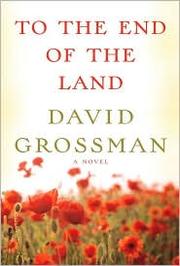 David Grossman · 2008To the End of the LandLvl 6Slow burn
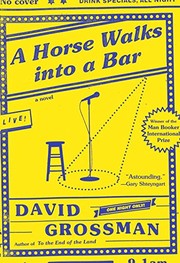 David Grossman · 2014A Horse Walks into a BarLvl 6Fast paced
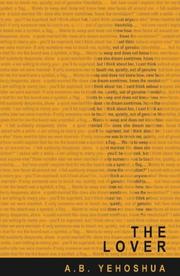 A. B. Yehoshua · 1977The LoverLvl 7Slow burn
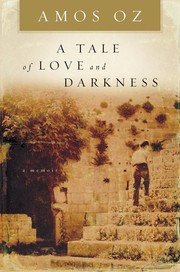 Amos Oz · 2002A Tale of Love and DarknessLvl 6Slow burn
 S. Y. Agnon · 1935A Simple StoryLvl 5Medium pace
 Leo Tolstoy · 1878Anna KareninaLvl 5Medium pace