
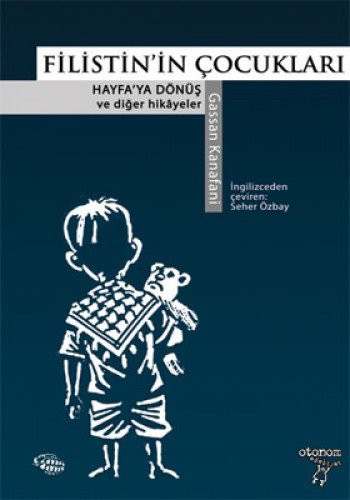
Returning to Haifa
Ghassan Kanafani · 1936–1972 · Palestine
Originally A'id ila Haifa (Arabic) · translated by Barbara Harlow and Karen E. Riley
Why it matters
Palestinian parents return to their abandoned Haifa home after 1967 and find the Jewish family raising the infant son they left behind in the chaos of 1948. Kanafani's most devastating novella, refusing any easy claim on grief or blame.
At a glance
A short, tightly focused novella whose emotional and political ambiguity resists a simple reading.
Deep dive
Twenty years after the chaos of 1948 forced them to leave their infant son behind in Haifa, Said and Safiyya get a rare pass back across the new border, straight to the door of the house they used to live in, to find out who has been living there instead.
Written for readers who have finished the book. No plot recap, and nothing here is safe to read first.
Themes & symbolism
Said and Safiyya fled Haifa during the 1948 fighting so abruptly that their infant son Khaldun was left behind in the confusion, and when the two return twenty years later, after the 1967 war opens a brief window for Palestinians to cross into Israel, they find their old house occupied by Miriam, a Holocaust survivor, and her husband, who raised the boy they left behind as their own son under the name Dov. Kanafani builds the entire novella around the unbearable calm of that visit, using a domestic reunion rather than combat to stage the deepest argument of the Palestinian catastrophe: what, exactly, does it mean to have a home, a child, a claim, taken by people who are themselves refugees from an even larger catastrophe.
Miriam's own history, having survived the Holocaust before settling in a house and raising a child that both, by any earlier accounting, belonged to someone else, keeps Kanafani from writing a simple villain into the story even as the novella refuses to let her occupation of Said and Safiyya's home go unexamined. Kanafani, himself a Palestinian refugee and a spokesman for the Popular Front for the Liberation of Palestine, deliberately declines to resolve that tension into propaganda, letting Said instead arrive at a harder, more self-critical conclusion about what his own generation's passivity in 1948 actually cost.
A Second Son as the Novella's Real Argument
Said and Safiyya's younger son Khalid, born after they fled Haifa and raised entirely as a Palestinian in exile, wants to join the fedayeen resistance, a wish Said has spent the whole novella resisting out of fear of losing a second son. Kanafani builds the ending's real force out of that parallel rather than out of the reunion with Khaldun itself: one son was lost to circumstance and raised by someone else's grief, and what Said decides to do about the other son, the one he still has a say over, becomes the novella's actual verdict on what his generation owes the next one.
The last seal: what actually happens, and why it lands the way it does.
The ending, explained
Khaldun, now a grown man serving in the Israeli army under the name Dov, refuses to accept Said and Safiyya as his parents, choosing the only family and nation he has ever consciously known over the biological claim two strangers are asking him to honor on the strength of one conversation. Said leaves his old home having gained nothing back and having lost, in a sense, the version of Khaldun he had spent twenty years imagining, but the visit changes his position on Khalid entirely: he tells Safiyya, on the way out of Haifa, that he now hopes their younger son does join the resistance, reversing the fear that defined him at the novella's opening. Kanafani ends on Said's own question rather than an answer: what a homeland actually is, once it has been proven that neither grief nor biology is enough to reclaim one.
Where to go next
 Ghassan Kanafani · 1963Men in the SunLvl 5Medium pace
 Nawal El Saadawi · 1975Woman at Point ZeroLvl 3Fast paced
 Abdul Rahman Munif · 1984Cities of SaltLvl 6Slow burn
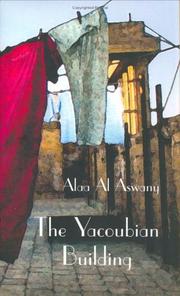 Alaa Al Aswany · 2002The Yacoubian BuildingLvl 4Fast paced
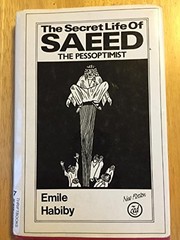 Emile Habibi · 1974The Secret Life of Saeed the PessoptimistLvl 6Fast paced
 Mahasweta Devi · 1974Mother of 1084Lvl 5Medium pace